Wednesday, July 19, 2023

Spotty


If you have taken any amount of time to read posts in either our Genuinely Faux farm blog or the GFF Postal History blog, you just might have come to an opinion or two about me as a writer.  Some of those opinions could possibly be something like "how does he know so much about that particular thing?"  Other thoughts regarding me and my writing might be "how is it that he doesn't seem to know much about this other thing?"

Well, first of all, because I have offered up so much of myself, writing and publishing almost daily, it means I am giving anyone who reads this material ample opportunity to form opinions about me.  Some of them might be accurate, others might simply be the wrong conclusion based on the evidence given.  And, since the farm blog has been going since 2009, you might also want to consider that your opinion might have to be revised for whatever version of me happens to be in your sights at the time.  

After all, I do try to learn and improve - which means I am not a stationary target.

At one point in time, I had extensive knowledge about heirloom tomato varieties and characteristics.  This was partly because we were actively attempting to discover the best varieties for our farm and our growing practices.  So, I dove deep into that topic.

Now, I still have a decent amount of knowledge about heirlooms and heirloom tomatoes.  But, like most of us, some of that expertise has not been exercised in the same way.  So, I don't have everything on automatic recall anymore.  At least I have notes and writing from years before that I can reference and refresh my memory!

As I was thinking about this topic, I remembered the bafflement one of my Computer Science professors at Luther College had regarding my test results in his classes.  You see, I had this tendency to answer some of the questions with extensive and accurate details, including examples.... and then I left other questions blank.

Perhaps it was partly a time management thing, I'll grant you that possibility.  And it is something I've worked on over the years.  But, the truth of the matter is that my knowledge was spotty because it illustrated how I like to learn.  And it shows my dislike of trying to speak/write about something where I don't have acceptable (according to my standards) competence.

If I'm going to learn about it, I really want to do my best to understand it.  I want to be able to explain what I understand so others can understand it too.  And that's where the time management issue came into play.  

There simply isn't enough time to build skill and knowledge for that level of competence on everything that comprises any reasonably complex topic.  There never was.  There never will be.

As a result, I would run into a question that I hadn't really dug into.  Rather than writing an answer that I felt was not a good one (and waste the professor's time), I would just make sure I made it clear how well I understood the material I had gotten to.

Of course, this strategy didn't apply to foundational topics that you needed to learn in order to get to the really neat stuff.  I understood that I had to get a handle on those things.  But once I began to get exposure to a wider expanse of topics I would become enthralled with some of it and dive right in.  To some extent, this is still me.  I'll have those basics down just fine.  Then there will be a whole bunch of topics that I am comfortable with, while some "next-door" topics might not get much of a look.

Be patient.  I'll get there someday - I hope.  But until then, you'll just have to deal with a person who is not perfect and whose knowledge can be spotty at times.  The difference is that I usually have some idea of what those areas are and I try not to pretend that I do know that stuff.  I'd rather maintain my integrity and talk about things I feel I can represent fairly well.  All the while knowing that there is so much more to learn.

Tuesday, July 18, 2023

Payback

May was full of disappointment at the Genuine Faux Farm while the farmers fought Covid and found themselves only able to do basic farm and self-care chores and job-related duties.  June was a transitional month where we borrowed some motivation from our farming friends.   Now that we've reached July, we find ourselves with enough energy in the tank that we can actually pay back some of the kindnesses we received when we were down.

Our "gang" of farmers got together at Scattergood Friends School Farm on Sunday and did what we do when our farms get together during the growing season.  We provide our combined expertise at some much needed tasks and then we converse over a meal.  It's good for those who travel to get off of their respective farms for a bit.  It's good for the farm that receives the help.  And, it's good for the souls of all who participate.

We started by helping transplant sweet corn for a late succession.  One of Mark's perennial challenges at Scattergood is to try to grow crops that mature during the school year when there are more people to feed.  Traditional peak for sweet corn in Iowa starts in late July and ends in late August.  So, he has to get creative if he wants to extend the season of certain vegetables so the students and staff can enjoy a wider range of produce.

The Scattergood Friends School Farm is on rolling land, and they do a good job of rotating the growing areas with animals, cover crops and perennial cover.   It's a beautiful place to walk and it is always pleasant to visit.  I appreciate the hard work that goes into making this a worthwhile place in the world.

In addition to planting sweet corn, we weeded the onion patch.  To give you an idea of scale, I would guess that we had rows that were about 300-400 feet long and there were about ten or twelve rows there, if you included the leeks.  I grabbed a wheel hoe and got my steps in for the day while the rest attacked the in-row weeding.

Once that was done, there was a quick foray to plant some late succession summer squash and zucchini.

It felt good to help someone else get something done.  Sometimes payback is a good thing.

Monday, July 17, 2023

Occasionally Loud


We first moved to our current location, at the Genuine Faux Farm, in 2004.  The first neighbor to approach us was an older woman, Ruth Bergmann, who "only lived a half-mile away."  She brought us a dessert and invited us over for a dinner when we were ready.  It was a kind offer that we were, honestly, a bit startled, but still grateful, to receive.  You see, in all of our other places of residence, we had not been welcomed by a neighbor - so we did not expect anything different this time around.

While we did not spend a great deal of time over the years with Ruth and her husband, Loren, who had lived there for many years, we did do our level best to offer assistance when their garden needed tilling.  And, we tried to be good neighbors to them, even when the farm and jobs made it difficult to carve out the time.  Perhaps we could have done more.  No.  We certainly could have done more to befriend them.  But I don't think we did anything to be bad neighbors.

Today, her grandson lives in the house down the road and we're pleased to say that we also get along with them just fine.  In fact, we were gifted with this sign that had come into their possession.  This sign had once been Sparky Zander's.  You see, Sparky and Kent Harms were two people who introduced themselves to us early when they learned we intended to do farming - and be Certified Organic.

Perhaps we'll get into that history at another point in time - for today, I wanted to share the sign.  You might notice that it does all sorts of things to be "loud."  Exclamation points!  Capital letters!  Underlining the word "NO!"  Bright colors and even a neat little trick with a pair of eyes.

Sometimes, those of us who wish to raise food or work with the land in a way that is not reliant on chemicals find ourselves needing to be loud - because otherwise, it feels like too many folks seem to believe it is okay if they infringe on the practices of growing that we are dedicating ourselves to following.  In fact, we can sometimes become downright unpleasant if we find ourselves having to try to defend the small parcels of land we steward over and over .... and over again, with no discernible changes in behavior that might indicate we've been heard at all. 

There was a reason both Sparky and Kent were vocal and, sometimes, bitter, about the situation.  Kent spoke passionately against the "aerial terrorists" that were becoming far more common in Iowa in the years just prior to his premature death in 2010.  He and Sparky both encouraged us to hold our ground and do what we needed to do.

Well, we've tried and are trying.  Maybe we're not the same kind of loud - but sometimes we can get a few people to listen.

Sunday, July 16, 2023

Guano Wars - Postal History Sunday

Welcome to this week's edition of Postal History Sunday!

It's been several weeks since I did a full introduction.  So, if you're new here or if you need a refresh, Postal History Sunday is written weekly - and hopefully not weakly - by Rob Faux (yep, that's me).  The first Postal History Sunday was offered in August of 2020, as part of my own effort to reach out to others who might be feeling the negative effects of the pandemic.  My intent then is the same as it is now.  I hope that I can share something I enjoy with you in such a way that you might be entertained whether you know a lot about postal history or you just happen to be passing through.  Perhaps you will be able to set your troubles aside for a few moments and maybe, just maybe, you'll learn something new!

And now, without further todo, let's look at a piece of postal history from the year 1868.  This item was mailed from Richmond, Maine, in the United States to Callao, Peru.

Richmond is located south of Augusta, Maine, on the Kennebec River.  For those of you who are vegetable growers, you might recognize the name "Kennebec" for the popular potato.  That potato variety was developed in Maine at the Presque Island USDA facilities and introduced in 1941.  This document from that time period discusses those facilities and their program (page 415).

I bring potatoes up because they, and other food plants, are grown on land where additional fertility is often needed to maintain crop production year after year in the same location.  The cover above actually has a connection and it will be interesting to see how I get to making that connection!

This envelope has two postage stamps, one represents 24 cents of postage and the other 10 cents.  The 34-cent rate per 1/2 ounce from the United States to Peru was in place from October of 1867 until February of 1870 and unlike many postage rates of the time, was actually an increase from the prior postage rate (22 cents).  

Letters to Peru from the US typically traveled by steamship to Panama, crossing the isthmus by land if the letter originated from a location east of the Rocky Mountains.  Once on the west coast of Panama, a steamship under British contract would carry mail destined for the west coast of South America.

At this time, ten cents of the total postage was kept by the United States to cover their costs, but they had to pass on 24 cents to the British - hence the red "24" at the bottom right.

The letter itself was intended for Zacheus Allen, who was apparently on board the ship America under the command of Captain Morse.   The directional docket instructs the postal service to put the letter into the hands of the US Consul in Callao so they could arrange to get the letter to Allen.  

This docket reads " Ship America, Capt Morse, care American Consul (ship loading at Chinci Islands)"

Zacheus Allen was on one of a large number of ships likely awaiting a load of guano from the Chincha Islands, a process that could be quite lengthy.  So, it is likely that the various consuls for different countries had a process for taking mail to bored sailors waiting for their ship's hull to be filled...

with poo.

Yes, you heard me correctly, these ships were waiting to be filled with old bird droppings that were going to be sold as fertility amendments elsewhere in the world (primarily North America and Europe).  And now you see the link between Kennebec potatoes and the topic at hand.  This is all about soil fertility.

Guano became big business


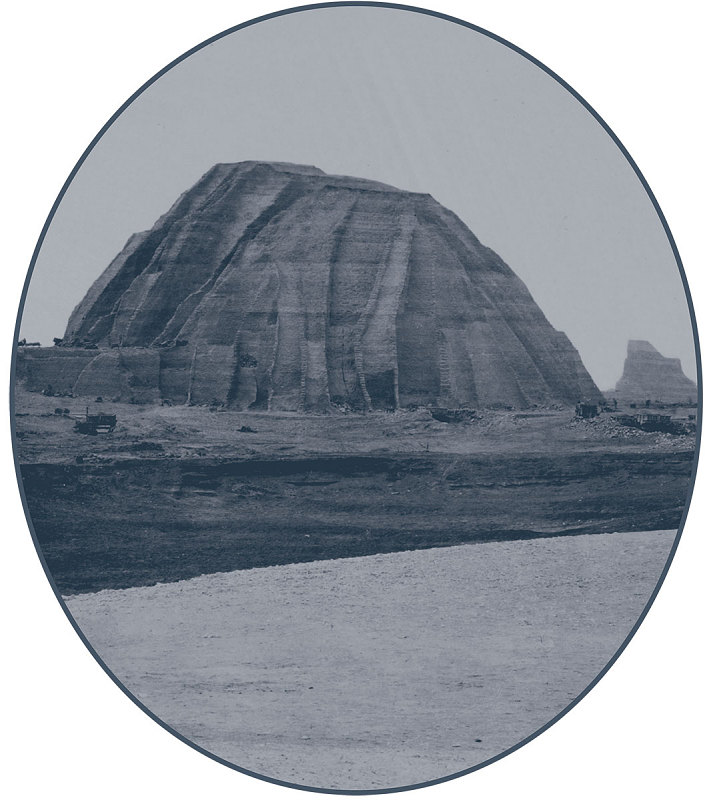
The Great Heap from Alexander Gardner's Rays of Sunlight from South America

Guano had long been used, in a careful and guarded fashion, for fertility supplements by the Incan empire for generations.  The Incans were fully aware that this resources was renewable as long as the seabird population was encouraged AND the lmited existing resources was not over-exploited.  Of course, European and North American agricultural systems tended to extract more from the soils, requiring various sources to replace fertility (nitrogen, phosphorous and potassium).  As a result, these ag systems had an almost insatiable need for products that could deliver that fertility.

Alexander von Humboldt, during his travels in South America, became aware of the use of guano and took samples back to Europe with him in 1804.  Scientific analysis of the day confirmed its value.  And thus began a process of extraction and export that would last for decades on the Chincha Islands - where the supply would run out in the late 1860s and early 1870s.

If this topic interests you, you could get a nice summary here at the Atlas Obscura by Cara Giaimo.  Or, if you want an in depth work on the topic, Gregory T Cushman's book titled Guano and the Opening of the Pacific World seems like a good place to go.

Ships awaiting guano at Chincha Islands 1865, from Gardner book

The largest of the Chincha Islands had guano that reached depths of 200 feet, which can be seen by looking at the first photo of the "Great Heap."  Workers, some free laborers and others indentured, would use pick-axes, shovels and carts to mine the substance.  A fine article by W.M. Mathew titled "A Primitive Export Sector: Guano Production in Mid-nineteenth Century Peru," describes the effort of extraction, movement and loading as dirty, slow, difficult, and inefficient work.  Significant amounts of guano was lost into the ocean during the loading process and in dust that filled the air.

"When the loading started, all inside doors and windows [of the ship] were closed and tightly covered with canvas to prevent the toxic dust from filling a ship’s crew spaces. Loading crews were limited to twenty-minute shifts in the cargo holds, and the rest of the crew climbed to the tops of the masts to breathe fresh air." - from this Smithsonian source titled the Guano Trade.

According to the work by W.M. Mathew, there was one report that stated as many as 160 ships were awaiting loading at one point in 1869, and this was at a point when the supply of guano on the Chincha Islands was dwindling.  The same source suggested that this meant there were 4000 people on board those ships - all waiting for a load of bird manure.

I think you can now get an idea as to how valuable a letter from home - and an American Consul office that would arrange to deliver that letter - could have been.

Guano mining from the Gardner book.  1865.

Enough to fight for?

Battle of Callao from wikimedia commons

The value of seabird excrement was such that the Spanish actually attempted to use the Chincha Islands as a bargaining chip, since guano production produced a significant amount of the Peruvian government's revenue.  Spain occupied the islands with 400 marines on April 14, 1864 and proceeded with a blockade of major ports in Peru (including Callao).

Peruvian and Chilean forces (and later some help from Ecuador and Bolivia) eventually forced Spain's withdrawal (by 1866).  This would not be the end of hostilities that had to do with the extraction of materials for fertilizer.   The War of the Pacific (1879) between Chile, Bolivia and Peru was at least partly due to a desire to control both guano and saltpeter deposits.

Saltpeter - staying in the fertilizer game

Let's go back to an envelope I featured in an earlier Postal History Sunday for a couple of interesting tidbits that you might enjoy!

This envelope was sent from New London, Connecticut to Valparaiso, Chile, in 1867.  The recipient was a Captain Hinckley and his ship must have been the barque "Fannie."  His mail was sent to Messrs Alsop & Co, which was a common location for United States ship captains or US citizens to have their mail sent if they were visiting Chile.

Foreign mail to Chile could only be pre-paid to the point of entry into the country.  Chile charged an incoming foreign mail fee equivalent to 5 centavos (July 1853 to December 29, 1874).  In addition to the incoming mail fee, incoming mail required two times the domestic internal rate (10 centavos) for a total charge of 25 centavos collected from the recipient at the point of delivery.

This letter was initially sent to Alsop & Co in Valparaiso, but they sent that letter on to W.E. Billinghurst in Iquique, which was in Peru at the time this letter was sent (1867).  We can assume this letter caught up to Capt Hinckley there since there doesn't appear to any more travels recorded on this envelope.  

Mr. Billinghurst was listed as a shipping agent for Lloyd's in Iquique during the 1860s and was, like many who worked as a shipping agent, also the representative for many other concerns. Anyone involved in trade, especially of Chilean saltpeter or guano, had likely heard of him.  So, it might not be surprising to hear that his demise in the 1868 earthquake was specifically noted in newspapers throughout the world.

Iquique, despite being located in a desert region, was a port of prominence because that desert had strong deposits of sodium nitrate (Chilean saltpeter) - used for fertilizers.  With the guano deposits rapidly being depleted, attention was shifting southward to the Atacama desert - and to Iquique - as the primary port of departure for ships laden with Chilean saltpeter as a fertilizer product.  In 1867, nearly 116,000 tons of saltpeter were exported by Peru. This amount declined the following year, likely due, in part, to the 1868 earthquakes.

Iquique 1865 by Mariano Felipe Paz Soldan from wikimedia commons

 And then, there was always bone meal

This envelope was first featured in a Postal History Sunday titled  Poo d'Etat

The postage stamp is a 2 cent denomination from the 1869 US issue and it pays the rate for items that were classified as a "circular."  The rate for this class of mail was effective from 1863 to 1872 and allowed the sender to put up to three copies of the circular into one cover (envelope or wrapper of some sort).  To qualify, the contents could only be printed matter (with no written personal messages placed in addition to the printed matter).  The envelope also needed to be left unsealed so the postal clerks could inspect the item to be sure it met regulations.

I recognize that some people are a little squeamish with the idea of using ground up animal bones as a soil supplement, but you need to consider the relative resource efficiency of using bone meal versus other sources of phosphorous.  Most farms included animals in their operations, some of which were raised for meat.  Rather than simply discarding the bones, they could be used by being ground up and placed back into the soil so the cycle of life could continue.  The goal of companies like this was to make the bone meal "soluble" so it be more readily available for uptake by plant roots.

This company directly compares their product to the Peruvian guano and, of course, makes a case that their product would be better.  In particular, they cite a much more favorable price than the expensive guano being shipped from South America.  

And now you know, manure was, and is, big business.  And I just got you to read all about it in today's Postal History Sunday!  No wonder I enjoy writing these posts.

A short bonus material section

Zacheus Allen, the recipient of our first letter and sailor, at the time, on the ship America, actually turned up with a little searching in a strange place.  He ran into a spot of trouble as the First Officer on the Matterhorn during a trip from Cardiff (Wales) to Callao a year or two after his time waiting for a load of Guano in 1868.

This document Criminal Case Files : 1863-1917 includes charges against Allen that were of a serious nature.   The case is summarized there as follows:

"Indictment for beating, wounding, assaulting and for cruel and unusual punishment and for the murder of Moses Blake, mariner, using a four foot capstan and a pistol and then beat him up"

There was apparently a case for self-defense that even led to a letter to then President U.S. Grant.

from the Papers of U.S. Grant, Vol 20, Nov 1, 1869 - Oct 31, 1870

You might notice that the US Consul for Peru was involved in this situation as well.  Williamson had taken the post earlier in 1870, so was not the same person who was in charge of the consulate at the time Allen received the letter we show at the beginning.

The case results are also from the Criminal Case File document:

Detailed description of the assault and the testimony; Consolidated with cases 504 & 505; 31 Nov 1870 Verdict not guilty for case 503; nolle prosequi for case 504; guilty of beating Moses Blake for case 505, fined $10 and discharged; Case 506 murder - separate, 3 Nov 1870 ordered nolle prosequi

For those who do not know (and that included me until a few minutes ago) nolle prosequi is

 a formal notice of abandonment by a plaintiff or prosecutor of all or part of a suit or action.  So, Zacheus Allen was only found guilty of beating Moses Blake and had to pay $10 for the crime.  Was it because Mr. Allen truly was defending himself?  Was it because he had friends who could get the ear of the President of the United States?

It sounds like an interesting story.  Maybe we'll hunt that one down some day.

-----------------------------------------------

Thank you for joining me for Postal History Sunday.  I hope you enjoyed reading this and that, perhaps, you learned something interesting and new to you.

Have a great remainder of the day and a fine week to come.

Postal History Sunday is published each week at both the Genuine Faux Farm blog and the GFF Postal History blog.  If you are interested in prior entries, you can view them, starting with the most recent, at this location.

Saturday, July 15, 2023

Swallowed!


Most years about this time at the Genuine Faux Farm, the Barn Swallow chicks fledge and begin trying their hand at flying.  In another week or so, the parents will probably start looking to lay eggs again so the next batch can fledge and get their wings working before their migration south.*  It's important that we know this because we will need to get out of the habit of leaving certain doors on our outbuildings open - unless we want to host Barn Swallow nests in places we would rather not.

This year, we have a particularly large group of swallows - numbers we have not seen since the old barn fell down and stopped providing prime Barn Swallow nesting real estate.  Perhaps they've figured out safe places to be in the rubble?  I don't know, but I sure do like seeing all of the birds - especially when they wheel around and do their sky ballet.

*edit July 15 - the adults were swooping in and out of the granary this morning and the flock was no where to be seen.  Perhaps I should have written "in the next day or so."

Turn up the volume if you want to the hear the birds.  Be patient, I do zoom in about halfway so you can see them a bit better.

With the help of the Merlin app, we were encouraged to look more closely at the various swallows in these larger flocks.  Certainly, the Barn Swallows we have grown familiar with that have been swooping around the granary and the Poultry Pavilion are there with their v-shaped tails.  But they weren't the only swallows.  There were also significant numbers of Cliff Swallows too.

No, I don't know where the cliffs are that these swallows used for their nests.  

Actually, Cliff Swallows have adapted to use overpasses, bridges and culverts, according the the All About Birds site.  Anyway, we're pleased that the Merlin app identified a different call that our ears were not picking up.  After we took some time to read about Cliff Swallows, we were able to verify the presence of these birds.

Last night, Merlin let us know that there were also Northern Rough-winged Swallows in the flock.  Sure enough, after a little more exploring and observing, we could confirm that one as well.

I wonder who else we'll be able to find in this flock over the next couple of days?

Friday, July 14, 2023

Farm Report for June and July


Our farm has egg (and other farm product) email orders approximately every other week.  When we send out our email notice, we try to include some farm news for those who receive it.  A kind individual suggested that some people might also like to see these updates in the blog - so here are our farm updates from the past two egg emails!  

Note: if you live in the Waverly or Waterloo/Cedar Falls areas, you can certainly request to be on our email lists by using the contact form on the the right of this blog.

Anyway, this certainly seems like a good idea for a Friday blog post!

June 26, 2023 Farm News

Life on the farm is like it always has been.  There are moments of triumph and moments of grief.  Times when we celebrate and others filled with annoyance.  In other words, it's just like life for everyone in this world, but maybe on steroids.

We sometimes joke with ourselves that if we don't like how we're feeling about the farm now, we can just wait five minutes and it will change with the current circumstance.  While we might be doing less in recent years with the farm than we used to, we're no less invested in it and the day to day events that color our lives.

For example, we are coming off of the triumph of getting several things into the ground that have been waiting for us to recover and combine available time with energy so we could get it done.  It is likely that some of these crops will fail because they are in too late, but they most certainly would have failed if we never did plant them.  We're pleased because we have a chance with them now - something we didn't have the last time we sent an egg email to all of you.

On the other hand, we're dealing with raccoons attacking our chickens in the middle of the day, something we haven't dealt with for several years.  So, of course, dealing with this problem has multiple stages and it suddenly becomes a top priority, despite plans to accomplish other things.  Needless to say, we are applying ourselves to this problem to defend "the ladies" and the eggs we know you all enjoy.  We have lost some chickens and we don't know what the long-term effect will be just yet.

But, swinging the pendulum back, our flock of hen chicks now have feathers and they are doing very well.  In fact, they are doing far better than last year's flock (which are now our laying flock).  It does make a difference when both farmers can be involved in the work of raising the birds.  If you will recall, Rob was on his own last year after Tammy's Achilles surgery.  We expect the new ladies to start producing eggs in mid to late September at the earliest - so any dip in production that might come after losses in the current flock will be short-term.

Through it all, we remain grateful to all of you for your kindness and support.  Thank you for all that each of you does in this world.

Rob & Tammy

July 11, 2023 Farm News

In our last email, I mentioned how life at the farm is a pendulum, swinging back and forth between things that feel like success and others that feel like failure.  It's a normal thing, but it can be alarming when that darned pendulum swings all the way in both directions multiple times a day!

I am pleased to report that both of us are physically feeling so much more like ourselves, with the past two weeks being pretty good.  Tammy seems to be past the headaches and regular PT appointments are helping with the hip/leg stuff.  And I don't find myself out of breath and tired after what seems like very little activity.  We appreciate all of the kind words and thoughts sent our way as we fought to get through all of that.

We are fighting a battle with varmints (deer, rabbits, woodchuck and raccoons) which has required a number of adjustments and extra tasks.  But we are doing a decent job (so far) of addressing the problems without resorting to drastic measures.  The laying hen flock has been reduced a bit by the raccoon issue, but we can still get about 3 dozen (as opposed to four or five dozen) a day.  So, we do have eggs, but we might occasionally have to say "no" now.  However, we know from our history that vacation time usually sees a dip in orders as well, so things will probably take care of themselves.

The new hen flock is looking REALLY good right now.  With two of us able to give them attention, I think the temperament of this group will be much better than the last one.  The current batch has given us more trouble than other flocks in our remembered history.  Perhaps I have just conveniently forgotten a flock that was really bad?   I don't know - that's why it's called "forgetting."  The young hens will probably begin laying eggs in September and I suspect we'll have more eggs than we know what to do with about that time.

We are also entering the time of year where we might be offering some excess produce.  Yes, everything at the farm is late for all of the reasons we've mentioned in prior newsletters.  But, we've managed to do some good things despite the struggles.  I wouldn't be surprised if we offer summer squash and zucchini or maybe white onions in the not too distant future.  Perhaps even a Boothby's Blonde cucumber or two?  

Have a good day everyone and we hope to see you tomorrow!
Rob & Tammy

Thursday, July 13, 2023

Grace


I am going to tell you a story that starts with Bree, the Meeting Cat and Indoor Farm Supervisor.  She was also known as the "Breeling" or my "Bree L.F." (Bree Little Friend).  I am not telling this story to elicit sympathy or bring about indignation for things gone wrong.  And I certainly don't need your judgement if you feel our decisions were misguided in the first place. 

I have another purpose and I hope you'll stick with me while I get to that destination.

We let it be known, via the blog, that Bree was declining and likely reaching the end of her life.  We did our best to be kind and consider what might be the best course of action as she approached the exit door of this world.  We did our best to look at her with clear eyes when it came to assessing if she was in excessive pain and if waiting longer for the end would be more cruel than the alternative, taking her to see the vet one last time.

One of our cues was assessing how she accepted comfort.  Bree was always a cat that would seek and gladly accept comfort from her humans.  And the good news is that Bree was able to accept that comfort until the day of that appointment with the vet.  During her last few weeks I think the only sustenance she successfully took in was that comfort - because she certainly wasn't drinking much and she wasn't keeping any food down.  That comfort kept her eyes clear and she still gave us purrs and let us know that she did appreciate what we could give.

But, we knew what was coming and we wanted to provide Bree with the kindest exit we could manage for her.  She sat in a lap and received comfort for the entire trip in the car and we did everything that we thought was right - choosing the best alternatives as the options dwindled.  The intention was for a gentle exit - one we had witnessed before with Eowyn, by using the injections to bring about sleep and then an end.

I held Bree for that first shot, but things didn't go exactly as hoped.  The first shot must have hit something vital because our little cat showed extreme pain before going limp.  I suspect she was dead before the second injection was even started.  The process wasn't gentle.

And I felt as if I had let a creature who had trusted me down.

So, that's the story - now for the point of telling it:

In this world, you can do everything as best as you are able with the knowledge that you have at your disposal.  You can seek out qualified opinions and give yourself time to make the best decisions.  You can do everything as right as you possibly can.

And you can still have a result that is not a good one - even when you can't possibly see how you could have done much better.

This is why it is so important to give each other - and ourselves - grace.

We need to exercise the gift of giving grace because it is actually a rare thing to be able to successfully navigate difficult processes and decisions perfectly in the first place.  We're going to fail to observe something, or we're going to misinterpret something else, or maybe we'll just not have the energy to apply ourselves in a way we would really like to.  If things can go wrong even when you think you've done the best that can be done, what can we expect when we add in our own shortcomings?

I like to think that most of us in this world genuinely want to do the "right thing" as well as each of us is able.  Unfortunately, I also know that we're going to fail at doing the "right thing" frequently.  This should not be an excuse that we use to ignore problems or opportunities to improve.  But it should be a reminder to all of us that each of us is imperfect, and grace is necessary because it recognizes our value despite that imperfection.

If you're still with me - today's gentle reminder is to offer grace to someone who needs it.  Maybe it's you.  Perhaps it's someone else.  And be prepared to practice offering grace frequently.

Because it's actually one of the best qualities humans can have.  The ability to offer forgiveness, love, and support despite mistakes, imperfections - and results that don't go the way we had hoped and planned.

Wednesday, July 12, 2023

Observed.


The two of us took the time to "sit there again" a couple of days ago at Sweet Marsh Wildlife Area.  We chose the same location because we wanted to see if the Monarch egg we observed being laid on a particular milkweed plant had become a Monarch caterpillar.  

Sadly, we did not find a caterpillar (or any Monarch caterpiller) as we looked at a number of milkweed plants.  But, we still took the time to let nature come to us by sitting still for a while.

We'll probably offer up a bit more in a future blog, but since it is getting late and I am tired, we'll go with the abbreviated version.  

Take a look at the image above.  Feel free to click on it so you can see a larger version of that image.  There are two critters that we spent some time watching in that photo.  Well, actually, there is a third that might be visible in there too.  Can you find them?

Two of these critters decided not to move the whole time we were there and the third gave a go at trying to catch a dragonfly that hovered just over its head.  The dragonfly did get away and we observed as the dragonfly exhibited an interesting behavior where it dipped itself in to the water two to four times in a row.

I have seen dragonflies dipping their tail into the water, which is apparently how some dragonfly types lay their eggs.  But they usually hover closer to the surface while doing so.  In this case, the dragonfly executed a rapid circular motion that resulted in hitting the water.  The Ojai Valley Land Conservancy website suggests:

On a hot day, dragonflies sometimes adjust their body temperature by skimming over a water surface and briefly touching it, often three times in quick succession. This may also help to avoid desiccation.

 I suppose that is possible.  But, the behavior seemed more like a hunting mechanism to me.  But, I will readily admit that I am not a dragonfly expert, nor do I speak dragonfly - so I wasn't able to ask.

Maybe someone can point me in the right direction?  In the meantime, I'll see if some of the photos I tried to take while it was doing this interesting behavior can be turned into something!

Have a good day everyone.

Tuesday, July 11, 2023

Charge!


In yesterday's blog entry, I was bemoaning what feels like increased pressure from the various varmints that give us fits at the Genuine Faux Farm.   When I write things like that I try to maintain either a philosophical side or a humorous side to the whole thing because - well - what else can I do?

That, my friends, was a rhetorical question.  I do not require an answer, so let's leave it at that.

But, since it is MY rhetorical question, I can provide you with a bit of an answer anyway (writer's privilege!).

The picture above shows most of our solar chargers that we use to power the poultry netting fences that we use around the farm.  Like so many other things on the farm this year, we're finding that the last couple of years have put us in a less than optimal position.  Batteries need replacing, there are some shorts in a few of these that need to be repaired and the gator clips on others are needing to be replaced.  So, we've got them all in one place so we can "Frankenstein" some into working pieces for our farm.

You see, ever since we got some motivational help in June, things on the farm HAVE improved for us.  Tammy and I were just reminding each other of the things we did just today on the farm that would have taken a week (or not gotten done at all) just three weeks ago.  We've even managed four back to back days with some serious physical labor and we're still standing.

Though we did have a little bit of a laugh at the bottom of the stairs again.  But, yes, the trip up the stairs was ever so much easier this time around.

The problem is this - we're getting things in the ground.  We're getting the cultivation done.  We're getting the weeding done.  We're even getting irrigation and fences set up.  But, if the chargers for those fences don't work... deer and other varmints visit anyway, which is very frustrating.

The other issue is trying to figure out where to put fences.  These deer have decided they like being around the house.  That means potted plants are....

Wait?!  Where did the potted plants go?  I found the pots....

and some dirt....

ARG!

And so, we keep working to change things up in hopes that we can protect some of our crops, some of our flowers, some of our chickens...    Losses are a part of the game of farming and its the way the world works.  We can give up or we can charge up our batteries and work for other solutions that might solve the problem.

For now, we've decided to charge.

Monday, July 10, 2023

Varmints!


Day lily season had begun and I happily took the camera out yesterday to record some of the first blooms.  I think it would be safe to say that I was looking forward to even more today.  It turned out that there were fewer and there will be fewer for the foreseeable future.

Deer apparently like day lily flowers.  So, now we have a bunch of flower stalks with no buds and no blooms.  It's very annoying, of course - especially given the space around us and myriad of other food opportunities.  But, they, along with some other varmints, have decided the things that we grow are tastier than anything else out there.


The young melon plants were starting to look good and we were preparing ourselves to trellis them this weekend.  Well, I guess there is no need to do that now because the deer made sure to shorten them so that a trellis is no longer necessary.  

Gee thanks.  How thoughtful.


I was also considering pruning some of the peppers and tomatoes this weekend.  The deer decided they could also help in that department.  The problem is that I typically prune some of the low stems on both the peppers and the tomatoes, while these varmints like to start at the top of the plant and work their way down.

Now, it would be one thing if these plants were out in the field because this sort of thing happens sometimes.  But, the melons and peppers that were "pruned" were inside Valhalla, one of our high tunnels.  That's why the door is closed on Valhalla in the picture below.  The deer tracks told the story of these varmints just walking in through the door.  


Typically, we like to have that door open to allow for more air circulation, but if deer are just going to walk in, we can close it.  Unfortunately, they have now shown that they can navigate their way into Valhalla via the side walls - as new damage (and footprints) can attest.

Deer are not the only varmints that have been much more aggressive towards us this year.  The raccoons have been causing problems with the hen flock this year too.

One of our coping strategies is to not let the hens out for a while to break the pattern (and protect the birds while we try to address access issues).   That's why you see a picture of the hen yard with no hens in it during the daytime.  

Some of the measures we have taken for the raccoons have worked recently, but we know we need to keep addressing the problems because they will be back.  Once they figure out they like chicken and where they can get it, they'll keep after it until we can make the cost too high for them to pay.  

The same holds true for other varmints.  Who knew that varmints could respond to economic pressure?

It seems to us that the drought put pressure on the wildlife and they found our farm to be a location where they might find water and food.  Once they figure that out, we have a problem because these varmints don't know anything about budgeting and saving things for later, even if they do seem to understand opportunity cost.

Here's hoping we can figure out strategies that work with our current group of annoying varmints.  It's not like we don't have some options in mind, but every year is different and the irritation is always real.  We always prefer to find ways to get along with the wildlife, but sometimes it's hard to want to.

Sunday, July 9, 2023

Trans-Atlantic - Postal History Sunday

Imagine that your troubles are the weeds in your vegetable plots (sadly we can picture that all too well).  Then, add to that picture all of your good friends and family members and pretend that they are all able to help you weed your vegetables.  If you do not have many friends or family members, just think of a horde of willing, able and friendly volunteers.  Sick them on the task of weeding those troubles out of your tasty veggies and viola!  Your troubles are gone!

With an introduction like that, I suspect it must be time for Postal History Sunday!

Mail between the United States and the United Kingdom

One of the areas of postal history I enjoy very much would be mail that crossed the Atlantic Ocean in the 1860s.  As many of you know (and the rest of you will soon know), I have been focusing on mail featuring the 24 cent stamps issued by the United States from 1861-1868.  Below is an example of the type of mail that catches my interest.

This is an 1862 letter from Boston (United States) to London (England).  The Boston postmark indicates to me that the letter was put in a mailbag which was then placed on the Cunard Line's Asia that departed Boston on August 6 so it could cross the Atlantic Ocean.  The Asia arrived at Queenstown (Cork, Ireland - also known as Cobh) on August 16 where the mailbag was offloaded.  A train took this bag of mail to Kingston (now known as Dún Laoghaire) where it would board a steamer to cross the Irish Sea to Holyhead.   From there, it would ride in another train to London.

Finally, the letter was removed from the bag and given an August 18 postmark to record its official arrival at the English exchange office in London. 

This is the mail service this postage stamp was primarily intended to be used for.  The United States and the United Kingdom agreed in 1848 that a letter weighing no more than 1/2 ounce could travel from the US to the UK for 24 cents.  This rate was effective from February 1849 until the end of December of 1867, so it would be tempting to think that these stamps were available for that entire period of time.

Interestingly enough, the first time a stamp with the 24 cent denomination was issued was 1860!  Until then, a person would have to apply two 12-cent stamps (or some other combination of stamps) to pay the postage.  From 1851 to 1859, you could buy stamps with 1-cent, 3-cent, 5-cent, 10-cent and 12-cent denominations.  In 1860, the United States added the 24-cent, 30-cent, and 90-cent denominations in response to the growing use of mail to foreign destinations.

This stamp is part of the series of postage stamps introduced in August of 1861.  The new stamps were issued in response to the secession of the southern states.  But that, as they say, is another story (and possibly another Postal History Sunday).

Now - because I want to - we should take a look at a letter that came back the other way (from the United Kingdom to the United States).

This thick folded letter has a dateline of August 24, 1867 and a Liverpool postmark on the back.  The New York marking on the front is dated September 4th.  And, the docket at the top left reads: paid Per "Persia" via Cork.

*** A Quick Reminder - We All Start Somewhere ***

Now - as a bit of an aside - when I first started looking at some of these letters from this period, I was confused by these dockets that said things like "Per Persia."  Not knowing much about Atlantic shipping at the time and the convention of dockets on mail, I would see the word "Persia" and think - "Wow!  This thing went to Persia!  Ummm.  But, why would it go from Liverpool to Persia and then Houston, Texas.  Hmmmm?"

Of course, once I figured out that many ships were named after places, it made more sense.  

I just want to remind all of us that it is ok to be confused by something that is new to you and it is fine to ask questions.  Why?  Because it means we have an opportunity to learn something that is new to us!  And learning is always cool - even if it is difficult, embarrassing, or inconvenient.

*** Back to the regularly scheduled program ***   

The Cunard Line's Persia did leave Liverpool on August 24 and arrived at Cork August 25.  Because the date is not readable on the Liverpool postmark, I can't say for certain that this letter boarded the ship at Liverpool or if it was sent by train to Holyhead, crossed the Irish Sea to Kingston and then by train to Cork just to catch the ship there.  The speedy trains could very well get a letter to Cork prior to the ships departure to cross the Atlantic Ocean.

Either way, it did take the Persia to New York, where it did arrive on September 4.


The postage was paid by two stamps, a one shilling and a two shilling, with a total of three shillings in postage paid.  The same agreement that set the postage rate at 24 cents for the United States to the United Kingdom required one shilling for the 1/2 ounce.  So, this letter must have weighed over one ounce and no more than 1 and 1/2 ounces.  In other words, this was a triple weight (or triple rate) letter.

There is certainly more to tell about this letter to Houston, Texas and that can be viewed at the Postal History Sunday entry titled Triple Threat

Of course, there is more than one country across the "Pond," so let's try another one!

Mail Between the United States and France

The United States did not have an agreement for mail with France until April of 1857.  This agreement set the rate of postage at 15 cents for every 1/4 ounce of mail and continued until the end of 1869.  However, there was no 15-cent stamp to pay for this rate until 1866, when a stamp was issued in memory of Abraham Lincoln after his assassination in April of 1865.

Until that time, a letter to France would most typically be paid by a combination of a five-cent and ten-cent stamp.  But, the example I am showing you today has a 15-cent Lincoln mourning stamp on it to pay the postage.

The letter above was mailed from New York and set sail on the Cunard Line's Tripoli on March 18, 1869.  

As an aside - if you sometimes wonder about what attracted me to this specific item, you might enjoy knowing that our farm is near Tripoli, Iowa, which is NOT the location this ship was named after.  I suspect the ship was named after the city in Libya since Tripoli, Iowa had yet to reach 100 inhabitants by 1880.  Meanwhile, the United States had already fought Barbary pirates at Tripoli, Libya, in the early 1800s.  So, I suspect Tripoli, Iowa, might not have the same clout for naming rights.

The Tripoli arrived in Queenstown, Ireland on March 30 and the mailbag entered France at Calais on April 1st.  

A postal historian actually gets more than one opportunity to find out more about a cover between the US and France because both countries provide some clues with their markings.  This is important because not every old letter has clear markings.  Sometimes they are smudged or inked lightly and you can't read all of the information.

This blue French marking tells me several things.  First, the letter came from the United States (Et.-Unis).  Second, it came on a steamship that was under contract with the US (Serv. Am.).  Third, the letter was taken on the train from Calais to Paris and this served as the French exchange office for the US mailbag this letter traveled in (Calais).  The simple fact that it entered France in Calais suggests it went via Queenstown (Ireland) or Southampton (near London).  This, and the date, can help confirm which ship carried the letter across the Atlantic.

That's a lot of information in one postal marking.

And now for a letter coming back the other way from Bordeaux (France) to New Orleans (US).

The rate for mail from France to the US was 80 centimes for every 7.5 grams.  The letter above has an 80 centime stamp that pays the postage for this letter.  The letter boarded a train from Bordeaux to Paris on November 16, 1859, then traveled on the train from Paris to Calais the next day.

The instructions given on this letter state that it was to go "by the first steamer from Liverpool."  I don't think you can get more explicit than that!  And, to no one's surprise, the letter left on Cunard Line's Europa from Liverpool on November 19th and the rest is history.   The Europa actually arrived at Boston late on the 1st of March and the letter was processed on March 2nd.

This handstamp found in the middle of this cover reads "Br. Service,"  which indicated the letter traveled on a steamship that was under contract with the British.  This is a hint to me, as a postal historian, that I should be checking for Cunard Line or Galway Line sailings if I want to figure out how the letter crossed the Atlantic. 

 
from France to US 

from US to France

The Boston marking for this cover tells us the equivalent to 15 cents was paid in France.  There are NO clues as to which shipping line might have carried this letter.

The New York marking from the previous cover gives us the number "6," which tells us that six cents were due to the French postal service and nine cents were kept by the US.  This included the money needed to pay for the Atlantic crossing, so that gives me a clue regarding possible shipping lines based on that information.  It would have to be a shipping line under contract with the United States.  

Now - if you are paying attention - you will have noticed that the Cunard Line carried BOTH letters (remember that Tripoli thing?).  What's up with that?

It is true.  The Cunard Line was under contract with the British to carry the mail across the Atlantic for the entirety of the postal agreement from 1848 until 1867 between the United Kingdom and the United States.  However, when a NEW agreement was reached to begin on January 1, 1868, things changed.  And the letter that was carried on the Tripoli was mailed in 1869.

As of 1868, for a letter that was leaving the US for the UK, the Cunard Line was sailing under a US contract.  If the letter was leaving the UK for the US, the Cunard Line was sailing under a UK contract.

Ain't postal history grand?!?  Just move a few years forwards or backwards and everything you think you know changes!   Well, ok.  Not everything.  But, you do have to pay attention because you shouldn't assume the processes for mail carriage have always stayed the same.

Mail To and From the Papal State

Rome, and the surrounding territory known as the Patrimony of St Peter (or Latium), resisted joining the Kingdom of Italy that had formed under the leadership of Sardinia beginning in 1859.  The map below can give you a picture of the territory that was still held by the Papacy after 1859 until 1870 (territory in pink).

Don't let the cities of Isoletta and Napoli confuse on this map.  This is a map I created for another purpose and it was good enough to illustrate my point.  Yes, sometimes I run out of time and I have to make due.  It's a weekly blog, things like this happen sometimes.


What this little piece of history means for you and I as we look at mail going to Rome is that the Papal State had its own mail service, issuing its own stamps.  And, the Papal State had no postal agreement with the United States.

So, what does that mean for a person who wants to send a letter from Boston to Rome? Something like the folded letter shown below that was mailed in mid-April of 1862 from Boston to Rome.


If two postal systems did not have a negotiated postal convention that outlined how mail could be exchanged between them, they would have to look for intermediary postal systems to help them do just that.  Typically (but not always), the two postal systems would have a treaty with some third-party postal system in common.  Italy and the United States each had their own agreements with France.  This made it possible to use France's postal service as the intermediary.  

As a point of information, the British, Prussian, Bremen and Hamburg mails could also serve as an intermediary between Rome and the U.S. in 1862, but most of the mail was carried via France.

The treaty between France and the United States (established in 1857) included instructions for mail that France was to serve as an intermediary.  Article VIII of the postal treaty between these two nations mentions that each country would carry mail and pass it on to other postal services beyond their borders (if you wish to see the actual text of the treaty, it is here).  This would allow the sender to prepay the entire required postage to get between the US and Rome.

The rate was 27 cents per quarter ounce and it was a valid rate from April of 1857 through December of 1870.

This letter was put in a mailbag to go to France at Boston's exchange office and is dated April 15th.  The mailbag was sent to New York so it could board the trans-Atlantic steamship named Niagara for departure the next day.  The Niagara dropped the mailbag off at Queenstown (Ireland) on April 27.  From there it went by train to Kingston (Ireland), it crossed the Irish Sea to Holyhead and then it went through London and crossed the English Channel to France at Calais.

Wait a second....  who said anything about the United Kingdom getting involved in this?

Ok, you got me.  I did not mention to you that the US - French agreement included language that allowed mail to be sent via the UK, sometimes using Atlantic steamers under contract with the British.  

This is a great example of how services agreed upon under one postal treaty had the potential to be accessed via another treaty.  The French had an agreement with the British.  The United States also had an agreement with the British.  When the US and France created their postal convention, they could use those agreements to allow mail to go via the UK.  Similarly, the agreement France made with the Papal States allowed access to the United States, which, in turn, allowed access to the British system.

Got all that?  No?  That's ok, sometimes you just have to accept things as a matter of faith.

Back to the letter in question...

The letter was finally taken out of the mailbag somewhere in France on April 29 (see the black circular marking above) on its way to Marseilles.  At that point, it took another steamship that arrived at Civitavecchia (near Rome).  We know it took a ship from Marseilles to Civitavecchia because the Rome marking on the back reads "via di mare" (by the sea).

The Rome post office put the ink slash in black ink across the envelope to indicate that it recognized postage for the letter had been paid.  The recipient would have to pay nothing more to collect the letter.

So, now that we are in Rome, let's see if we can't travel back the way we came!

What you see above is an envelope that was mailed in Rome in March of 1861 - destined for New York City.  The stamps were issued by the Papal State and used the bajocco (plural is bajocchi) as the currency unit.  The stamp issue is commonly referred to as the Papal Keys issue.  These keys represent the keys of heaven given to St. Peter that had the power of "binding and loosing," one made of gold and the other of silver.  Their appearance on the postage stamps were simply an affirmation of the papacy's authority.

The postage required in Rome to prepay a letter to the United States was 32 bajocchi per 7.5 grams (roughly 1/4 ounce) and this rate was effective from January 1, 1858 through August 30, 1866.

Compare that to the rate period for the United States and their 27 cent rate to Rome (April 1857 through December 1869).  Yes, they are different, which probably requires some sort of explanation.

What we need to remember is that France is an intermediary country in this case.  They have an agreement with the United States that sets the terms for how they will carry mail to Italy and the Papal State.  Unless the US and France agreed to do something different, there was not going to be a change in the postal rate during that time for mail going from the US to Rome.

On the other hand, the agreement between France and the Papal State could change, even if the agreement with the United States did not.  In fact, even more than that changed!  Rome and the surrounding area actually adopted the use of the Italian Lira as its currency, so the bajocco was no longer the measure for postage in Rome.  This is, of course, a simplification because there was certainly a transition period.  But, maybe that sort of discussion can be its own Postal History Sunday some day?

The markings on the front can be read, even if it takes a bit of concentration to do so.

The black, circular marking is a Rome marking for March 23, 1861, which indicates the date when the letter entered the mail in Rome.  The black diamond shaped grid is the obliterating cancel that was used to make it difficult for someone to re-use the postage stamps.

The red, double-circled marking shows us the next step of this letter's journey.  It went via ship from Civitavecchia to Marseilles, arriving there on March 27.  The words at the top of that marking read "E. Pont" or état pontifical.  A marking on the back shows us the next step of the journey.


This marking was applied on the train that ran from Paris to Calais (March 27).  From there, this letter went across the English Channel and reverses the journey of the previous letter.  It appears that it boarded the Edinburgh on March 28 at Queenstown (Ireland) and crossed the Atlantic Ocean to New York, arriving on April 8.


If you want to see a larger version of the map, feel free to click on the image to view it.  This gives you a visual representation of some of the routes via France to Italy at the time these letters traveled from place to place.

Now that we have returned from our travels to and from Rome, I think I found the explanation as to why I seem to keep landing on the 1860s period.  Ok, it doesn't explain everything, but it is an early Postal History Sunday that gives some explanation as to why I collect and research some of the areas I do!  

Aren't I sneaky, I just might get you to read (or re-read) another PHS all in one sitting.  Alas for you!

-----------------------------------------------

Thank you for joining me for Postal History Sunday.  I hope you enjoyed reading this and that, perhaps, you learned something interesting and new to you.

Have a great remainder of the day and a fine week to come.

Postal History Sunday is published each week at both the Genuine Faux Farm blog and the GFF Postal History blog.  If you are interested in prior entries, you can view them, starting with the most recent, at this location.