Sunday, September 18, 2022

Oh, The Places You Can Go - Postal History Sunday

Welcome to Postal History Sunday, featured weekly on the Genuine Faux Farm blog and the GFF Postal History blog.  If you take this link, you can view every edition of Postal History Sunday, starting with this one (the most recent always shows up at the top).

The title of this week's entry might make you think of Dr. Seuss and the his final publication, Oh, The Places You'll Go - and that would be intentional on my part.  For that matter, if you are needing a little bit more Dr. Seuss in your life, the link I provided in the prior sentence goes to a Youtube reading of that particular book.  There's even an activity at the end!

Once you've had the chance to have Oh, The Places You'll Go read to you, maybe you'll remember to come back and finish reading this week's Postal History Sunday.  This week, I wanted to have a little fun and explore the places we can go (virtually) when we look at a piece of postal history.

You can go to Peru if you want to

I recognize that not everyone is willing or able to physically travel around the globe to visit the wonders that exist out there.  Yet, if we want, we can explore the world and its history virtually by looking at, studying, and researching pieces of postal history.  And, it's not even required that these pieces be expensive collector's items, though some certainly are.  An inexpensive item can capture your imagination and you can find yourself transported to a different time and a different place.

This first item was mailed in San Francisco on October 3, 1865 where it boarded a steamship to Panama.  From there, the letter took another steamship under British contract that made several stops on the South American coastline.  The postage rate for mail from the US to Peru was 22 cents per 1/2 ounce (Dec 1856 - Sep 1867), so the 24 cent stamp was clearly a convenience over-payment.  The red "12" at the top left indicates that 12 cents of the postage was due to the British for their efforts.


Actually, this particular cover allows us to travel back to a time when Peru, San Francisco and Italy intersected.  According to the paper referenced as "the Cerruti report" (1st page shown above), Nicola Larco was a prominent Italian in San Francisco beginning in 1849 - during the Gold Rush.  Larco was born in Genoa, Italy in 1818 and initially emigrated to Peru before coming to San Francisco.  For a period of almost two decades, Larco and Domenico Ghirardelli were the prominent leaders of the Italian community in San Francisco.  And, yes, I do mean the Ghirardelli that led to the present day chocolate company.

Wow, we went from saying we'd talk about Peru to chocolate all of a sudden.  It might be that kind of Postal History Sunday.  Who knows what places we will go with this next?  Not me! I'm just along for the ride that the stories take me on!

The Peru connection with Nicola Larco is fairly obvious if you look at the address, a business that must have been headed by a relative.  In fact, Larco served as the consul for Chile in San Francisco at this time.  It was not uncommon for a person with business connections to serve as a consul for another nation in larger cities.  For example, the US might have a foreign consul in cities like Cairo, Paris, and, yes, Lima to represent their business interests in those cities.

But, why did Larco go to Chile in the first place?  What sets up the scenario where he would be doing business with a relative that remained in Lima while he was based in San Francisco?  

Well, it turns out that there were centuries of connection between Peru and Italy, specifically Genoa, where Larco was born.  According to Fare l’America ou apprendre à y vivre ? L’immigration italienne au Pérou by Mario Pera:

The first Italians to arrive in Peru came with the Spanish army of conquest in the 16th century as a result of an alliance between the Kingdom of Spain and the Republic of Genoa. This is the reason why the first Italian immigrants to Peru came from Liguria (the region around Genoa), and predominantly from Genoa, birthplace of the expert sailors recruited by the Catholic Monarchs who captained the Spanish ships bound for America.

Well.  I could stop this Postal History Sunday right there because I just learned not one, but a few new things! But, I am still curious what other places we can go today.

You could ride a camel in the Sudan

I am hopeful that those who read this blog, but feel like postal history is a hobby beyond their reach, might reconsider as I share this next envelope sent from Sudan to the United States.  This particular item cost me a couple of dollars to purchase and I expect if I were to sell it that it would not get much more in return.  However, I have gotten a significant amount of entertainment and learning value out of it.


In fact, this February 7, 2021 PHS entry focuses on this particular cover - and I encourage you to read it if you want to learn more.  The cover was mailed in Khartoum in 1939 and went via Egypt to get to the United States.  The postage stamp design catches your imagination in a new way - perhaps even transporting you to that place along the Nile River where a postman might actually ride a camel to deliver the mail.

The story of the creation of this design, according to the Stanley Gibbons firm, was that the designer, Captain E.A. Stanton, saw the arrival of the regimental post via camel, instead of the normal riverboat delivery.  This inspired him to create this proposed design for the new stamps of Sudan to be used as the English asserted their control in that region. 

feel free to click on the map for a larger version

But, it isn't just the camels, it's the allure and history of the Nile River, which this cover likely traveled next to and probably ON during some of its voyage!

Ride a Viking ship in Estonia

I prefer to focus on the pre-UPU period (before 1875) of postal history and I really pay the most attention to the 1860's.  That doesn't mean I won't appreciate other items - especially when there is an opportunity to learn something new and maybe take a virtual trip at the same time!

My postal history hobby has its roots in stamp collecting (philately) and I can be influenced by certain stamp designs that got my attention at an earlier point in my life.   The Viking ship issue of 1919-1920 from Estonia is one such stamp.  So, when I found this item being offered for less than my lunch was going to cost, I decided it was okay to take it home with me.

The issue with things like this is that I am not knowledgeable about the rates and routes for this area during the early 1900s.   However, I was fortunate to find a very useful website compiled by Sijtze Reurich that provides all of the Estonian rates for this period. 
0122910
image from the Nordic Estonia site

Before you visit this site, let me prepare you a bit.  It contains a LOT of raw postage rate data and represents a great deal of effort.  If you want to go there to just read and enjoy, this is not the site for you.  It IS the site for you if you are wondering specifically about postage rates that include a period of hyper-inflation - where postage rates were changing over a period of days, rather than years!  In short, this is very much a reference site - and a good one at that.

According to the tables I found there, this cover was a proper payment (10 marka) for a simple letter weighing no more than 20 grams (Apr 10, 1921 - Oct 31, 1922). 

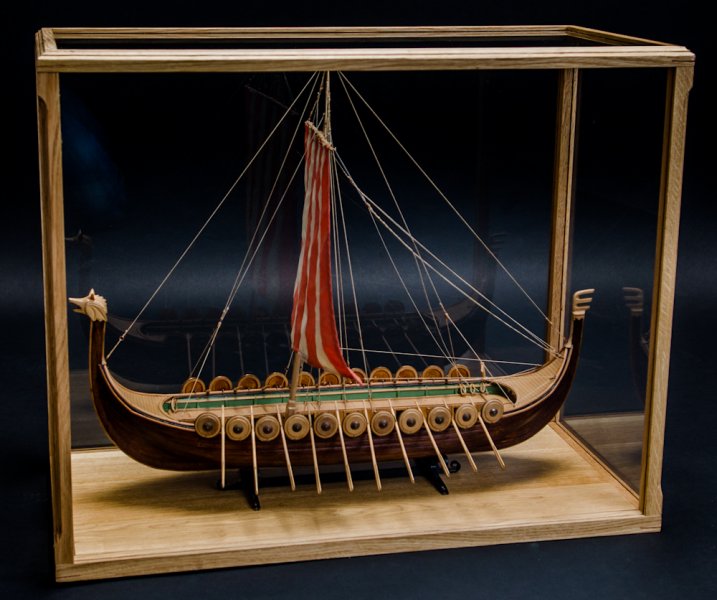
Vikings are usually associated with the coastal regions of Norway, Sweden and Finland.  For that matter, I suspect many people simply think of coastal Norway as the place where the Vikings hopped on ships to do their plundering and pillaging of surrounding coastal regions.  Well, the Estonian Vikings play an important role in the history of the whole.

According to the Nordic Estonia site, the people from the largest Estonian island were known as Oeselians and were referred to in Norse Icelandic sagas as "vikings from Estonia" or  "Víkingr frá Esthland."  The piratica was a warship that featured a high prow with a dragon or snake head and a four-sided sail and is featured on the postage stamps used to pay the postage to mail this letter.

Ice in India

The places we can go and the things we will see might include visiting an ice house in, of all places, Calcutta, India, in 1861.  The folded letter shown above was mailed in Boston late January and arrived in London on February 6th.  It took another month to find its way to Calcutta.

The postage paid was five cents, represented by the brown postage stamp at top right and the remainder of the postage was paid by Caleb Ladd.  This is a case where the "open mail" provision of the United States / United Kingdom agreement was used.  The sender in the US only had to pay for the portion of the postage that was under the US Postal Office's control.  In this case, the letter entered the control of the British Post at the point it boarded the ship named "America" in Boston.  This meant Mr. Ladd had to pay the postage for all of the services from the point the letter boarded the boat in Boston to the point it was placed in his hand.  

engraving from the Graphic, Nov 1880

Caleb Ladd was the agent for the Tudor Ice Company from 1837 into the 1860s, when the ice trade reached its peak.  Ice was harvested from Massachusetts and shipped to India.  One of the first such ships sent by Tudor started with 180 tons of ice and arrived with only 100 tons (due to melting, of course), but the trip was still quite profitable.

This interesting article by David Dickason discusses some of the reasons for the decline of this trade in the late 1860s into the 1870s.  Among the causes was the a trend towards less severe winters in the areas where ice was being harvested.  Another direct contributor to this decline, cited by Dickason, was the introduction of technologies that could manufacture ice.  Why ship a bunch of blocks of ice when you have a piece of equipment that will make what you want? 

The decline was precipitous enough that the ice house referenced on this cover was dismantled in 1882, according to the Calcutta Review.

If you would like a more complete summary of ice houses in India, this link to the Heritage Lab might be of interest to you.

--------------

There you are!  A few examples of how postal history artifacts can lead us to interesting stories that have to do with the people, places and times that surrounds each item.  Certainly, the process of collecting ice from a lake not far from Boston and sending it to Calcutta is not necessary to discuss the postal history of the letter to India.  It doesn't really matter horribly much that we know anything about Estonian Vikings or camel riders in Khartoum or Genoans in Lima, Peru if we only want to look at the postal history aspects of the first three items.  We can still look at these pieces of old mail and learn about the postage rates, regulations and processes without these extra pieces of information.

But, when we do take the time to explore the stories outside and around postal history, we do two things:

  1. We add color, depth, and interest to each item.  Suddenly, a person does not have to be deeply interested in postage rates, or things like - "which ship did this sail on?" to be interested.  Instead, the postal details are a part of a larger, more interesting whole that can attract more people to the story.
  2. We provide evidence that can support our observations regarding the postal history particulars of a given item.  For example, it makes sense that the Peruvian consul in San Francisco might be willing to overpay the postage once in a while because it is a convenience. Because, surely one letter out of many is not going to be that much of a financial strain because it is a cost of doing business.

Oh, the places you can go when you pick up a piece of postal history and start to explore it.

Thank you for joining me for Postal History Sunday.  Have a good remainder of your day and a wonderful week to come!

Saturday, September 17, 2022

Soothing Sounds


In the last few months of her life, Hobnob seemed to take more solace with sitting in a paper sack than she did for most of her life up to that point.  She didn't need to be there for long, but when she wanted to be in a sack, she would push it along the floor until she could manage to get it to open up enough so she could crawl in.

I have noticed that Bree has decided making paper sacks make that "paper sack sound" when you step on them to be a good thing now that Hobnob is gone.  I'm not sure if Bree finds that to be soothing, but it's been a thing.

As we approached the new school year (now a couple of weeks prior to this blog posting) Tammy spent increasing amounts of time on the computer, trying to get things ready.  The end of August and beginning of September has traditionally been a stressful time at the Genuine Faux Farm - in large part because it is important for Tammy to start the school year off on the right foot.  And, it also means that the farm gets less and less of her attention - even if she would like to get out there and do some things!

In an effort to help, I created a nice long playlist of songs that I knew Tammy likes.  But not just songs she likes - songs that can be soothing, that might aid concentration, and, perhaps, help us find success in the work we are doing.

It's not a paper sack, but it seems to work for both of us.  So, here are some soothing sounds from that play list.  Maybe you will enjoy a few.  And, yes, this list goes to eleven.

Love is Not the Only Thing - Mark Heard

Lights - Journey

The Color of Dreams - Derry Daugherty

Sing in Portuguese - Randy Stonehill

The Sound of Silence - Disturbed

Benedictus - 2Cellos

The Dreams of Children - Shadowfax

View of the Islands - Iona

I Radio Heaven - Over the Rhine

Dixie Storms - Lone Justice

A Quiet Little Place - 77's

Have a good Saturday - and may you find music that soothes you as well.

Friday, September 16, 2022

Artistry in Nature

Tammy and I were talking together and solving all of the world problems, something the two of us are particularly good at - especially if we are not forced to actually test our solutions in the laboratory that is real life.  But, we do come up with some worthwhile ideas between the two of us.  Sometimes they are things we can actually implement - and sometimes they are ideas that we think might be interesting for others to try.

During our "Brief Escape" that was (gasp) actually a month ago now, we made lots of time to talk about things we don't often discuss during our often full days at the farm and with our off-farm jobs.  One of those topics was inspired by our observations at a Mississippi River overlook.  We were happily looking at the river AND enjoying seeing a couple of birds we don't see at the farm AND observing all of the insect life on some nearby goldenrod.  We also observed a family (with three-generations represented) piling out of their vehicle for the obligatory family photo op.  

Then they piled back in and drove away.

As we watched, we saw the phones coming back out as the kids found their seats - and we both thought it was a missed opportunity.

After all, if people are going to have "phones" attached to them all the time, perhaps we should be finding ways to encourage their use to learn, explore and interact.  What if the parents had challenged the kids to spend fifteen minutes and take different pictures, record different sounds or create a mini-video talking about what they were seeing?  What if, this time around, they all focused on finding SMALL things or looking at things UP CLOSE.  Like the rind of the Orangeglow watermelon I took the picture of (and that is shown at the top of this blog)?

What if - instead of texting friends constantly or watching Youtube, parents helped to set a theme to explore - using those phones as a tool for that exploration.

Today, let's explore color!  Take pictures of the sky during a sunset.  Tomorrow, let's explore textures.  The next day, let's find a new (to us) living creature and take a picture or video it.  Take the time to try to use internet resources to identify what it is and what it eats.  

If that phone has to be ubiquitous, then let's find ways to make it a more positive part of our world.  In fact, it could help us to connect to that world even more.

Tammy and I do not typically use our phones in this way, but we do use our digital camera when we go different places and sometimes when we walk about the farm.  Simply holding the camera in my hand encourages me to slow down and look for different things and different ways of LOOKING AT things.  And when I actually come up with a decent photo or recording, I am often encouraged to learn more about what I am seeing.

Then, after I see some success, I find that I get interested in exploring more and learning more.  Suddenly, I feel like I want to share some of these neat things with others.  And, it just happens we have a farm blog that allows me to do just that.

You know what?  It doesn't matter if the person wielding the phone is a kid or not.  I think we could all benefit from exercising our curiosity for the world around us a bit more.  Get out there with your phones, or cameras, or.... heck, maybe just your eyes and ears.  

Take a look around.  Cultivate your senses of awe and wonder.

And check out the Rudbeckia triloba that is growing wild out by the winter squash.  They're looking pretty good this year!

And if you want to identify some of your plant pictures, you can try using Pl@ntNet Identify or  Candide.  They both appeared to agree on this identification for the photo shown below.  Or, if you really want to use your phone, check out this list.


Thursday, September 15, 2022

Keep On Blooming!


Every year we do as much as we are able to extend the bloom season of flowers on the farm.  We make it a goal to provide food for pollinators and other beneficial critters for as much as the season as we are able. 

Why?

Well, it seems obvious to us that the surrounding fields of corn and soybean are less than ideal for most of these critters.  There is minimal diversity in habitat in those fields and a very limited bloom season (therefore limited food resources).  When you add the application of chemicals, these fields become even less attractive for diverse life.

We figure if we create attractive habitat on our farm for as much as the season as possible, there will be no reason for our friends to leave us and travel into dangerous territory.

Late March to April
We do have a very healthy dandelion population each year at the Genuine Faux Farm and we are perfectly happy to let them bloom.  I realize there are people out there who are horrified by this.  But, in the grand scheme of things, dandelions are actually not a big deal from a weed perspective.  They have deep roots that pull up micronutrients for other plants to use and the bloom period attracts all sorts of pollinators at a point in time when those who have fruit trees would really like to have them around.

Every Fall about this time, we play with the idea of getting large numbers of crocus and daffodil bulbs with the intent of 'naturalizing' an area with them.  Why don't we?  Well, our plate is usually too full and we just can't find the time to do it.  And, we're not always certain that the bulbs we would be getting would be clear of neonicotinoid insecticides and we just don't always have the time to research that issue.

When you add to that the possibility that those flowers may not be the most wonderful for our pollinators, we typically fall back on our dandelions and our fruit bearing trees and shrubs. 

We are pretty happy to have a number of spring anemone and pasque flowers on the farm.  And we recognize that non-showy flowers are actually very good for pollinators.  For example, Crazy Maurice, the Weeping Willow has numerous small flowers that pollinators are enjoying.


May busts out all over
The month of May heralds a nice mix of flowers, many of which show up in some of our intentionally 'wild' places.  For example, we have some yellow and purple Siberian iris that like to show off.  We've let them spread as they would like and we're happy that they seem to think our place is an ok habitat for them.

And, of course, the German bearded iris start to show on our farm in May.  I have to admit that they seem to take center stage with our picture taking, much to the chagrin of so many flowers appearing on the landscape.  In fact, the iris don't usually show much attractive qualities for the critters we desperately want. 


Clover typically gets going in May and you'll often see painted daisies, anemone, creeping phlox, peonies and other neat flowers showing off.  In fact, we start getting so many flowers that Tammy and I have a difficult time differentiating between May and ...

June - bugs and blooms?
June on the farm is unfortunately known for the bugs that seem to like to snack on farmers at GFF.  The winds are typically not as strong - or at least not as consistent, so the gnats and other biting insects can get pretty thick.  It makes work difficult and it makes enjoying the flowers challenging.  And yet, we have to take it as a sign that there is some health in our ecosystem if there are insects that think we are food (I suppose).

The thing is - we're usually so bugged by the bugs that we don't have time to investigate the bugs we want.  And that bugs me.  You're welcome.

We've got perennial geraniums covered in blooms early in the month and by the end of the month many of our annuals are starting to consider showing what they can do.  Though, it's really the next couple of months that we usually have more annual flower activity.

Clover really start their summer bloom period in June and we do take great pride in having a lot of clover on the farm.  And the great thing about clover is that it will bloom most of the growing season as long as there is enough moisture.  You might find clover flowers drying off in drought conditions.

July is full of smiles
Our big flower highlights tend to be day lilies in July and into early August.  Just as we have noticed with the German bearded iris, these flowers do not tend to be the focus of insect activity.  We suspect that the highly hybridized plants have been selected for so long with consideration for how attractive the flowers are to humans that much of the attractiveness to insect species has been bred out of them. 


And this is why we continue to promote clover on the farm and why we're happy to have ditches with a bunch of ditch daylilies.  Daisies and coneflowers start to appear and many of our perennial spices are begging to show more flowers in late July.

The annual flowers start to carry a heavier load for feeding the pollinators on our far in July too.  The sunflowers on our farm are amazingly good for a fairly wide range of beneficial insects.  Zinnias, marigolds, borage and phacelia do a fine job for us.  And, if we get a nice batch of buckwheat in the ground, we can have an amazing bloom the bees will love.

August sunshine
It feels to me like yellow is the color for August flowers.  The helianthus and heliopsis, along with rudebekia can really put on a show.  And, they're all attractive to our insect workers.  The zinnia, marigold, four o'clock, salvia and other flowers continue to flower and the hyssop, oregano and thyme are often covered with smaller bees and bumblebees.

Then there is the under-rated goldenrod.  Many people still mistakenly believe goldenrod is one of the wildflowers responsible for high pollen counts that make people with allergies miserable as August progresses.  However, goldenrod pollen is too heavy to really cause the issue.  You can blame most of your sneezing on ragweed in Iowa.  Pollen for those plants is quite able to be airborn and travel quite some distance.

September - Yellow turning to blues and whites
There are still some clover blooming in September, though it has a good deal to do with late Summer rain amounts.  This year (2022) we are seeing most of the goldenrod bloom and some excellent helianthus and sneezeweed around our farm.  But, perennials such as sage and thousand flower aster typically begin to show off in September.  Other than the tail end of hibiscus blooming season, it feels like plants that peak at this time focus on LOTS of smaller flowers.

The hummingbirds we often see on the farm check out the hostas, zinnias, phlox and Rob's hat.  The butterflies can be seen in the marigolds, zinnias, clover and other flowers. 

But, perhaps the hardest part for us to remember this season is that many of our insect friends simply need a little shelter.  If the Fall is dry, plants that aren't irrigated are growing very little.  That means each time we do some 'clean up' around the farm, the plants will not fill in nearly so quickly.  In short, that means we sometimes need to consider NOT cleaning something up so there are still good places for our katydids and coneheads to hang out, places for our ladybugs to be and our frogs to stay out of the sun when they want to.  

The good news?  2022 has been a good bloom year on our farm.  We see evidence that many of the beneficial critters are thriving as much as we can expect given the limitations of our surroundings.  And as we travel through September, we're going to keep planning ways to make the next year even better. 

------------------

This post was originally shared on the blog Sept 17, 2017 and is this week's Throwback post.  It has been significantly edited to update it, photos have been added and various typos corrected.

Have a good day all!

Wednesday, September 14, 2022

What's A Cuke Worth?

In September of 2010, I took the time to write a blog that looked at the value of one of the many vegetable crops we were raising that year.  There were a few motivations for doing this at the time.  First, I would frequently assess whether we were growing the right amount of any given crop - and one of the ways to do that was to figure out if a crop was contributing financially to the farm in some fashion.  But, I also realized that boiling things down to financial numbers was both more complex than it seemed and it was not the only way to assess what we were growing.

I thought it might be interesting to look at what I wrote then and modify with a few more years of experience and see where it landed.  For full disclosure, we actually removed cucumbers from our production list this season - and we might see a reason for that as we go.

The first thing I often like to do is look at the value of the crop produced.  And, when I say value, we need to remember it isn't always about sales.  For example, I might look at buckwheat and see the value in its ability to suppress perennial weeds that have harmed other crops.  Or, I might add value for a basil crop for its ability to attract pollinators when allowed to bloom.  And I've been known to grow more green beans than we need because it can help with Colorado Potato Beetles in our potato crops.

No matter how I go about it, the process of exploring value is what is important here.  It isn't necessarily important that you uncover everything as long as you feel comfortable that you have enough information to make useful decisions. 

Our numbers from 2010 at the beginning of September for cucumber production were as follows:
  • 4200 cucumbers went to the CSA
  • 50 were sold at farmers market
  • 400 were sold to other outlets
  • 1400 were donated to various locations
  • 1100 were used on the farm to feed birds, for events, for our own (or our family's) consumption or for promotional usages, etc

That is 7150 cucumbers produced, harvested and used in some fashion or another.  To clarify, our main business in 2010 was the CSA Farm Shares for about 120 members.  Deliveries were done at farmers markets, so we tried to maintain a front table with some extra produce.  One of the issues with that approach was that we only had certain types of produce at the table when we had fulfilled our commitment to the CSA.  That means we only had cucumbers when they were at top production - when every other vendor had cucumbers.  This is not exactly the best way to sell cucumbers at farmers market because you typically make your best sales on the 'edges' of the season!

We usually didn't have much time to pursue other outlets, so we sold what we could that way and we were quite free with our donations to the local food bank.

When we tried to assign values, we used these numbers:

  • 75 cents at market
  • 50 cent values to cucumbers given to CSA or donated. We figure in these cases that there is a discount because of the ability to move bulk amounts.
  • We sell to other outlets in bulk at 40 cents.
  • We assign 5 cent value to things used on the farm. There is still value - even if it is used to feed birds (or even compost).

That gives us a value so far of $2900 for this one crop.
This works out to about $4.32 per row foot assigned to cucumbers.

So, how do I feel about those values now?

We can't change the price we charged at farmer's market, so we won't discuss that one - and the bulk price to other outlets is also a constant.  Other than that, the rest was an assigned value based on various estimates.  

The first question, of course, is why did I go with higher values for CSA and donated crop rather than bulk price?  Most years, the CSA value for cucumbers would be lower, but at the point I wrote the 2010 blog, cucumbers had taken a higher than usual proportion of the share volume because some of the other crops were slow due to weather issues.  By the time we reached the end of the year, this value would be much lower because our Fall crops did very well (with the help of a new high tunnel!).

Backing up a little bit, there are two ways I could calculate CSA values for a given crop.  One would be to take the entire income from CSA shares for the year and assign value based on the portion of those shares represented by each crop.  But, that assumes each crop is appreciated in the same way by the customers (hint - they are not). 

The other option might be to consider it another bulk purchase and simply assign that price.  The problem with that is I run into the danger of over-valuing each crop and making the total value actually EXCEED the realized income from the CSA.

In the end, I simply recognize the weaknesses of each approach and go with an informal hybrid of the two.  It is just not worth the time and effort it would take to come up with an exact formulation.  

Why?  There is a point where the returns for the effort of determining exact values are negative.  We just need to get things close enough so we can get a handle on what we are doing and inform future decisions.

So, if I did this valuation process for 2010 now, with all of the data for the year and a few more years experience - what would I do?

I would start with the bulk price for both the CSA and food donations and I'd probably stop there.  I only need some reasonable base values of the crops I am analyzing each season to make comparisons.  I never had the time or energy (or need) to assess every single crop - which makes sense when you have forty or more crops each season.

And, I think I might argue that the 5 cents per cucumber for the rest works out well enough.  Though my gut tells me I am underselling some of the benefits that come from feeding the birds, etc.  My gut also tells me that I am overvaluing these things because I can't readily change them into cash.

But, again THAT IS NOT THE POINT.  If we consistently use the same valuation system, we do not need to make it balance exactly with actual cash.  What we need is to value things for the purpose of comparison so we can evaluate how we are doing with our crop.  Instead of using dollars and cents, we could make up a new unit... call it "whatsits" or "thingies" or something else if it makes you feel better.  It's a unit that we can use on our farm.  Maybe I'll call them GFFs?

After adjustments, our value for the cucumbers in 2010 might be closer to $2500 (or 2500 GFFs)- which would still have been a reasonable return.

Is there other value we missed?

It is a common mistake to miss some intangible benefits that come with a given crop or practice.  The reason for that is that we have a hard time figuring out a monetary value to assign these things.  And sometimes we do it a disservice when we try.

For example, it works well to plant multiple successions of cucumbers AND they can get an early start (or late finish) in high tunnels.  Consistent and long production of a quality crop brings value.  We might be able to assign numbers to that if we really wanted to.  Remember how I mentioned the production "at the edges?"  If you have quality product in the early or late stage of the typical season, it usually can bring a better price - so it can have more value.

So, why don't I use those numbers?  

First, time is valuable too.  So, I was never convinced I needed to do that for this particular crop - though I did try it with lettuce (for example).  And second, I figured edge of the season value averaged out with prime season value.  The end results were only a few dollars (or GFF units) different, so why should I get that detailed?

Here's another example of value we might consider:

Cucumbers mature in 50 to 70 days depending on the variety.  Most melons take 80 or more days to mature.  Many winter squash take even longer.  And, squash bees are the best pollinator for these crops.  

So tell me, doesn't it make sense to get an early planting of cucumbers going to start feeding those squash bees so they are present when the longer season crops need them?  And maybe additional successions of cucumber (or summer squash and zucchini) might help to keep those populations healthy and moving about the farm for future production?

How do you put a value on that?  It's hard enough to actually establish whether or not there is measurable differences in pollination - so there isn't a good way to establish a value easily.  But that doesn't mean you shouldn't consider it. 

So, maybe $2900 (2900 GFFs) is still a reasonable estimate for that 2010 crop?

So, what does this crop cost us?

In the 2010 version of this blog, I proceeded to work on the costs for our cucumber crop:

  • Seed cost - $62
  • We direct seeded these into the ground, so planting cost was low
  • Irrigation costs depend on the year. 2010 was wet, so this was minimal
  • Labor included seeding, cultivation, weeding and harvest.
  • Labor for cleaning, packing and distribution.
  • Overhead costs, such as fuel for delivery and equipment are split between so many crops that this is not a huge factor.
  • The highest cost is labor. 

Estimate of person hour labor spent on this crop = 160 hours.
Assign a value of $10/hour and you have a labor cost of $1600

In 2010, I calculated a net value of $1238 from the crop, not including overhead expense splits.

How have things changed for cucumber production costs?

The biggest change in process over the years was that we moved from direct seeding cucumbers to transplanting them.  We made that move because it increased the reliability of each succession.  After all, there is value in being able to consistently produce a crop (another intangible we often fail to measure).

Otherwise, labor is still the biggest expense.  And, $10/hour doesn't represent the present day labor cost either.  Either way, it is safe to say that the expense per row foot for growing cucumbers has gone up since 2010, if only because the rate per hour is higher.

The price we can get for cucumbers hasn't exactly changed much since 2010 and the cost has gone up.  Our $1200 "profit" on cucumbers would look more like $500 in 2022.  But that assumes we have two things:

  1. sufficient labor to grow and harvest the crop
  2. sufficient demand for the crop in the markets we have available to us

Well, once we hit 2020 (and the pandemic) we no longer had the access to labor we once had.  For that matter, we lost most of the demand too.  Combine all of that with a decreased value over cost per row foot and...

the farm stops growing the crop.

What did we learn over time?

Over a period of ten growing seasons (2010 to 2019) we developed a fairly consistent production system for cucumbers that routinely resulted in quality product in a volume that covered all of the demand we were willing to pursue.  We were also able to devise a system where the failure of one succession rarely resulted in a drop in income for this crop..

In short, what we did worked.  And our analysis of the crop informed the small adjustments we would make from year to year as circumstances changed.

We also determined that investing additional capital into a labor saving piece of equipment (like some version of this) was not going to fit our operation or the future plans for our farm.  We considered, at one point, adding trellising to our cucumber operation to reduce harvest labor costs.  But, we found that would only move labor to a different point in time where we wouldn't have enough of that resource available.

We did make adjustments to our cucumber succession timing and we changed the composition of the varieties we grew in each succession.  As it was, we came to recognize that not all cucumbers could be valued equally.

But that, as they say, is another story for another time.  If you read this far and found some of this useful or interesting, excellent.  If you found it amusing - ok, I can accept that too.  If you skipped to the end to find out how this blog was going to end.  Here you go.

And they all lived happily ever after.

Tuesday, September 13, 2022

Why - Two K!


As I was looking to see what partially finished blogs I might feel like completing this week I noticed something that surprised me.  You see, there is this little pop-up in blogger that tells you how many posts you have and I just happened to look at it as I was looking at the list of blogs that were in draft status. 

Here's what I saw as I looked:


As of Sunday, the Genuinely Faux blog had 1,998 blog entries published.  That was when I suddenly realized that I was only two entries away from my 2000th blog post.  

Are you kidding me?!?  How in the world did THAT happen?

Oh.  I suppose the big blogging blitz I started when the pandemic was really taking hold might have something to do with it.

I celebrated 1000 posts on October 13, 2017 with a post that highlighted some entertaining words from many of those 1000 entries.  I looked at it and I thought to myself, "Great.... now I have to do some sort of celebratory blog for 2000 posts.  When am I going to find time and energy to do all of that work and figure out what things I should highlight?"

That's when I realized I was going about this all wrong.

We're supposed to celebrate the round numbers, not make work out of them.  Well, actually, we should celebrate any number.  Each time we succeed at something... anything... we should allow ourselves at least a moment to feel a little pleasure that we have accomplished some task.  The round numbers (like 2000) remind us to take a moment to recognize the aggregate of something we have done.  To take some pleasure in the resiliency, tenacity, skill and good fortune that allowed us to accomplish some sort of thing over and over again.

We should recognize and celebrate things like "live another decade together as a married couple" (congratulations Mom & Dad!).  Or to a lesser extent, reaching the number 400 as we were harvesting Thelma Sanders acorn squash on Sunday.

And perhaps reaching 2000 blog entries on this blog today is worth some feelings of accomplishment.

We can celebrate things in many ways.  For example, I took that really neat picture that opened up this blog.  The skies had an almost surreal look to them for most of the day and I just had to capture that image with the bright red roof as contrast.  I celebrated a beautiful day where we were accomplishing good things by capturing a beautiful image.

And our oak friends were painting the sky yet again, giving us contrast so we could better see the depth of the blues and the textures of the clouds.  So, I celebrated that moment as well.

Once I reminded myself that 2000 posts should not mean having to create a blog post I don't feel like creating right now, I suddenly felt much more like celebrating.  I also realized exactly how valuable it can be to let yourself feel a sense of accomplishment.  And, it really doesn't matter how small that accomplishment might be.  It is healthy and good for your well-being to have a sense of accomplishment in your life - whether it is something small (I took a picture on a beautiful day) or a decent-sized accomplishment (2000 blog posts) or something magnificent (like 60 years of marriage).

Here's hoping each of you find at least one thing in your life to celebrate today!

Monday, September 12, 2022

Weekend Warrior...er...Farmer


As the daylight hours become less and less each day, the amount of time I can spend outside to do farm work almost disappears.  With a full-time job with Pesticide Action Network, I find myself working for them during the best hours of the day for things like... oh.... harvesting squash.

The net result, of course, is that the weekends are are now made for things like... you guessed it... harvesting squash.

So, guess what Tammy and I did on Sunday?

What? How did you know?

Can guess how many pounds of squash are in these tubs?

I mean, no - really?  How did you guess?  Did someone tell you?

I did?!?  When?!?

You mean you didn't fall for the double misdirection ploy where I actually tell you what I did by implying that I needed to do it on the weekend and then hoping you would think it couldn't be that obvious and you would guess something else? 

Oh, you noticed the pictures....  Never mind.  I guess I'm not as clever as I thought.

Or maybe I am tired from harvesting squash.
 

Ok.  Since you all outwitted me and guessed that we harvested squash on Sunday, maybe you can show me how clever you really are by guessing how many pounds of squash are in that SECOND picture -  the one with all of the green tubs stacked up in our Truck Barn?

There are 18 containers.  Seventeen are full of Thelma Sanders Acorn Squash (like those shown above) and the 18th is full of Burgess Buttercup.

None of the pumpkins or watermelon are in those containers.  But, I can tell you that the largest pie pumpkin weighed in at 31.8 pounds.  

Feel free to put your guesses in comments here or as replies to our social media posts.  Or you can send us an email using the from at the right of our blog.

Have a good day all!

Sunday, September 11, 2022

Return to Mantova

Welcome to Postal History Sunday, featured weekly on the Genuine Faux Farm blog and the GFF Postal History blog.  If you take this link, you can view every edition of Postal History Sunday, starting with this one (the most recent always shows up at the top). 

The city of Mantova (Mantua) has captured my imagination enough to encourage me to pick up items addressed to or from that location more than any other Italian city.  In fact, postal history to this city was the focus of a Postal History Sunday a little over one year ago.  And, we're actually going to start with one of the two items featured in that post.

My goal this time around is to illustrate many of the ways I like to look at cover and the different directions this takes the overall story.  We'll start with this item mailed in Espalion, France on November 19, 1855.  The letter had five 20 centime postage stamps representing 1 franc of postage paid.  As of July 1, 1851, the rate for mailing a piece of letter mail, weighing no more than 7.5 grams, to Mantova via Sardinia or Switzerland was 1 franc (100 centimes).  So, we've got ourselves a properly paid letter here.

The Address Panel

An interesting thing about letter mail is that there can be a very wide variety in the way the letter is addressed.  The combination of language differences, handwriting differences, and postal regulations/procedures can certainly make interpreting what is there a bit more difficult.  The address panel for the envelope shown above reads as follows:

"Italie  Monsieur Monsieur L Sartoretti avocat  A' Mantoue  Royaume Lombardo Venitieu, par Clermont Lyon et Turin"

There is a wealth of information here - as well as some interesting points of discussion.

"Italie" and "Royaume Lombardo Venitieu"

Even though Lombardy and Venetia were under the control of Austria, people clearly still identified these regions as part of Italy.  In fact, the region of Lombardy and Venetia was semi-autonomous and was identified as a "kingdom" (royaume) though it was under the control of Austria's emperor Franz Josef I from 1849 to 1859 (until 1866 for Venetia).


The borders shown above in a period map illustrate where Mantova is - located in the southeast portion of Lombardy. The the south is the Italian state of Parma and Romagne, which was part of the Papal States at the time this letter was sent.

"Monsieur Monsieur L Sartoretti avocat"

I have noticed the double honorific "Monsieur" on many business letters in Europe during this period.  While I have not been able to verify this (in part because I don't have enough motivation to hunt it down), this could be a bit like saying "Honored Sir, Mr. L Sartoretti."  This double honorific does not seem to be consistently applied during the 1850s and 1860s and it seems to decline in use as mail services become more available to a larger portion of the population.

Mr. Louis Sartoretti was a lawyer (avocat) in Mantova who apparently kept his correspondences, which was normal as these served as records for his business.  At some point in time, the covers from these records were made available to collectors since I have not one, but two envelopes that had been sent to him in the 1850s.

"par Clermont Lyon et Turin"

Not only was there addressing information to show the postal services who the letter was to and where they were located, the writer even included directions as to how they intended the letter to travel.  We'll see how that worked out later on!

"A' Mantoue"

I was introduced to this city as "Mantua" which is the Latin or Lombard name.  So, to those of us in the US, it would be "at Mantua."  The Italian language references it as "Mantova" and the French - "Mantoue."  A similar pattern can be seen for the Italian city of Padova/Padua/Padoue.  This is just another variable we have to deal with as we read a cover.  Different languages have different spellings and pronunciations for various cities and countries.  If you add the possibility that the person writing it doesn't know how to spell well, things can get interesting fast!

How it Got There

The markings on this cover are as follows:

Espalion Nov 19, 1855
Clermont-Ferrand Nov 20
Clermont A Paris Nov 20
Lyon Nov 21
Lyon A Marseille Nov 21
Marseille Nov 22
Mantova Nov 27

It seems that the routing indicated by the writer was followed - at least as far as going through Clermont and Lyon are concerned.  There is no marking to confirm Turin, but, that would have been the most common route after crossing the Alps for a destination in Lombardy from southern France (Marseille).  So, it is highly likely the entire route was followed as suggested.

Another option, would have been to travel next to the sea and go up from Genoa to Turin.  But, there is no evidence that can support that on the letter.  Typically dockets that gave directions were followed.  If no directions were given, postal services would have identified default routes that mail between nations would take.  They would deviate from the default if directional dockets were present OR if there were obstructions, such as weather or armed conflict, that would temporarily change the route to an alternative.

So, let's take a look at where these markings say the letter traveled.  To see a larger version, click on the map.

At the time this letter was written, there was no rail service in or near Espalion.  However, there WAS a rail terminus in Clermont-Ferrand that connected to one of the very rare rail lines that did not go only to Paris.  France was rapidly developing a 'star configuration' of rail lines with Paris at the center.  Often, if someone wanted to travel from west to east in southern France, they were often left with only the option to go via Paris!

This letter likely traveled by mail coach to Clermont-Ferrand, where they had a brand new train station.  One has to wonder if there was some amount of excitement that this option for mail now existed that might have caused the writer to be so explicit in these routing directions.

The letter was able to travel by train from Clermont-Ferrand to Lyon and then by train to Marseille.  From Marseille, it was back to the mail coach to go northeast to Gap and to cross the alps until meeting up with a railway spur west of Turin.

Why aren't their postmarks for points between Marseille and Mantova?

This is a great question.  After all, wouldn't it be neat to be able to trace this letter even more accurately?  We assume it was carried through Turin (Torino), so why isn't there a marking for that city here?

It turns out Marseille and Mantova were exchange post offices. Exchange offices were post offices in each country that were identified as being able to exchange mail between those two nations.  Marseille and Mantova could exchange mail, which essentially means they would place the last marking on the letter prior to putting it into the mailbag (or other container), not to be opened until reaching the exchange office in the destination country.  

So, that's why there aren't any markings for places in between the two.  The letter was sealed up in a mailbag in Marseille.  The mailbag was marked to be for Mantova.  That meant it would not be opened until the clerk in the Mantova post office received it.


Another Letter to Louis Sartoretti, avocat

This is another envelope from the correspondence saved by our Mantovan lawyer friend.  Since, neither of the items in my collection have contents or provide any indication as to who sent these pieces of letter mail, I am not able to determine if these were private or business correspondence.  However, odds are good that they are the latter.  

This address panel reads:

"Monsieur Louis Sartoretti avocat a Mantoue, Daun(?) Lombardie-Venitie (italie)"

If you look at the prior envelope, you might notice a number of differences.  First, there is only one use of the honorific "Monsieur."  Second, the sender did not see fit to provide any postal instructions for directing this letter.

And third, there is the mysterious "Daun" that follows Mantoue.  Of course, it is possible I am reading the letters incorrectly.  It could be a shorthand reference to something else.  It is also possible that the writer misspelled something.   At this point in time, I have no idea.  It appears to have some sort of significance in naming a region - but I cannot be sure at this time.

So, what was I saying about handwriting, mispellings and different languages sometimes making it hard to decipher an address?

Um... You Need to Pay More than That!

As we mentioned in the prior post, the cost to mail an item through Sardinia to Lombardy from France was 1 franc (100 centimes).  This rate applied for pre-paid mail as well as unpaid mail.  However, there was no provision to provide credit for partially paid mail.  Therefore, part paid mail was treated as unpaid at the destination.

This item bears only a 20 centime stamp, clearly not enough to do the job.  The hand-written "timbres insuffisant" can be translated to "insufficiently stamped."  That, and the absence of a "P.D." marking made it clear that this item was not pre-paid.  You might also notice that the front of the cover does not have a big, bold "X" like the first item had.  That "X" told the carrier that no postage was due from the recipient.  Without the "X" the carrier knew to look for how much they were to collect before handing over the letter.

In this case,Monsieur Sartoretti was forced to pay 25 kreuzer - the full price that it would cost for him to mail a letter to Montpellier, France - just to receive this letter and find out what was in it!

The scribbles shown above actually DO mean something.  As most people would guess, the "25" at lower right is the due marking, instructing the carrier or clerk to collect 25 kreuzer to pay for the mail services from France to Lombardy via Sardinia.  The smudged scribble on the left reads "16/9."   

Yeah.  I know.  It seems like some sort of voodoo magic when I tell you a scrawl on one of these old envelopes means something.  It is possible that many of you saw that and figured someone was trying to draw a picture of a bird in a tree and gave it up as a bad job.  This is one of those times you might have to trust that I know what I'm doing.  Give it time.  After a while, you'll start seeing scribbles in your sleep.  Soon after that you should be able to see what I am seeing.

We'll all have to decide at that point whether that is a good or a bad thing.

The amount of postage collected was 25 kreuzer, of which 9 kreuzer covered the Austrian postage (the lower number).  The remaining 16 kreuzer needed to be given to the French and Sardinian mail services.  Of those 16 kreuzer, the French received 12 kr and the Sardinians 4 kr.   

As for the 20 centime stamp?  Well, it really did not do anything, in the end.  This was not an uncommon occurrence at the time.  Postage stamps were first introduced in France in 1849 and the idea of full prepayment for letters and using stamps to represent that payment was still kind of new. 

Simply put, people didn't always understand what they were supposed to do.

Getting from Here to There

The markings on this cover:

Montpellier Feb 9, 1857
Marseille Feb 10
Gap Feb 11
Mantova Feb 13
Arrta Di Notte (Night Arrival)

The travel time for this letter was much shorter than it was for the other letter we show at the top of the post.  However, the square marking on the back (Arrta di Notte) indicated that the letter did arrive during the night time hours.  So, we have to ask the question - was it very late on the 13th that it arrived or very early on the 13th?  At the present time, I do not know.

So, this could have arrived one day faster or almost two days faster than the last item.

Here is the map from the prior post with a small addition showing the route from Montpellier to the rail line from Lyon to Marseille.  This section was covered by a railway at the time this letter was posted in 1857 (Montpellier to Nimes should have been completed by the end of 1856).

Once in Marseille, this piece of mail likely followed the same route that the first letter did, heading up to Gap and then Besancon - on the way to Turin.  Only, this time, we have evidence that it went this way because there is a postal marking for Gap.  Most of this part of the route would still have been by mail coach until it reached the rail spur west of Turin.

And this time, Gap and Mantova served as the exchange offices.

Shown above is a portion of an 1855 map that clearly showed the rail lines running from Turin to Milan then Verona and a spur down to Mantua.  While Italy was behind much of Europe for rail development, these major northern cities were connected.

And there you are, two letters mailed to the same lawyer in Mantova about a year and a half apart.  Similar routes at the same postage rate - but with enough differences that we can tell very different stories with each of them.

In recognition of people with different levels of understanding

I am always hopeful that I can write Postal History Sunday in a way that all levels of interest in postal history might have a chance to read, understand and enjoy what is shared here.  Obviously, I don't expect any of you to take a test now that we are at this point in the blog - that has never been the point of this.  But... I also want each of you to feel you have an opportunity to understand what is written here.  

Sometimes, I try to remind you of concepts and terms in the middle of the description, but I know that can get tedious for the reader at times.  This week, I am going to do something different.  Let's see how it works!

1. How did the postal clerk or carrier know a letter was fully prepaid?  In the case of our first letter, there was a big bold "X" on the front.  This Postal History Sunday (PHS) shows you other ways payment was indicated on a letter during this time period. 

2. If you feel as if it wasn't entirely fair that our lawyer friend had to pay so much for the 2nd letter, even though the sender put SOME postage on it, let me tell you it could get much worse.  This PHS entry gives you some examples of how this system worked and exactly how bad it could get!

3. And we talk about the directional dockets on the first letter shown today.  In this case, the directional dockets were part of the address.  This PHS shows us several more examples of dockets and might help you understand their purposes a bit better.

And, what if you're someone who already knows all of the terms and concepts?  Well, a while back I started a list of the different postal conventions France had with other nations.  Maybe some of this information will help you with your own search for information?

Thank you again for joining me as I share things that I do enjoy.  I hope you have a good remainder of your day and an excellent week to come!