Showing posts with label Throwback. Show all posts

Thursday, November 30, 2023

Too Long on the Farm


Way back in 2010, I wrote short blog that listed some of the odd things I noticed that reflected how much the farm influenced what I thought and said.  I actually took the time to update it in November of 2020 because there was soooo much more!

The kicker for these is that, while some seem a bit silly, they accurately reflect actual thoughts or are a faithful recording of actual conversations and states of being.  Laugh all you want, but there are plenty of grains of truth here.  If you nod and agree, you're probably a farmer - especially a farmer of a small-scale, diversified operation.

If you don't get it.  That's fine.  You haven't experienced it and that's ok.  You'll just have to trust me when I say:

You know you've worked on the farm too long when ...

  • ...you see the words "harrowing experience" for a Halloween advertising and you immediately think of a using a farming implement.  
  • ... even worse - you consider writing a blog about your latest farm "harrowing experience."
  • ...someone asks you how you are doing and you say, "the lettuce looks good."
  • ...and the fall-back answer is "well, the weather has been nice/difficult."
  • ...you know there are cobwebs on your hat from the Poultry Pavilion.  You've had people point it out to you.  And, you still haven't cleaned them off.
  • ...stains on the knees of your jeans do not mean your jeans are not clean - at least from your perspective.
  • ...you'd like to CHUCK the wood at the woodchuck.


  • ...after seeing that Sesame Street clip, you wonder if the woodchuck might actually CHUCK the wood back at you.
  • ... there is a small jolt of surprise when you meet someone who doesn't know what kale is...or kohlrabi, bok choi, etc (sorry, had to stick with k's).
  • ... but after doing this for many years, you are now surprised when someone DOES know what kohlrabi is!
  • ... there are six or more shovels in your possession and you wonder if you should buy a *few* more.
  • ... and even after changing how the farm works and those changes have reduced the number of people at the farm - you still think about adding shovels, rakes and other hand tools. 

  • ... you strain your neck trying to look behind farm buildings and in the tall grasses by farmsteads for tools and implements that might be useful to you.
  • ...and then after many years of farming, you start wondering how you can get rid of tools and implements that turned out not to be so useful and wonder if you should adjust and get some NEW tools that fit you better.
  • ... you wonder if people are straining their necks to look behind our buildings and in our tall grassy areas.
  • ... someone asks you what you've been doing lately and you are tempted to say, "Lemme esplain...no, there is too much.  Lemme sum up."  (Ok, this one is more of a thing for people who like Princess Bride than a thing for farming)
  • ... you bite your tongue and edit your comments so they are suitable for the general public when you hear a non-farmer's opinions about the weather.
  • ... you editorialize about the weather to whomever will listen (or appears to listen)
  • ... all of your analogies seem to refer to farming, vegetables, poultry or ... of course ... the weather.
  • Someone asks you what you did over the weekend and you tell them about the weather. 

  • ... most of the catalogs on the end table have pictures of drip irrigation, greenhouse heaters, chickens, tractors or tomatoes on them.
  • ... the back entry has twleve or more pairs of shoes/boots for two people.  
  • ... every shoe on the back entry seems to have poo on the bottom of it when you need one that does not.
  • ... someone asks if you like tomatoes and you reply with a diatribe about heirloom versus hybrids, the relative merits of trellising techniques and the yield levels of three of your favorite varieties.
  • ... a picture promoting a cross country team makes you wonder if you could convince them to train on the farm by either fetching the needed tools, taking the harvested produce back to the packing are or (worse yet) you consider hitching them up to plows or cultivators.

  • ... you appreciate Winter for the physical break it gives.
  • ... your picture of Summer when it is Winter is always so much better than what it ends up being.
  • ... your biggest gripe about Winter has less to do with cold, wind, snow or ice and MORE to do with the lack of daylight hours so you can do work outside.
  • ... the line between 'just enough farm talk' and 'too much farm talk' in casual conversation is too readily crossed.
  • ... the line between 'just enough farm talk' and 'too much farm talk' is rarely crossed because you have convinced yourself that no one really wants to hear farm talk.
  • ... you get surprised when people actually DO want you to talk about the farm.
  • ... your dreams include giant turkeys chasing you with a wheel hoe.

I'm sure I'll come up with more at some point in the future.  But for now, I hope you were mildly entertained.  Have a good day everyone!

Thursday, November 9, 2023

Farmer Delusional Syndrome Strikes Again!


November.  The daylight hours are fewer and the dark hours are longer.  But, the transitions from one to the other are frequently full of color and drama.  The moments of sunrise and sunset are enough to even lift the spirits of a farmer who has grown tired of the growing season that was.  And, depending on the farmer, it may even lead to a bout of optimism that might be less healthy than you think it is.

Yes, I'm talking about 

Farmer Delusional Syndrome

Typically, Farmer Delusional Syndrome starts the moment seed catalogs begin appearing in the mailbox.  It ends whenever it becomes clear to the farmer that they are already behind and their well-considered plans for the year are already shot.  This is usually April for me, but I am sure some growers might argue for an earlier date.  I just might hold onto my delusions more firmly than most. 

Is it possible that you, too, suffer from Farmer Delusional Syndrome (FDS)?  Let's review the symptoms together, shall we?

1. Do you circle forty new varieties and three to five completely new vegetable types to 'trial' for the coming season in the first catalog you see?

If the answer is yes, you might simply suffer from Gardener Delusional Syndrome (GDS), a closely related malady.  The main differences have to do with volume.  A person with GDS might be thinking about growing a couple of plants of each thing.  We're talking about FDS when the individual already has a list of oh... say... one hundred vegetable varieties that are on the "must grow" list and a "trial of a few plants" is typically just "a few hundred row feet."

A person who suffers from FDS  thinks they can squeeze all of these crops into their system somehow.  Or, even if they don't believe that, they at least believe they'll be able to set aside more time to investigate these options in order to make the "best" choice before seed trays need to be started.

2. The farmer forgets that pictures like this one don't show the ENTIRE field.

And they forget the field doesn't STAY this way.

Every grower who records a season's progress with photos falls prey to exactly the same thing I do each season.  I just cannot help but immortalize those moments in the field when everything actually manages to look the way I dreamt them up to be.  It may only happen a few times each year.  But, by golly!  I'm going to get a photo of it so I can blow it up and hang it in my brain to remind me that it CAN be done.

Unfortunately for the sufferer of FDS, images like this only feed the insanity.  Suddenly, every field WILL look like this in the coming year.  And, it will look like that all the time!  And...um.... that back corner that didn't get cleaned up just prior to the photo won't be there either.

3. It's cold outside right now.  Like most people in Iowa, the sufferer of FDS idealizes warm June, July and/or August days.  

Yes, those days.  The ones where we have often gone through three, four, five and even SIX t-shirts as they get soaked by sweat.  Days where we have been known to go see a movie we didn't want to see just to get into air conditioning for a little while at the end of the day. 

4. The farmer sees nothing wrong with a calendar that includes five or more good sized projects in April and May. 

After all, getting plants started, handling sales, planting a majority of the crops and dealing with poultry chicks only take "a couple of hours a day."  For us, it only gets worse as Tammy's time is pretty much monopolized by her work at Wartburg and we usually don't have anyone working on the farm with us yet.

The months may be slightly different depending on the grower and their situations.  But everyone with FDS conveniently forgets the tasks that just simply have to get done every year (or day).  Suddenly there are no labor costs associated with them and they always get done, to completion, with no issues and minimal fuss.  As soon as we convince ourselves that they will magically complete themselves, it's pretty easy to decide to add a small task or two - like, oh, building a new greenhouse or maybe tearing the old farmhouse down and building a new one using just matchsticks and bubblegum.  

Yeah, little things like that.

5. Every row is straight.

Straight as an arr....oh.

It's a good thing that drip tape is flexible, that's all I can say.

The photo above was a moment when I fully realized that other people do not have the same sense of straight lines that I do.  But, if you have FDS, every row is perfectly straight UNLESS you don't want it to be straight.  This is the time of year where a grower might allow themselves to consider more complex shapes and growing systems - and actually think they can manage it without adding lots of extra time to the effort of maintaining it all.

The growing season is when you find yourself adapting to complex shapes and growing systems because THINGS HAPPEN.  The off-season, when you have FDS, is the time when you willingly think about DESIGNING those things into your farm so you can deal with them ON PURPOSE.

6. Fields are dry when you want to work in them and rain only falls right where you want it to.

Ok, maybe we don't believe that one.

If you are really suffering from acute FDS, you will also believe that weather, in general, is a non-factor in your growing season.  Never mind that weather conditions may be the most important confounding factor during any given growing season.

7. Taking a weekend or two off in the middle of the growing seems like it shouldn't be all that hard to do.

After our first few growing years at the Genuine Faux Farm, we realized exactly how much the farm dictated what we did with the rest of our lives.  We knew that it was important to find ways to balance the daily farm grind with things that helped us to stay healthy and happy.  And it is a common Winter exercise for those who suffer from FDS to fervently agree that there WILL BE time off next season.

You can gauge the severity of this symptom based on how far a person actually gets in planning the mythical weekends off.

8. This will be the year that a major, unplanned for project does NOT cause us to re-prioritize.

No Snorts Allowed!

In a very real way, FDS makes a grower behave a bit like an ostrich (burying their head in the sand so they don't see problems).  The next season's plan is a place where the sufferer of FDS steadfastly ignores the bumps and the bruises that are most certainly coming!

9. Deer don't eat beets.

Or apple trees, or carrots, or... houseplants.  

And, rabbits don't cut down young pepper plants, cucumber beetles don't girdle young vine crops, raccoons don't eat chickens, woodchucks don't graze on trays of broccoli, gnats don't cover your face, neck and arms in welts, horn worms don't eat every leaf off of a tomato plant, dandelion seeds don't clog up air intakes on the tractors, tools don't break, seedlings won't dry out.  

The wind won't be THAT strong, thistles don't hurt that much, my body won't get that sore in May, cleaning carrots doesn't take very long and I won't let the pile of receipts get so big before they are recorded this time.

Those wheels didn't break, they just couldn't have.

10. A place for everything.  And everything in its place.

We like the sentiment and the intent - at the least.

This will be the year that everything on the farm gets organized.  No more walking from building to building trying to find the open-ended wrench that is the size you need to get a stubborn bolt loose on one of your farm implements.  The harvest bins will be stacked neatly and they'll be clean when you need them, so you don't have to stop what you are doing to make them clean.

That space you keep saying you want to set aside so you can more easily do maintenance on the tractors will be ready to go every time you even get an inkling that an oil change is necessary.  And, of course, you won't set something down in the grass path for just a second and then be unable to find it later on because you will ALWAYS be mindful of putting things where they belong.

Yes, sufferers of Farmer Delusional Syndrome always think that THIS will be the year that everything will work the way they've always wanted it to.

And the final symptom?

11.  The farmer spends time making creative blog posts about fictional syndromes.

Our first reference to Farmer Delusional Syndrome appeared on the blog on February 5, 2014.  It is likely that Tammy and I made our own personal reference to this syndrome - even if the name was not yet refined - as early as 2005, when Rob went through the process of creating a business plan for the Genuine Faux Farm.

In other words, it's been around the Genuine Faux Farm for a long time.  I think we now have enough experience with FDS that we can tell you that, even though it is not listed as a real syndrome, it probably should qualify as one.

Well, I guess we should get on with the season.  Don't mind me while I immerse myself in my own world of farm perfection for a little while.  Sometimes, I think Farmer Delusional Syndrome might be the healthiest disorder a grower could have.

Have a fine day everyone!

Thursday, October 26, 2023

Outstanding in the Rain

As small-scale vegetable and poultry farmers dedicated to local sales, we became experts at numerous things.  We're very good about doing lots of laundry and Farmer Rob barely blinked at putting in a few hundred cloves of garlic in a short period of time this Fall.  We can tell if there is an invader in the chicken yard from the other side of the farm.  We know when the broccoli heads are at peak harvest quality and I can usually put together a couple of pounds of (name your veggie) without also finding a scale.  

And we have been very good at standing in the rain.

People who have outdoor jobs, such as farming, can probably relate to the "Five Stages of Being Wet" that we introduced for the first time in the early years of the blog.  Sometimes, you get wet because you don't have a choice.  The job (whatever it is) can't be brought to a halt just yet, so - there you are.  At other times, the job can't continue once things get too wet, so you keep pushing until it reaches that point.

I can recall numerous times that we were pushing to get a 'few more things' planted just prior to a rain.  We would keep an eye on the skies so we would know if we needed to be ready to pack it all in.  But, there was a huge difference between a rain that caused us to rush and gather all the equipment and go versus those light or steady rains that we would just tolerate as we continued with our task.

There were even more times that we pushed to harvest despite the rain, even when it was quite heavy.  You see, when you have two to three deliveries a week, you can't just 'not harvest' when the weather is less than ideal.  Of course we plan our harvests so we pick things that won't be adversely affected because we are working with them in the wet.  "One and done" crops like lettuce or cauliflower are often good choices, but I never did like harvesting wet root crops.  There are only so many times you want to say to yourself, "I know there must be a carrot in the middle of all that mud I just pulled up."

So, I told you those stories so I can tell you about the tolerance we developed for standing in the rain.  

I can recall numerous farmers' markets where we dealt with downpours, strong winds, and continuous rains.  There were even multiple events where it was cold (35 degrees) and the rain was falling sideways in a stiff, northwest wind.  I remember multiple CSA distributions in rainy conditions.  One season, we had nine consecutive Thursdays (typically our Cedar Falls distribution) where it rained during the entirety of each of our two and a half hour delivery periods.

It was not uncommon for us to stand outside the shelter area so our customers could stay dry and we very rarely packed up early, simply because we knew there were some folks who had to come later.  And, if there were still people on our delivery list that had not arrived to pick up their share, we stayed until 'closing time' because that's just what you do. 

I have realized that I have become less willing to stand in the rain than I once was.  Or, more accurately, the reasons I accept as being good enough to stay out in the rain have changed.

I will stand in the rain, the cold and the wind - for hours if I must - for someone who needs me to do so.  I will work in the pouring rain if the task really must be done - I will not forsake it just because I don't want to be cold and wet.  There will still be times that I will stay in the field, work in the pasture or remain on the tractor when conditions are not optimal.  After all, that is part of what I bargained for when I decided to be a grower and raise poultry.

On the other hand, I will no longer stand in the rain for the sake of potential business.  I won't get soaked for the possibility of another couple of dollars in sales.  But, I will stand in the rain for you.

I realize this is a fine distinction, so let me try to make it clearer for you.

If someone specifically needs me to stand in the rain to get them food that they need - I'll do it.  If someone else's tent blows over and their product is exposed to the elements, I will be among those who will rush over and help them get things under cover - even if I get soaked doing it.  If I'm in one of our fields and I know another ten minutes will finish the task, I can handle getting cold and wet.  If someone has a flat by the side of the road, I'll help them change to a spare even if (and maybe especially if) conditions are poor.  And, if my spirit wills it, I will stand in the rain because I want to.

I just don't see the need to stand in the rain because some unwritten rule or a misplaced sense of obligation says I am supposed to.

This has been a gradual revelation to us over the years.  Our last couple of years offering farm shares saw us seeking out delivery locations that provided us with more (rather than less) shelter, preferably with indoor options when the weather got difficult.  Our delivery times became more compact, reducing the need to stand around in possibly inclement weather for too long.  And now, we make deliveries to about once every other week to two locations.  While we are outdoors, we have very brief periods of scheduled time for those deliveries.

It is possible that we place a higher value on our own comfort than we once did.  Or more accurately, we might consider our own discomfort to be enough of an 'expense' to cause us to look for alternatives. 

It is actually even more complex than that.  Over time, we have come to realize that our willingness to be soaked rarely paid off.  At farmers' market, rain usually signaled the end of customers coming to purchase, even if it cleared up well before closing time.  And, with CSA distributions, we had the same number of shares to deliver whether we were soaked or not.  Wouldn't you rather make deliveries without being soaked?  With a rare exception or two - we would prefer to stay on the drier side, especially if it meant we would have to ride in a truck for forty-five minutes before we could get home to change. 

After all, if we get damp on the farm, we just go into the farm house and change into dry clothes (and maybe, ironically, take a shower).  

What if you get caught in the rain 45 minutes from home?  Welcome to exploring the world of being damp!  

Did we tell you about the time the farmers' market in Waterloo experienced a downpour, complete with wind knocking over tables and tents?  It rained and blew so hard that some of our produce washed away and went down the storm sewer that was hundreds of feet away.   After the clean-up, we squelched into the nearby box store, bought clothing and went into their restroom to change.  Yep, we started taking a change of clothing with us to any market or delivery that looked like it might rain from then on and we started backing away from farmers markets the next season.

So, here's to the next time we get caught in the rain and we have a choice of whether we want to get to shelter or if we want to feel the cool drops landing on our shoulders. If we do that, we'll have a good reason for it - even if that reason is "because I want to."

Saturday, October 7, 2023

Around the Bend

When Tammy and I take a hike on a trail, we do like to take a moment and enjoy our surroundings as we go.  This is even more pronounced if we bring a camera along because we like to try and look at things different ways and capture different viewpoints of where we are at that point in time on the path.


Most of the pictures don't turn out to be much of anything from a 'photo' perspective.  In fact, most of them end up being deleted.  But, some few of them look pretty good and many of them help transport ourselves back to that moment.

Then, there are pictures that - even though I remember that moment and place - make me wonder, "What would I find if I stepped into that picture and followed the trail I see?  What would be around the bend?"

Would the trees welcome our presence?  Would there be a light breeze or would it be perfectly calm?  Are there birds in the underbrush to the right and left?  Would they grow silent as we stepped through or would they continue to chatter, not caring that someone magically appeared on the path nearby?

Would we remember to look carefully at where we are now and appreciate things like the texture of bark, the smell of leaves and the rustle of sound as a small creature darts around in the brush?  Or will we focus too hard on our destination - the area after we turn that bend in the path? 

I just hope that we can be happy to be on the path in the first place.

Thursday, October 5, 2023

Self-Critical

This post was originally published in October of 2019 and I offer it as a Throwback Thursday post.  I've done very little editing this time around.  I hope you enjoy the (re) read.

---------------------------

I've been doing some thinking as I've been out digging the potatoes.  And, we all know thinking is a dangerous pastime!

I've been hearing so much criticism by everyone leveled at everyone else lately that I was wondering if anyone was actually looking in the mirror and considering how they measure up.  I realize there are several people in this world who are entirely too hard on themselves, so I recognize my characterization is likely unfair.  But, it seems the loudest voices right now are getting pretty mean without realizing that perhaps the critique being pointed at others just might apply to the source as well.

Self-critical of our own small farm's practices

It is important, if you own a small, working farm that tries to sell locally and direct to consumer, to always put on a 'good face.'  Give the people what they want and maybe you'll make a few sales.  Do what it takes to always make things look good.  Obscure anything that doesn't meet that end and stretch definitions when it seems like it is important.  And, perhaps, above all - make the customer feel like this:

 
You can take the this several ways.  It could be a critique of how out of touch so many of us are with what it takes to be in touch with nature and supportive of the environment.  Or, you can consider it a statement that calls out all of the small farms that keep putting out the beautiful farm pictures on Facebook to collect as many likes as they are able in hopes that it translates to other support (our farm included).

Instead, I took it as a reminder of how very far away the Genuine Faux Farm is from being perfectly friendly to the environment - despite everything Tammy and I think we do to work with nature.  Do not get me wrong.  It is very important to us that we try to do the right thing with respect to keeping the damage we do to the environment to a minimum.  But, there is no getting around the simple fact that our very existence as a farm is often in conflict with nature.

Deer, woodchuck and rabbit are all likely to destroy many of our crops - especially at moments when we can afford to lose those crops the least.  Foxes, raccoon, mink, hawks, owls and other predators threaten the poultry we raise.  Trees shade gardens that need full sun - or solar panels that don't do their job quite so well in the shade.  We till our soil and make life a bit more difficult for the micro-organisms that try to live there.  The snakes hate it when I turn the compost pile and the rats are generally not welcome where our poultry feed is. We grow plants and varieties that are not native to our soils.  We drive a tractor that creates soil compaction and uses fossil fuels.  We use single use plastic bags for green beans we sell.

I could probably make an extremely long list of things that we do that are contrary to the image we hope to project.  But, I have to avoid crossing the line into despair. 

We have to hope the difference we make because we actually TRY to work with nature is enough to start with.

We're happy to have some bumblebees on the farm and we'd love to have more.

It would be too easy to just throw up our hands and say, "Well, I guess that was useless.  It's just easier to stop caring."  Well, ok.  I'm wrong.  I think it would not be easy for the two of us to say this unless it was a moment of sheer frustration.  But, I don't think I am entirely wrong in saying that many people have opted for this attitude.

The - "oh well, nothing I do really makes a difference, so why try?" - attitude.

Bill Watterson (creator of Calvin & Hobbes) often got it right.

Being willing to be self-critical might actually help us do better than just trying.

I had the dubious 'honor' of having to euthanize a song-bird today.  I didn't enjoy it at all.  But, I was enjoying watching it go through its suffering even less.  This bird clearly had either been injured or it was dying from some sort of disease.  I realize that creatures of this world are constantly dealing with threats to their well-being and have been doing so well before humans started piling on additional threats and obstacles.  But, I still found myself questioning whether I had some part in the circumstances that led to this particular bird's demise.

Does the concentration of poultry on our farm create some sort of imbalance that might impact wild birds?  This is certainly a possibility that I cannot discount.  I also know that the habitat we have installed attracts more birds to our farm than the surrounding corn and soybean fields do.  So, I suppose I should feel good about that.  And the Goldfinches love the sunflower seeds right now.  But, sometimes I wonder if I just lure these birds into a trap that exposes them to the unhealthy things that surround our farm at certain times of the year.

It is not required that every criticism I level at myself should have legs to stand on its own.  What is required is that I ask the questions so I can continue to seek out better answers.
By providing what might be considered a very small oasis by migrating song birds in the middle of corn-soybean fields, we probably expose ourselves to more instances of exhausted creatures who just don't have enough in them to continue their journey.  So, I guess we will continue to provide habitat because we think that is better than the alternative.   And, I will once again provide the dubious service of easing suffering if I am called to do so again. The difference is that the Genuine Faux farmers will move on and look critically at the habitat we provide in hopes that we can improve it.  We will also continue to consider the size of our poultry flocks in an effort to keep them, our pastures and the rest of the farm as healthy as we are able.

In the end, we know we can do better and we are willing to be self-critical so we have a prayer of actually becoming better.  We'd love it if more people joined us in this endeavor.

Thursday, September 28, 2023

Realm of Peace and Content

The vegetable plots on our farm have not qualified as 'gardens' for a very long time.  We crossed the border between gardener and grower or farmer once we got to a point where we could honestly (and accurately) tell ourselves that we had "cut back" and will only harvest nine hundred or so onions this year.

Even so, I will proudly wear the name of 'farmer' or 'gardener' if others feel it is appropriate as long as both those labels are equated with being a steward of the land.  The responsibility of actively caring for the land and the things that grow and live on it (and in it) is difficult, rewarding, tiring, fulfilling, frustrating, interesting, and, above all, diverse.

If I were asked to differentiate between a farmer and gardener, I might be tempted to point to the words that carry a negative connotation (difficult, tiring, frustrating).  The act of growing for others on a larger scale than a garden entails a certain undertone of worry/concern/stress that pervades every moment on the farm.  

Perhaps the key descriptor that comes to mind when I think about being a professional grower is the word "relentless."  Once you start down the path of growing on a diverse farm like ours, you don't have the option of delaying things until you feel like doing it.  Don't take this wrong.  There are always choices to be made and there is always some level of flexibility.  In fact, it is valid to make the choice to NOT do something as long as you know that the consequence is the potential loss of a crop (for example).  But, the work that needs to be done on a farm like ours is relentless.  It doesn't have an end if you intend to be a grower and land steward and it doesn't look at your schedule to determine when it might give you a bit of a break.


Now, there were also the positive descriptors (rewarding, fulfilling, interesting, diverse) that come along for the ride too.  If they weren't part of the equation, the unrelenting nature of farming/growing would drive practically everyone out of the profession.

I've been a fan of Tolkien Lord of the Rings for a very long time and I have read the books more times than I can remember.  The wonderful thing about the books is that I can re-read them and find something new that speaks to me in a way it hasn't before.  Perhaps that says more about me than it does about Tolkien, but that isn't what matters here.

"Your land must be a realm of peace and content, and there must gardeners be in high honour."
 J.R.R. Tolkien in The Two Towers


And, this is why I want to make sure I never completely shed the label "gardener."  

What are some of the things that drew us to this vocation in the first place?  Do we not still enjoy hearing the birds sing and feeling the breeze on our faces while we do some task in the fields that requires the use of our bodies and hands? We still take moments to view a flower or two and acknowledge the bees, butterflies and hummingbirds that move among them.  Isn't there still a sense of satisfaction when we harvest some beautiful apples or we smell the basil as we walk next to it?

Yes.  There is still a sense of peace and contentment on the farm.  It's there for the taking.  We just need to allow ourselves to recognize and accept it.

 
"The one small garden of a free gardener was all his need and due, not a garden swollen to a realm;
 his own hands to use..."  
J.R.R. Tolkien about Samwise Gamgee in Return of the King


There is a sense of place and belonging that comes with the farm (or garden).  Perhaps this is not true for everyone since I am aware of many people who have declared to me and others that gardening is something they NEVER want to do.  But, for someone like me, the garden helps me to find my place again.  

It may not be the small garden alluded to for Mr. Gamgee, but it is always a good reminder that there is reward in working with what you have in the best ways you know how.  It is also a good thing to reflect on what we do on our farm frequently so we can see the positive things that happen and accept what we have as what is good enough for us.  Of course, this does not mean that we won't look at opportunities and assess them as we always have.  But, there is a difference between looking carefully at opportunity versus belittling that which is in front of you because you think you want something else.

Pardon me, but I need to go out and survey my realm of peace and content now.

Thursday, September 21, 2023

Three Weeks

This Thursday, I was considering the migration of the swallows from our farm (and elsewhere).  Already, we have had multiple visits from swallows who are from regions to our north.  I was trying to remember how far they flew each day (55 miles) and knew I had that factoid here.  So, I will share this as a Throwback Thursday post because it's a good one.

Enjoy!

----------------------------

It was just three weeks ago that we entered the month of September, and I've only just gotten used to the idea that we are actually residing in that month.  I am still startled to notice that schools are in session and that Tammy is now fully into the semester at the college.  I am both dismayed and a bit alarmed that the sun comes up later each day and goes down sooner.  There are tasks that I told myself should be easy to get done during the month that I have not even started and there are changes I promised I would make that are still promises - but not reality.

Three weeks.  It doesn't seem like much time at all - yet it can be all the time in the world.

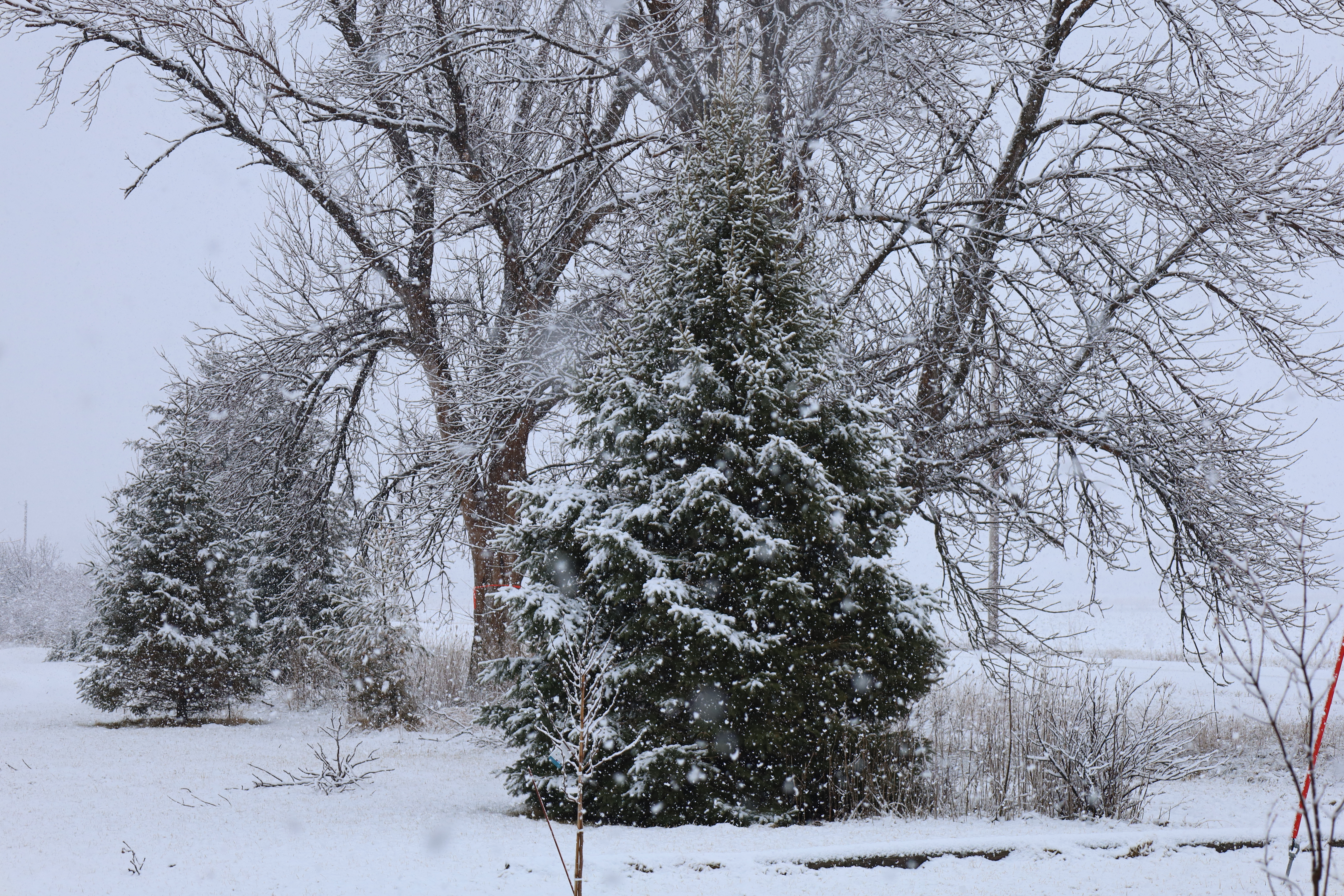
The first days of April this year brought snowfall to the Genuine Faux Farm.  The big, fluffy flakes floated down from above and drew me outside with the camera to see if I could capture a pleasing image or two.  Even if they weren't the nicest pictures in the world, they served as an excellent reminder of what was at that time.  

There was a moment, as I stood outside and the flakes landed on my hands and head (well, hat actually), that time felt like it stopped.  There was silence - except for the sound a snowflake makes when it lands.

But, then I blinked.


And three weeks had passed.  There was no snow.  The grass had greened.  Some of the earliest plants were starting to show interest in waking and displaying their greenery.

The sun woke us up earlier each and every day - unless it was shy and hid behind the clouds.  And, that same sun found more to see in our landscape, so it stuck around a bit longer into the evening - painting the sky as it finally admitted it had seen enough this time around.

Three weeks and the world had changed enough that a stranger might not recognize that they were in the same place that had existed just twenty-one days ago.

Three weeks is about how long it takes for a Barn Swallow chick to hatch and grow big enough for it to take its first flight.  In three days more, it has likely left the nest for good.  In three weeks, we can see the first German-bearded Iris bloom and, sometimes the last for the season.  It's a special bloom season when we see them for four weeks.  We often transplant lettuce seedlings we started in trays after a little more than three weeks.  

Going back to our Barn Swallow friends, they are currently migrating, typically leaving our farm in September (we usually see the last of them on September 15, but many leave September 1st).  They travel an average of 55 miles a day, so in three weeks they will have covered approximately 1,155 miles.  That is approximately the distance from our farm to Galveston, Texas. 

Three weeks.  So little time - and so much.  I can either allow myself to be upset that so much has changed, but I have not accomplished what I wanted OR I can be encouraged and I can think about what I will be able to do in the next three weeks.

Because a lot can change over that period of time.

Thursday, September 14, 2023

Not That Simple

We are drawn to the simple answers for a very specific reason, I suspect.  

Because - once we accept a simple answer, we can stop thinking.  And, thinking is a dangerous pastime!

Unfortunately, accepting a simple answer and putting a halt on your thinking is, in my opinion, even worse.

I was actually beginning to think that I could stop this blog post right there.  Point made.  Nice and simple.  Don't accept the simple answer or the simple opinion at face value and work a lot harder at critical thinking and putting what you hear under the microscope.  It doesn't matter the topic.  It doesn't matter if it already matches something you happen to agree with or believe.  It doesn't matter if you're inclined to disagree.  In fact, it doesn't even matter if you think you have covered some of this territory before.

Think.  Question.  Ask.  Accept that very little in this world is easy and most everything is complex.

And it can be stinkin' hard to do.

So, do it anyway.

I Hate Beets

I am going to bet you all thought I was going to go off on some highly philosophical or current event tangent after all of that.  You weren't?  Oh.  Now I am not sure you're telling the truth, but that doesn't really matter.  What matters (to me) is the point that I am trying to make.

We like to take simple either/or decisions and make them a part of our identity.  Oh... oops.  That is kind of philosophical.

So, about those beets...

Beets are one of those vegetables that we have identified as being one of the most polarizing among the persons who have patronized our farm over the years.  Some people just LOVE their beets and others look at us like we are offering to poison them as a reward for them giving us money.  Kale and eggplant rank right up there with beets - but we're not talking about them now, are we?

I was once a hater of beets.  Beets!?  NO thank you!!  I did not even want to look at them.

Then, I started farming - and some people wanted beets with their CSA farm shares.

Well, I guess I can grow them.

And, harvest them....

And, clean them....

And, maybe it would be cool to try some different varieties...

And then people asked how they tasted.  Uh oh.

The point is this.  There are many, many different varieties of beets.  There are golden beets, striped beets, red beets, white beets, beets for beet greens, cylindrical beets, round beets, etc etc.  Beets have a range of tastes and textures.  Yes - they are all still beets - so they do have similarities.  But, there really is quite a diverse range for different palates.

And, you can prepare beets so many ways.  You can boil them, grill them, roast them and pickle them.  You can mix them with other ingredients or you can just put a little butter on them.  You can cook them so they are really soft or make it so they have a little crunch.  Once again - still beets.  Once again - a surprisingly wide range of tastes and textures for different palates.

I Like Beets Most of the Time

It turns out, I like beets most of the time.  I prefer the golden beets over the other types.  I like them roasted or steamed and a little real butter melting on top.  But, I've found that I'm just fine if red beets are prepared in these fashions.  In fact, I'll tolerate cooked beets in most forms now.  But, there are still times I do not like them.

This did not happen overnight.  First, I had to be willing to learn more about beets.  Then, it took a while to explore the world of beets and learn about it in my own time.

After that, it took me awhile to get over my own, self-applied label that I am a person who 'doesn't like beets.'  I had to admit that I might be wrong and that this label doesn't apply to me.  I even had to face up to the fact that some folks who know that I am a self-described 'beet hater' were surely either going to be disappointed in me or were going to take an inordinate amount of glee in my 'conversion.'  

In the end, I discovered that the responses of others who felt I had to either love beets or hate them did not matter - because they haven't taken the time to know beets like I have.

Thursday, September 7, 2023

Over-hyped, Over-used, and Over It


If I told you that you did something well, how would you feel?

What if I told you that you had actually done exceptionally well?

Or maybe, what if I said your work just "blew me away!?"  Would you believe me?  Would it make you feel good?  I certainly hope so, because if I have uttered these words and directed them to you, then I certainly believed them and I would hope you do too.

But what happens when we resort to ultimate praise for practically anything?  Do those positive words mean what they think they mean?  Do they have the same impact?

It feels like many people have decided the extremes have become the norm now.  A person does something for the first time ever and people say the results were "just amazing," "couldn't have done any better," or "literally fantastic!"

It doesn't leave much room for anything more does it?  Where's the encouragement for growth and future achievement?  Is it even possible for the person receiving these comments to prepare for the possibility of constructive criticism?  Or will the likelihood that the outsized dreams they have begun to cook up after high praise are going to die on the vine when someone finally gives some honest (and maybe negative) feedback along the way?

This is why I cringe when someone tells me that something I have done is "perfect."  Either I am really, REALLY bad at being me or the perfection I have been striving for my entire life isn't as hard as I think it is to achieve.  

Hey, I know how far away from perfect I am.  And if you're going to praise my effort and have it mean anything, please make it real.

People also have a tendency to give negative criticism far more weight than it deserves.  Our criticisms must always be scathing and relentless.  And, they must make it sound as if this is the FINAL WORD.

"That was the worst such and such I have ever seen."

"This just destroys the position that these other people hold.

etcetera etcetera... blah blah blah.

Our desire to create the ultimate put-down or take-down leaves us, and everyone else, with no opportunities for discussion.  No chance to reach a better understanding.  No real incentive to learn more and improve ourselves.  We're making it clear that there is no redeeming qualities and it's time to move on - and find something or someone we like and agree with so we can be in awe of that "perfection" instead.

Once again, I cringe when this happens.  After all, while I am far from perfect, I have honed a few skills and acquired some knowledge about a number of things.  I believe I have shown some ability to learn and adapt.  I like to think that I have some empathy and a wee bit of integrity too.

But, when you tell me that something I have said, something I have done or something I identify with is abhorrent and no worthwhile creature in the universe possibly believes that or does things that way, I am left either feeling like I must oppose you, or I must cease being who I am.

And I'm not sure either of those options is a good idea.

If you're wondering what I think, you've come to the right place.  After all, it is my blog and I guess it makes sense that there will be a few of my thoughts here.  

I believe that truly heartfelt praise comes with carefully considered words.  Don't just reach onto the shelf and grab the closest superlative.  Give something real.  Give something concrete.  Give something that appreciates effort while also helping the person target an area for future growth and improvement.  Give in a way that doesn't try to make that person into your clone.  Instead, give so what you say and do encourages them to be their best self.

Similarly, honest and beneficial criticism and dissent also come with carefully considered words and actions.  We aren't playing a game to see who gets the most points for cutting remarks, most dramatic actions, or the most empty applause for efforts at stealing the show.

Or are we?

If we are, I am not playing.  Fair warning.

Thursday, August 24, 2023

Caretaker

The picture of newly hatched chicks in a Genuine Faux Farmer hands may still be one of my favorites.  By the shape of the hands, it looks like Tammy was the picture taker and I was the hand model for this photo.  I am no longer certain who took this one and it doesn't really matter - because both of us would have had rough, cracked hands.

And we both would have held the chicks gently, watching for their well-being even as we took the time for a photo opportunity.

The artistry of Norman Rockwell has been something that has captured my attention since I first encountered it at my grandparent's house in an over-sized, coffee-table book.  Rockwell had a way of capturing people in a way that let you get lost in the layers of fine detail.  And yes, I mean detail in more than one way.

Norman Rockwell illustration

In the piece shown above, it is absolutely amazing how things like the texture of the wood on the scythe and the roughness of the farmers' hands are so clear to see.  But, even more amazing is the depth and consistency of the detail of the work.  Other than the unlikely appearance of the flying bird in the panel in just that position, nothing really seems out of place.  Nothing rattles against the subconscious - telling us something isn't right.  Even that bird belongs.

It is perfectly clear that the clothing worn by this individual is something familiar and functional.  There is a wear pattern on the handle of the scythe that implies this is not the first time it has been used - just as the hands of the farmer who is wielding it are roughened and experienced in manual labor.  The details showing the difference between skin regularly exposed to the elements (face, hands and neck) versus those less frequently exposed (upper arm) shows an honest familiarity of what it means to work outside.  The hair is likely a little mussed under that hat and it isn't likely to get much better until the end of the work day and all of the chores are done.

This is one of my favorite Rockwell pieces as it portrays the farmer as a caretaker - one who works hard, but keeps an eye on the well-being of the world around them.  The farmer has an appreciation for hard work and fully understands that 'things don't get any dunner, if you don't do them!"  At the same time, there is a recognition of natural beauty and the fragility of life.  And - the farmer knows that there is time to observe, honor, and protect these things, even while the work waits.

Those tough, thick-fingered hands don't blister much anymore because they are all callous - but they can still hold a small bird.  Gently.  Kindly.  With awe and wonder.

This is the image of farmer I wish we could see realized on a regular basis.  Caretakers.  Not businessmen.  Stewards.  Not commodity growers.  There are plenty out there who have the heart to be this kind of farmer.  It would be good if we could find a way to employ them and realize the depth of value, beauty and worth that this type of caretaker brings to the land.

Thursday, August 17, 2023

Culinary Corner: From Cucumber Cooler to Sandwiches

We're entering peak garden harvest season for everyone out there who has a garden (and our farm is seeing a lot of things coming in now).  So, I thought we could share a throwback post from 2015 with some ideas you could use for some Summer food goodness.  Of course, I've edited the post so it is updated because... well, I can.

--------------------


Basil Lemonade
We actually brought basil lemonade to our CSA distributions on and off over the years so people could try it.  We had a recipe there for interested persons to take a picture of it, but then we thought we'd get it out on the blog in case that didn't work for you!

Making the Syrup

  • 2 cups basil
  • 2 cups water
  • 2 cups sugar
(or you can double this with 4 cups of each)
Boil the syrup ingredients together for about one hour.  Let cool and then strain out the basil.  You can store the syrup in the refrigerator if you do not intend on using it all immediately.

Making the Lemonade
  • 1 cup lemon juice
  • 2 cups basil syrup
  • 5 cups of water

Stir the ingredients together and add ice for a refreshing twist on lemonade!


Cucumber Cooler
We also had this refreshing drink available to taste test at our distributions periodically!

  • 1 cucumber
  • 1 qt cold water
  • 1/3 cup honey
  • 1 1/2 tbsp lime juice
  • pinch of salt
  • ice cubes
  • additional cucumber (sliced in rounds)
Partially peel the cucumber and slice off the ends.  Cut into 1 inch cubes and puree in a blender or food processor for one minute.  Strain the juice into a large pitcher, using a spoon to press out as much juice as possible. Add honey, lime juice and salt to the pitcher and stir well.  Finish with ice & cucumber slices.

Let me also refer you to this 2015 post on dealing with the bounty of the season.  If you've looked at it already - great.  If not, take the word of several of our CSA members who told us that the post was timely and useful.  And, if you have now read that post, you won't be surprised if we tell you that stir fries and frittatas are not uncommon for us at the farm.

Stir Fry to the Rescue

The great thing about stir fries is the ability we have to put wide range of veggies into them and then we have an equally wide range of things we can put the stir fry ON!  We'll be starting to dig potatoes, so putting the stir fry on a baked potato is something we are known to do.  We also use various types of pasta and rice as bases for our stir fries.

Here is one example of a base for a stir fry that we might do:

Swiss Chard with Garlic

  • 3 pounds Swiss chard (about 2 large bunches)
  • 1 large garlic clove
  • 1 tablespoon olive oil

Tear Swiss chard leaves from thick white stalks and coarsely chop leaves, reserving stalks. In a large saucepan or kettle of boiling salted water simmer stalks until tender, 5 to 10 minutes, and drain in a colander. Chard may be prepared up to this point 1 day ahead, stalks cooled completely and leaves and stalks chilled separately in sealable plastic bags. 

Mince garlic. In a large skillet heat oil over moderate heat until hot but not smoking and cook garlic, stirring, 30 seconds. Add leaves in 2 batches, tossing to coat with oil and stirring after each addition, and cook until leaves are wilted. Add stalks and cook, stirring occasionally, until heated through. Season chard with salt and pepper. Makes 6 servings. Gourmet March 1998

We realize that this doesn't use up a whole bunch of produce.  But, it illustrates a couple of things.  First, you could split preparation time for when you are able to do things.  Tammy, in fact, actually does not boil the chard before using it in a stir fry and we have no problem with that.  But, it gives you a way to have the chard ready to go in advance if you want.

What this recipe does is give you a basic start on a stir fry with swiss chard (for example).  It is not hard to cut up some zucchini, onion, summer squash and pepper and put them in the pan with the garlic.  I might suggest cooking the garlic for a little bit first, then add the harder items and finish with the greens.  The more volume you add to the pan, the more you time you might need to cook it. As you add to your stir fry, you will be amazed by how much produce can be used in one dish!

The Foil Packet on the Grill is Grate... er Great.

If you are grilling something for dinner, add a nice big foil packet of veggies to the items on the grill.  Depending on the veggies and amount your are grilling you may want to put them on prior to the meat (assuming you are grilling meat as well) so they have a chance to cook sufficiently.

Touchstone Gold beets
We have had great success with golden beets, potatoes, summer squash, zucchini, kohlrabi, cucumbers (yes, cucumbers), carrots, eggplant, peppers, onions and other items in foil packets. 

The really great thing about this?  You could make a foil packet for each person in the family.  Do you have someone who absolutely cannot swallow a carrot?  Well, they can put their selection of cut up produce into their packet.  They can opt to add spicing, olive oil, etc as they wish.  Seal the packet up, put it on the grill and remember which packet belongs to each person.

S stands for Simple and Sandwich
A sandwich does not have to be 75% meat, 15% bread, 5% condiments and one small slice of lettuce.  When you have quality produce available, much of it should be fair game for sandwich making.  The two of us and our crew regularly enjoyed the ability to add fresh heirloom tomatoes, peppers and lettuce to our sandwiches.  Often, the tomatoes are so good that we find ourselves stacking more tomato than meat on the bread!

If you like a bit more of a crunch on your sandwich than a few chunks of pepper might provide, you can try some slices of cucumber or a thin slice of kohlrabi.  And, don't forget a little onion!  But, if raw onion doesn't do it for you, cut part of an onion up and caramelize it.  This can be a nice treat to add to your sandwiches.  If you want to get a bit more exotic, caramelize the onion with some chunks of eggplant (cut to whatever size seems to work with you and your family).

We have found that a nice leaf or two of chinese cabbage is mild enough that it works very well as a lettuce substitute.  Or, if you like the taste of kale or chard raw, they will work just fine for you on a sandwich.

Enjoy the fresh produce and have a little fun trying some new things!
The most important thing is that you should take a moment and let yourself enjoy the season of fresh produce.  That season is a mere fraction of the entire year, so don't let the bounty detract from the opportunity you have right now to enjoy veggies at their peak!

Thursday, August 3, 2023

Screwy Data

When I walk behind a wheel hoe or run Barty (the walk-behind tractor) around the farm to prepare ground or cultivate, I find that my mind is able to multi-task fairly well.  Obviously, I have to pay consistent attention to what I am doing so I don't destroy plants I want to keep with the wheel hoe and the stakes are higher with the walk-behind tractor.  With Barty I can both destroy plants AND potentially do a bit of harm to myself or whatever else gets in the way.

Now, if I am cultivating with Rosie, the tractor, there is usually even less brain multi-tasking going on because that tool has even more potential to do harm.  But, I digress...


In any event, my brain can go all sorts of places when I am walking back and forth between 400 hundred foot rows of veggies.  One place it went to recently, much to my surprise, was my eighth or ninth grade science class.   I don't recall for certain which, and that doesn't matter.

Different Abilities
The instructor for the class was Mr. Rasmussen and he was, generally speaking, a capable teacher.  Certainly, as far as I was able to tell, he knew plenty about what he was teaching and I actually liked most of the things we covered - which is saying something when you are talking about middle school.

Everyone who is reading this knows this is going somewhere - so let's just get right to it.  Mr. Rasmussen had a host of physical challenges.  When he walked, it was with a shuffle that made it look like he could topple forward with each step, his arms hanging at his sides as if they might be too heavy for him.  There were days when Mr. Rasmussen would remain seated for the entire class.  He spoke as if his tongue were two sizes too large for his mouth and the rumor (I never found out if it was true) was that he had had polio when he was younger.

Sometimes he would try to give a demonstration in class that required measuring out some liquid into a glass tube.  He would start with one tube with too much liquid and try to pour from that tube into a second tube to get his required amount.  It was painful to watch as he would pour the liquid from one tube to another.  The shaking of his hands and arms made it virtually impossible for him to get what he needed.

The entire class sat there and watched, unsure of what we should do.  I could tell that some of the members of the class were inclined to just think it was funny and others thought it was sad.  But, in general, it was supremely uncomfortable.  You see, Mr. Rasmussen did not seem to want help, though he did accept it when one member of the class offered to pour it out.

I certainly learned from Mr. Rasmussen, but I suspect I learned more after the experience than I did during it.  Or - at least - I didn't fully realize what I was learning at the time. 


A Lesson Learned

One of the things I learned is that it takes a great deal of bravery to break away from the crowd.  When you add to it the uncertainty that comes with being a young person who is not sure if you are supposed to help....

I remember a good deal of internal pressure and debate when we witnessed our teacher struggling.  I would feel embarrassment on his behalf, but then I would berate myself that there was nothing to be embarrassed about.  His body only allowed him to do so much and there was no shame in that.  The next battle was whether or not he would appreciate help and whether I dared to step forward and offer to change what was going on.  I knew the answer - but then I had to fight my own shyness that was at its peak in middle school.  That, and as a middle school student, I still ran on the training that you waited for the person in authority to direct what was going on.

Mr. Ed Rasmussen

I would like to say that I was the student who finally won the battle and volunteered to help.  But, I wasn't.  Instead, I desperately wanted to be that person.  All the while, I felt a flood of relief when it was someone else who finally stepped up.

Good Data / Screwy Data

When our class would do a lab, he would shuffle from table to table, checking on our progress.  If things were going well, he would approve by saying "Good data!"  If you had made some sort of mistake, his response was always "Screwy data!"  I learned to appreciate the complement that was "good data" and I was determined to avoid "screwy data."  Such is the life of a kid that gets positive reinforcement by academic success.

The desire to achieve "good data" overrode my reticence to try new things in front of an audience.  I have to admit that lab and hands-on courses terrified me at that time for that very reason.  I would very much prefer to try things out without others nearby to witness potential failure or - even worse - see that I did not quite understand what was going on. 


Stepping Up

Stepping up and doing what seems like the right thing always sounds so easy when we say it.  But, if it is really all that easy, why don't we do it more often?  A big part of it is because you and I are all too worried about what others will see and think about us.

Happily, I have changed a bit since middle school.  Sadly, I still lose the battle with myself to do the right thing too often.  But, as far as I am concerned, hearing the words "screwy data" even once is too many.

And so, I find that I try to push myself a bit every day to stand up for someone else just so I can hear Mr. Rasmussen say "Good data" in my head.  Sometimes I do something small like writing a blog that addresses difficult things.  On other days, I speak up when I hear someone say something that is cruel or inappropriate.  Once in a while, I'll stop the truck and help someone at the side of the road who needs it.  There are times when I volunteer to do something to help someone else - even if it isn't something I want to do.

Here's to you Mr. Rasmussen!  Thank you for stepping up.
That's good data.