Showing posts with label Lessons in Farming. Show all posts

Wednesday, December 6, 2023

Experiments That Worked - Sort of

One of the things about small-scale, diversified farming is that you are always in the middle of change.  There are always new things and there are always experiments.  And many of those things are adjustments to what has gone before because the old methods are no longer sufficient for how things work at the farm at the present moment.

A perpetual project over the years at the Genuine Faux Farm has been poultry housing with safe access to quality pasture.  There were numerous projects where we, often along with other workers or volunteers, built a new shelter solution for the hens, or turkeys, or broiler chickens, or ducks.  

Often, these projects relied on repurposing raw materials already on the farm.  For example, the "portable" broiler shelter shown above was made of cattle panels that came with the farm when we bought it and lumber from a building that had come down.


We attached some handles on the base to lift and move these buildings, but opted to not put wheels on them for a number of reasons.  The end walls were shorter cattle panels that were covered with either tarp or chicken wire to keep birds in at night and predators out if they managed to get past the electric netting that circled the pasture area.

The initial goal was to provide us with something that two people could move periodically so the poultry could have a fresh areas to bed down regularly.  And, it worked.  Sort of.

If the day we moved the building was nice, things worked out just fine.  If it was a day where we had a couple of workers on the farm, it was even better - because four people moved it much easier than two.  But, if it was windy or the ground was wet, things could get a bit sketchy.

The beginning of the end for these (we made two) shelters serving as "frequently mobile" came after one of us slipped in a wet field and fell under the building.  While we avoided any serious injury, it was obvious that changes had to happen.

The end result is that these shelters stayed in place longer, often with straw bedding, waiting for the good days with extra help to move them.  And, of course, when it came time to move to a different part of the farm, we could use a hayrack to take it most of the distance.

These shelters worked well enough for us for several years until, as happens with such things, the base rotted out and the cover broke down.  But, by then, these were relegated as either emergency shelters or as a shade area for poultry during the warmer months.  We moved on to new, portable buildings with skids that we could move with the tractor - and only one person was needed to move these building every other day.

And that's one of the key parts of farming.  Seeking solutions and then improving on those solutions as you learn more or conditions change.

Tuesday, December 5, 2023

Farming for More than Yield and Money

The following is a cross-post of material I wrote recently for Pesticide Action Network and their Ground Truth blog.  As I often do, I am re-posting in our farm blog in the week following its release on the PAN website.  Thank you for considering my thoughts and words.

---------------------------------

One of the stories that is frequently told to, and sometimes by, farmers is that growing food or crops is all about yield and the bottom line.  It doesn’t matter whether you are a grazier, a row crop farmer, an orchardist, or you work a small-scale, diversified farm; the temptation is to measure the success of your efforts based solely on these two measurements:

Did the farm produce as much as it could have?

Did the farm bring in as much income as it can?

Unfortunately, when a person views farming that way, they fail to consider so many other measurements of success that are just as important.  This limited set of measures also fail to recognize that there is a difference between “enough” and “as much as is possible.”

I like to broaden my farm’s balance sheet to include measurements that go beyond total yield and profit.  In my opinion, there is much more to being a successful farmer and land steward than money and yield.

Considering investment in natural assets

When a farmer considers only how much they can produce and to turn it into the most money they can get, they close their mind to investments that can bring stability to future production and success.  This short-term thinking makes it easy to pretend that pesticides, synthetic fertilizers, mono-cropping (one crop in a field) and tilling up every square inch of land are not only good ideas, but the best ideas. Suddenly, confining as many animals into a shelter as possible because there is a better return per square foot of space suddenly seems reasonable and even preferable.

Instead, land stewards recognize that the health of the soil we grow our crops in needs to be maintained with an eye towards future success, not just this year’s numbers.  A cover crop will represent an expense on the regular balance sheet, but it can be an asset for soil health.  A perennial crop in the rotation may represent a loss in potential income for a season or two, but it also provides value when we consider the health of the land being farmed.

Bumblebees in borage
 
On our farm, we have considered the health of our pollinators to be another line on our balance sheet that needs attention.  Many of our crops are pollinator-dependent.  If we want them to produce, we need these natural workers to be present.  So, we invest in them by intercropping plants that attract these organisms and we maintain wild spaces so they have a refuge and a home nearby from season to season, year to year.

Considering a broader farm balance sheet

We also find ourselves thinking about a balance sheet that goes beyond our farm.  Rather than focusing only on this season’s production and income, we consider how what we do impacts our neighbors, our communities, and our environment.

There are many farms, like ours, that produce a wide range of foods and strive to sell those foods locally or regionally.  It should not be a surprise that a direct relationship with the market encourages investment into the communities where that market resides.  Sometimes that investment comes in the form of money, such as when our farm buys feed from another local farm for our laying hens, or when we pay an accountant in town to help us with our taxes.  But, it is just as likely that growers, like ourselves, will be found at local events supporting schools or donating food to a community dinner.

It should be no surprise that the connection to the community lands on both sides of the balance sheet.  Certainly, there are some costs that come with running a local business of any sort.  But, they are outweighed when you consider the support the community can give the farm when things aren’t going well.  And when it comes to product pricing, a farmer has an opportunity to be a price-maker, covering their expenses, rather than a price-taker, being forced to accept a loss because a broader market forces it to happen.

Thinking beyond yield and money

We need to challenge ourselves to think even more broadly.  For example, many vegetable farms use plastic mulch to help control weeds in their crops.  We understand fully why this option is a popular choice.  The cost per foot is relatively low and weeds are often one of the toughest things to deal with in a growing system.

Unfortunately, plastic mulch can only be used once.  After that, it just becomes more single-use plastic in the landfill.  In this case, it is important to consider the larger balance sheet that includes a broader segment of society than the effect on our farm and its immediate surroundings.  After thinking hard about this, our farm moved to using mulches made from organic materials, such as paper, straw and grass.

Straw mulch in intercropped field

This decision was reached out of concern for (for lack of a better phrase) the greater good.  But, it turns out there were some very good reasons to do it for our farm’s good.  First, these natural products break down and produce organic matter for our soil, while still suppressing weeds effectively.  And, it turns out that the use of black plastic over a longer period of time actually can result in a build-up of plastic debris in the soil.  By avoiding their use altogether, we prevent this from becoming a future problem on this land we steward.

A broader focus leads to better farming

I fully recognize that all of this might sound idealistic and impractical.  But, I would like to suggest that our current focus on the two outcomes, yield and profit, are far less practical.  Each time we have challenged ourselves to think more broadly about how our farm performs we’ve been able to identify options that ended up providing more benefits to more people and the environment.  Often (but not always) these choices included better long-term yield or profitability for our farm along the way.

So, why don’t more farmers think this way?  The system we have in place for food and farming is a big part of the problem. It’s in the interest of chemical companies and Big-Ag to encourage a focus on profit, yield and short-term risk/gain, because it drives up their profit.  For example, crop insurance measures risk on the basis of a single season, so options that might be good for the medium or long term success of the farm aren’t encouraged.  In effect, farmers can find themselves feeling trapped with few alternatives to pesticides and large, industrial farms.

The good news is this: There are farms, like ours, that still manage to be successful when they look at a broad-view balance sheet, despite the systems that are in place.  Imagine what we could do if we changed our policies, stopped catering to industry, and supported successful farming beyond yield and profit.

Friday, August 25, 2023

In Their Own Sweet Time


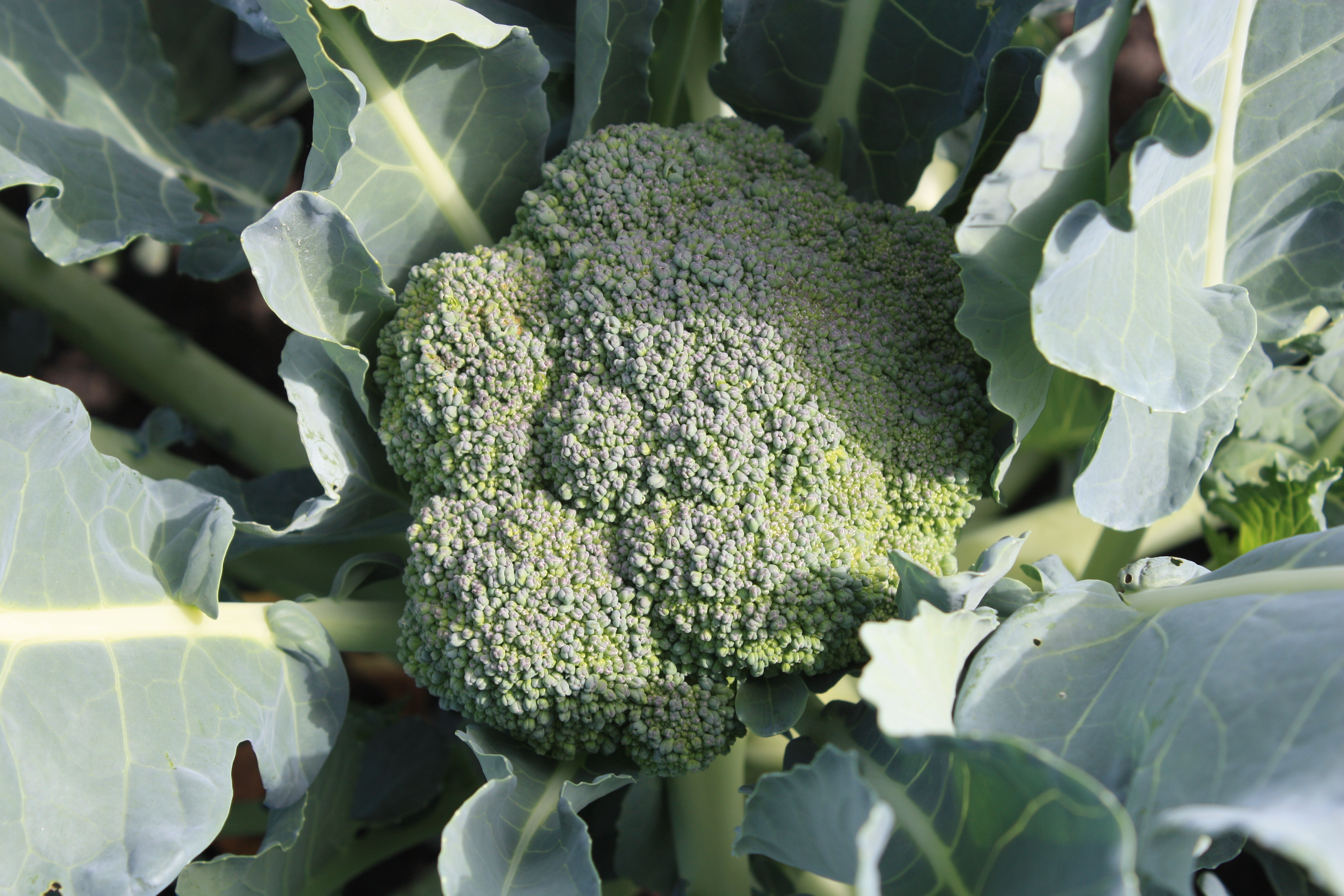
We harvested our first broccoli of the season on Wednesday morning before the real heat settled in for the day.  There are many more broccoli heads that are approaching maturity out there as well.  We'll just have to see how they handle the weather conditions.  Because that's just the way it is sometimes.

When the farm was my primary job, the first big broccoli harvest was usually an indicator to me that the harvest season for our farm was really starting in earnest.  Sure, we would have pulled in significant amounts of produce prior to that broccoli harvest.  But there's a difference between off-peak and on-peak harvest on a diversified vegetable farm.  

Off-peak harvest is something you work for so you can have fresh food available for a longer part of the year.  On-peak harvest is when you have to work desperately hard to keep up with all of the things that need to be brought in NOW.  And, you have to find homes for it SOON.

Even now that we have scaled back, the broccoli still symbolizes on-peak harvest season.  Suddenly we are trying to keep up with the green beans, onions, melons, peppers, tomatoes, cucumbers, zucchini, summer squash...  well, you get it.  Everything.

Things are very different now than they were when the farm was my full-time (and only) job.  For example, crop timing is important to us for completely different reasons now.  When we had a CSA, what mattered most was the timing of our crop with respect to each other.  If the broccoli was a little early or late due to weather conditions (or other matters) it mattered less as long as it still held the proper slot with respect to our crops.  If the weather was a bit cool and slowed the broccoli down, that was ok because most everything else would also slow - so the slots each crop held were pretty much intact.

In our current iteration of the Genuine Faux Farm, it matters much more to us that crops fall into slots that work with our job schedules and the relationship to sales opportunities or trips to the food bank.  But, no matter how hard you try to plan your planting dates and calculate your anticipated days to maturity, each crop is going to mature in their own sweet time.

It doesn't matter if you have a big project due this week for this job, or there are wall-to-wall meetings for that other job.  The broccoli decides when the broccoli is ready.

One of the bigger factors for vegetable production timelines is the "growing degree day."   A very basic way of looking at growing degree days that they are calculated by taking the average of a given days minimum and maximum temperatures and then we subtract a base temperature below which a given crop will grow (often 50 degrees Fahrenheit).  More growing degree days will typically accelerate the growth of most plants.  And yes, there are exceptions.  Many plants slow growth when temperatures get too high (usually over 86 degrees Fahrenheit).

As you can see, Iowa can be a pretty interesting place when it comes to temperature.  Just last week, we recorded a 47 degree low at our farm.  Then there was yesterday.  

Well, take a look.

A little before 3 PM on Wednesday, our weather station recorded a high of 100 degrees.  At that moment, the heat index was 122.  Around noon, we had our highest heat index (128 degrees) and our highest dew point (85).  For that matter, the heat index was already over 100 when I harvested the broccoli somewhere between 8 am and 9 am.

It's safe to say that very few of the plants at our farm found yesterday to be friendly for positive growth.  Yesterday was a "just survive day."  We'll see what happens after this.  Sometimes broccoli will start to bolt after a heat burst like this one.  We'll just have to see.

But they'll still do what they do in their own sweet time.

Monday, August 7, 2023

Why They're Called Chores


This past weekend, Tammy and I went from a busy week to a different kind of busy.  There were some important farm things that were reaching a critical tipping point - and we finally gave ourselves the time to attempt to address them.  

The biggest issue?  Things REALLY start growing in July.  Especially weeds and the grass around our electric netting.  Obviously, if we let the weeds have their way, our crops aren't going to do all that well.  And, if we don't deal with the tall stuff around the netting, the fences won't do a thing to prevent the rabbits and the annoying deer from harvesting more than their allotment.

So, we spent hours on Saturday in our Southwest plot weeding the rows that were getting out of hand.  And, while we were at it, we took the fence down and cleaned things up before putting the fence back up.

There was a lot of crawling.  These were the types of weeds that mechanical help wasn't going to do much for us, so we hand-pulled.  Then, we picked those weeds up and loaded them into Rosie's bucket (Rosie is our tractor) so they could compost.  There was a lot of effort put into the process during a day that turned out to be quite sunny and a bit warm if you're on black soil in the middle of the day.

Once we completed the work, I don't think anyone would blame us if we found a shady spot and spent the rest of the day sipping lemonade and iced tea and chatted about pleasant things.

But that's not how things work on a farm.  You see, you still have to put all of your tools away and then you have to do all of the farm chores.  There is a reason they are called chores.

You've got to do them even when you're very tired.  Or when you're quite ill.  Or EVEN when you just don't feel like doing them.

It doesn't matter if you've worked hard all day long.  It doesn't matter if you've been away for most of the day.  The birds still need to be put away each day and eggs need collecting.  The high tunnels need to be inspected and closed up.  And the laying hens don't really care if you've already had enough of the day.  They'll still take their sweet time finding their way to their sleeping perches in the Summer Cottage out by Crazy Maurice.

Now, the good, or bad, news - depending on how you look at it - is that there were two days this past weekend.  Sunday was cloudier, cooler and it had some light rain.  The rain wasn't heavy enough to stop the outdoor work, but it sure did make a person damp a bit faster than some good, old-fashioned sweat.  

In my case, I was able to accomplish the task of sweating and getting rained on at the same time.  

Multi-talented, I am.

First, on Sunday morning, we had to do what?  Yes, you got it.  We had to do farm chores.  Because, it doesn't matter if you woke up with a serious case of the "stiff and sore."  The birds still need water and food.  You've got to let them out, too.  The Farm Supervisory Crew demand their food, water, and an appropriate amount of skritching.  Plants need water and high tunnels need to be opened before the day gets too warm.

After that, I spent time working on Freyr field, where we had another electric fence that needed to be cleaned up and reset.  Tammy worked on harvesting green beans (and she succeeded, bringing in over 30 pounds of green bean goodness).  When it got too wet outside, we both worked on weeding in Valhalla, our larger high tunnel.  If anything, we put in a longer day on Sunday than we did on Saturday.

Then, at the end of the day we had to do what?

Yes, that's right.  Farm chores.

For the most part, we don't mind doing them.  But, there are days.  Like Sunday.  Where you really wonder how you're going to get up and go do them.  This is especially true if you've made the mistake of sitting down to eat some food.  All the momentum gone - but you still have to find enough to complete the day and check "farm chores" off of the to do list.

Tuesday, August 1, 2023

Who Said You Could Have a Routine?


At some point this past Winter, I was asked if I had any particular lessons I had learned after (mumble mumble) years of farming.  I was actually honored that someone was asking me that question, because that implies that at least one person has some respect for my thoughts or maybe my farming - misguided as they might be.  And, I actually like that question a lot because it encourages me to reflect, reframe and relearn.  All things I think can be very good for my mental health.

I gave what were probably some common lessons that other farmers might throw in there.  Things like, "always make sure the gate is properly latched."  Or, "a big part of the job is about how you treat water and soil."  But, there was one that actually still has me thinking because it explains some of the struggles growers on small-scale farms face.

The lesson is this - "finding a successful farming routine is a myth."  And by that, I mean an invariable routine.  A sequence of things you do daily, or monthly, or even yearly, that will almost always give you predictable results.

Certainly, there are things that could be considered a routine of sorts.  We feed and water the animals every morning and we get them safely to their shelters every night.  But, even that routine changes as the year progresses, or as the weather dictates, or as life changes require, or....

Well, you get the picture.  

For example, our routine for dealing with our animals has changed pretty dramatically over the past week.  We moved the laying flock to a new pasture area.  We moved the henlets to a new location.  We added broiler chicks to the mix.  We had to address a problem with raccoons in the laying hens and now we have to address an issue with rats and broiler chicks.  The overall routine is still food, water, shelter - but the execution is very different now.

Just when we had settled into what one might think was a pretty good routine, we went and changed all of that up.

The reality of a small-scale, diversified farm is that the routine routinely changes throughout the year.  Transitions are continuous and success is largely in how you navigate those shifts that may or may not follow the grand plan you had set out with at the beginning.

You know what?  This is a great topic.  Maybe I'll write on it more.

Once I get used to the new routine.

Tuesday, June 27, 2023

Compost is Gold

One of the adjustments we have made over the past few years at the Genuine Faux Farm has been the management of our high tunnels, Eden and Valhalla.  While I say "adjustments" I actually mean "adaptations to reality of now."  When you go three years running where one or both of the farmers is down during the time of year when planting and high tunnel moving is supposed to happen, you adapt to the reality of what is....  even if you do it kicking and screaming.

For those who do not realize it, our two high tunnels are built so that they can move back and forth between two growing locations.   And, if you're not entirely sure what I mean by a high tunnel, you're looking at a photo of the inside of one of these hoop buildings.  We grow in the soil that is covered by the building.  If you want to see what some of that looks like, here's a post from 2017.

In any event, we found ourselves planting in our high tunnels in the same location that they were in last year.  In Eden's case, it hasn't been moved during any of the three seasons I just mentioned.  We had some help moving Valhalla a couple of seasons ago.

And now for the good news and adaptation.  We had, at our disposal a nice finished pile of compost that we could use to help rejuvenate some of the soil inside the buildings.  In the picture above, you can see that Rosie (the tractor) has a nice full bucket from that pile.  The bright sun fooled the camera a bit and it didn't pick up the deep, rich and dark color of this compost.


Both Tammy and I liked the feel and the smell of the black gold we pulled out.  Anyone who has worked with composting can tell you that a person learns the texture and scent indicators of quality compost.  And, other than a few things, like some baling twine and bigger sticks, this was good stuff!

We took the time to dig a planting whole for each pepper plant in Eden and filled them with the compost.  Then we put in the plants and covered with the soil removed from the hole.  It's a much longer process of planting, but for what we are doing now this was the best answer.

Eden now has had 120 Quadrato asti Giallo peppers planted for over a week now and they are looking very good.  These peppers are being grown out to harvest the seed for Seed Savers Exchange and I think we're on track for some excellent production.  The next steps are to finish caging the plants and to trim off the early fruit set to encourage them to put on a bit more growth first.

Quadrato asti Giallo is a pepper we have grown since 2008 (maybe earlier) and it was even in our top veggie variety list for 2018.  The good thing about having a history with an heirloom variety is that we are able to select plants that will help maintain a strong and healthy strain.  When we transplanted these peppers from seed trays to pots, we removed twenty plants that had germinated but were weak or showed some other issue we wouldn't want to propagate.  Another two dozen didn't get put in the high tunnel for similar reasons.  

Now we've got a very good looking mini-forest of peppers in Eden - all of them feasting on quality compost.  Keep checking back with the blog and we'll keep you updated on their progress.

Monday, February 27, 2023

Tools in the Farmer's Toolbox: Crop Rotation


Perhaps the most well-known tool a farmer can use to introduce diversity into their growing system is the crop rotation.  A simple crop rotation used widely in the midwestern United States is the two-year, soybean and corn rotation implemented by many large-scale farmers.  Each farm is different and may benefit from a crop rotation designed specifically to fit the needs of the land and the stewards who tend it.

Our farm has produced a wide-range of food crops for nearly twenty years, and we continue to make adjustments to our rotation plan.  We believe that our growing system becomes more resilient as we introduce more, rather than less, complexity and diversity onto our farm’s landscape.

What is crop rotation?

Crop rotation is a technique that is typically used with annual crops (plants that grow for only one season), though some plans can include perennial crops.  In the simplest terms, the grower changes the crop each season so that plants from the same family are not grown in the same location each year.  On our farm, we create multi-year growing plans that prevent us from growing vine crops (squash, melons and cucumbers) in the same plot.  We might arrange to grow other crops, like broccoli and beans, in the intervening years.

A crop rotation plan can be very simple, like the corn-soybean rotation, or very complex, like our seven-year rotation.  A common five-year rotation used by many organic row-crop growers in Iowa might include corn, soybeans, alfalfa and oats – alfalfa is a perennial and often occupies two years of this growing plan.

What does a crop rotation do for the grower?

A carefully developed crop rotation is one of many useful tools that can be a part of a healthy growing plan based on the principles of agroecology.  The benefits are numerous and the explanations can be complex, but here are some simple arguments to encourage the use of crop rotation practices.

Pest and disease control
Perhaps the easiest benefit to recognize is that crop rotation makes it more difficult for pests and diseases to persist from one season to the next.  For example, the disease called black rot infects plants in the cabbage family and can persist on the residue (old leaves and other plant material) left behind by the prior year’s crop.  Planting more of the same crop in that location the following year simply makes it likely that black rot will infect those plants again during the new season. 

Weed control
Each crop type has different cultivation preferences and required growing conditions. This diversity makes it more difficult for weeds to become established and persist from year to year.  The introduction of alfalfa provides cover for the soil for more than one year, which can suppress many problem weeds for annual crops that would follow.  On our farm, we might use buckwheat as a cover crop to choke out Canadian Thistle, one of our problem weeds.

Soil health
Different crops interact with the soil in different ways.  Some crops are known to be greedy for nutrients while others, like those in the legume family, can actually return nutrients to the soil.  For example, beans, peas and lentils can collect nitrogen and improve future fertility.

Improved crop yields
Research continues to show that the introduction of diversity through crop rotations results in better production in individual crops.  Corn yield can be increased by 28%, regardless of the growing conditions for the year.  The improvement is even greater during poor growing seasons, such as those experienced during drought.

Diversified crop income
One of the benefits I have seen on our own farm over time is the home grown “crop insurance” that comes with diversification in our growing system.  More diversity makes it likely that at least some of our cash crops will provide sufficient income for our farm to keep doing what it does from year to year. 

More ways to add diversity in crop rotations

It is easy to simply assign one year to each annual crop in a rotation.  While this is certainly better than growing the same crop in the same place year after year, a farm can do better than this.

Part of a crop rotation could include a perennial crop that is foraged for two to three years by animals.  Our farm has included poultry on some of our production fields as part of our rotation.  This makes perfect sense because we can ask our laying hens to spread their own manure for fertility in future years; it saves some labor and provides necessary nutrients.

Many farms also include cover crops in their rotations.  These are crops that are introduced to cover the soil, but are not intended to be harvested.  For example, we have planted tillage radish in the fall to help loosen the soil for the following season.  The radish crop is terminated by the cold weather and we don’t need to do any additional work other than adjust our rotation so we don’t grow other crops from that family in the same location. 

Why is this important?

The simplest crop rotation is no rotation at all.  Many row crop farms in the United States grow the same crop in the same location year after year.  The only way this can happen is to rely heavily on synthetic fertilizers and pesticides to prop up soils that are being abused by this approach and to keep diseases and pests at bay.

The introduction of diversity through methods such as crop rotation and intercropping helps us to break this cycle of dependence.  Diversity and complexity in our growing systems are natural ways to maintain the health of our soils and increase the resilience of our crops.  These are techniques that require the ingenuity of those who would be stewards of the land, and they do not require purchased inputs from the pesticide industry.

-----------------------

This blog was initially published as part of Pesticide Action Network's Ground Truth blog.

Tuesday, October 4, 2022

Little Things Make a Difference

Throughout the years we have been stewards at the Genuine Faux Farm, we have provided opportunities for students to visit us and take guided tours of our farm.  Whenever we did this, it was interesting to get a glimpse of what the farm looked like through the eyes of others.  

No matter how many times I gave presentations or tour opportunities, I could still be presented with questions that made me pause and think a bit more.  One such question was a very simple one - "How do you know where each crop is?"  It's a great reminder to me that I take various landscape cues for granted and I don't always recognize that other people cannot see exactly what I do without a little guidance. 

Another person asked me what "small" changes we had made that worked out well for us.  I don't remember what I said then, but I have reflected more on it since that time.

Rather than quibble with defining what a "small change" might be, I thought I would dedicate a post to some of the "little things" we have done over the years that had more impact than you might think.

August, 2008 on the farm.

Running Rows the Long Way

It doesn't seem like a big deal, but we made a switch on the orientation of our rows in our Eastern plots several years ago.  The picture above shows our rows with a North-South orientation.  Our plots were oriented East-West, so the rows essentially went the "short-way" on our plots.  We changed our row orientation to go East-West with the "long-way" on the 60' by 200' plots and it led to improvements in mechanization that has helped us to continue with the farm.

Sure, the short rows made it easier for weeders to feel a sense of accomplishment.  You can certainly finish 60 foot rows faster than 200 foot rows.  The short rows also provided more natural breaks for crop successions and crop variety.  But, if you run any sort of equipment, you spent an awful lot of time just turning around.  In the end, the simple idea of changing the orientation of rows in our plots may have had as much impact on changing our farming strategies as any other thing we've done on the farm.

As a matter of fact, we changed the orientation AGAIN in 2020.  But, this time we turned our plots so that we now had 400 foot rows.  The idea there was that we knew we would have less human labor available to us, so we needed to optimize how the tools we had worked.

Now, in the interest of full disclosure, the long rows can make intercropping more challenging AND it makes it difficult to have the broad range of diverse varieties and crops that we have favored over the years.  But, the reality is that we cannot operate that way anymore, so things had to change.  We simply look for other ways to implement the diversity we value in our fields.

July 2010, yep had rain then too.

These Are Not Show Gardens

The earlier versions of the Genuine Faux Farm leaned closer to obsessive gardening rather than horticultural farming.  We had visions of beautiful fields with easy to read signs so the flocks of people who would come to visit the modern marvel that was our farm would thoroughly enjoy the experience.  We even considered growing a 'show garden' that would highlight specific veggies in one plot.

I will grant you that there was nothing wrong with that plan if our goal was to provide more of an agri-tourism business versus what we actually ended up doing.  We also didn't have a good enough feel as to how much we could actually manage to do without unlimited labor.  

And... everything looks doable when you plan it out during the Winter months.  

But, when fields get too wet to work, or the delivery and market schedule eats up more of your time and energy than you thought it would...  Well, let's just say, you re-assess what your goals are.

Once we made the decision that we do not have the temperament to take the agri-tourism route (and our location probably wouldn't make that work anyway) we spent less time on things like cute little signs showing the pepper variety.  Oddly enough, we also learned that putting together a decent operating farm is actually interesting to people and it provides good learning opportunities in and of itself.  People didn't need us to create the pretty gardens with signs - they needed us to show what it means to grow good food and be the best stewards of the land we can be.

Once we got rid of the old attitude, we were able to figure out how to do what we do well - which usually resulted in some pretty good looking fields anyway.  We'll call that a win.  

Happy to get new chicken crates in 2011.

Sometimes Making Do Doesn't Make Sense

When we first started raising chickens for meat, we did not have our own cages for transporting birds to the "Park."  Initially, we would borrow a batch of old, patched wooden cages from a neighbor.  They hadn't been used for a while and they were in awful condition.  In some cases, the chicken wire was attached to chicken wire which was attached to the rotting wood of the remaining frame.  Usually, we would have to cobble together some additional repairs just to keep chickens in them.

We finally gave ourselves permission to look into and purchase new, uniformly sized crates for transporting.  Yes, it cost us some money to do this at a time when money was tight.  But, it really did not cost all that much in the grand scheme of things.  It is amazing how much savings in time and effort this simple acquisition has provided over the years.

Let's just use a quick example:  Each cage will hold thirteen to fifteen full-grown broiler chickens for a total of 100 to 120 pounds of weight.  It's dark, late and raining.  The two of you have to lift this crate up high enough on the truck to stack it on another crate.  If crates are uniform size, don't have various wires sticking out everywhere and do not threaten to fall apart when you lift them then life is good.  

If we were still trying to use crates that were in poor repair and various sizes and shapes, we wouldn't be using them.  Why?  Well, we wouldn't be raising chickens anymore.  It's just that simple.

Heirloom tomatoes at market in 2012

Not Returning Home With More Than Half

We are asked periodically if we are willing to return to farmers' market sales and our answer remains the same.  No.  Unless we ever decided to raise some plant starts for sale in the future.  Then, it would be for three weeks of the year only and we might be able to handle that.

This is not an indictment of farmers' markets in general, but it does highlight the limitations.  There is not enough of us to go around to spend the hours it takes to prepare, set up, staff the table, tear down and clean up for each market for the limited return we can get from the smaller farmers' markets in our area.

The table you see at left was our heirloom tomato offering September of 2012.  Frankly, the trays full of different types of heirloom tomatoes look pretty impressive to me (and there was more in the truck).  We even had lettuce and offered BLT specials.  

And, we DID have several fine customers who purchased from us that day.  But, we still went home with more than half of those tomatoes after the market was done.  And this was not the exception to the rule.  You had to have plentiful product to get people to come to you, but there wasn't a chance that you could go home with an empty truck.

Simply put, if we wanted to move more product we had to try something else.  We could have gone to another farmers' market that was located in a larger city, but that didn't address the time consideration and still didn't guarantee that we wouldn't come home with significant amounts of produce.  

There you have it, an explanation as to why we pursued the CSA farm share model.  We didn't want to keep lugging large amounts of produce from the farm and then back TO the farm.  If there is excess on the farm, it can stay there and get processed or fed to the poultry without the extra travels.  Or maybe we could explore bulk sales elsewhere without worrying about having that impressive market table.

Tyler finishes a gate at GFF in 2013

You Won't Believe the Good a Fence Can Do

Neither of us grew up on a farm and our backgrounds really didn't lend many opportunities to develop fence building and maintenance skills.  Thus, we were grateful to receive assistance from farmer friends when the hen pasture fence went up.  

We just can't quite list all of the things that become easier once you have a good, solid fence in place.  It's enough to make you think that we would find the energy to put up some other fences that could be equally as valuable on the farm.  But, while we're much more certain about what we would need to do to put up new fences, they always seem to reside just below the last item on the VAP that gets done. 

It really shouldn't come as a surprise.  After all, putting up some good fencing requires some capital as well as a decent investment of time.  Argue all you want that you will have a net savings of time once the new fence is up.  But, if you don't have the necessary chunk of time to put the fence up in the first place, the point is moot.

 Don't Be Stubborn - Stake and Weave is a Fine Solution

Stake and weave in Eden - 2014

Many years ago, we participated in a research trial involving multiple trellising techniques.  One of those is called the Florida stake and weave method.  We found that this technique tended to be troublesome for us in our fields because the plants kept getting blown out of the weave.  You could argue that it was because we weren't particularly good at stake and weave and that wouldn't be completely unfair.  But, we actually weren't stubborn about stake and weave either.  We trialed it in different situations over time and eventually opted for square collapsible cages in the field and... stake and weave in the high tunnels.

It might be more accurate to state that the 'little thing' we are highlighting here is a willingness to keep trying something that has promise until that promise is realized OR it becomes clear that this is just not the right solution for us and our farm.  We have seen so many people give up on something after experiencing failure on the first try and we don't want to be that way ourselves.  After all, what makes us think that we can pick up a skill without any practice? 

What's funny is how things come around.  As we scale back, we moved tomatoes out of the field and kept them in our high tunnels.  That meant we had all of these nice square cages that weren't being used.  So suddenly the cages are being used in the high tunnel.  

Why?  Well, they're faster with the limited work force we have available now - both with putting them up and taking them down.  Nothing wrong with that.  It's a matter of using the method that words best in your current situation.

Giving Flowers Their Due

We've always had flowers on the farm and we have always had a good idea as to all of the positive things flowers could do as a part of our farming system.  But, growing flowers because you like them and think they're good is one thing.  Being committed to growing them because they are a critical component for making the farm a successful farm is something different. 

A re commitment to flowers in 2015

The natural follow-up question we get after we make that statement has to do with whether we sell cut flowers or not.  While we could certainly try to do that, I think people are missing the point here.  The flowers do NOT need the extra justification for their existence on the farm that flower sales would bring.  They bring value all on their own without requiring us to turn them into an additional enterprise. 

Like any other crop we grow, we have successes and failures.  Sometimes the weeds win.  Sometimes the wet weather wins.  And sometimes... the butterflies win.  Win or lose, we're going to keep playing this game and include flowers in the line-up.  Besides, if the only reason we plant them is  because they make your farmers smile, that should be a good enough reason. 

And those are some of the "little things" that have made a difference at the Genuine Faux Farm.  There are many more, but I suspect you need to go and do some of the little things that make your world go too.  Have a great day everyone!

Thursday, February 17, 2022

Every Morning is the Dawn of a New Error

I was cleaning out a file drawer and I came across a folder that held a whole bunch of cartoons, pictures, and other stuff that I had posted on my office door when I taught at the University of Minnesota - Morris.  One of the things that apparently got attention from my students was the group of "sayings" that were printed on a couple of sheets of old printer paper.  As I gazed at that paper yet again, I read down to this one:

Every morning is the dawn of a new error.

That triggered a recollection that I had a series of "lessons in farming" that I wrote for the blog several years ago - and some of them featured some of these sayings.  So, I went and looked at those.  I realized that, perhaps, I have learned even more since the time I wrote those and it was time to give them all a new look - with new insights - and maybe even new failures!  How exciting is that?!? 


The prompt for this particular topic came from the preparations that led up to a field day we were hosting at the farm several years ago.  For those who are not familiar with the concept, the idea of a field day on a small-scale, diversified farm, such as ours, is the equivalent to holding an open house so everyone can poke around in your closets and make judgements on how many shoes are there.

Ok.  That's not entirely true.  What is true is that, despite what everyone might say, you FEEL as if all of the attendees are going to be making a whole host of judgements that will be less than flattering to you or your farm.  As a result, the days prior to events like this are spent running in overdrive - hoping that you can clean it all up before the "hour of doom" approaches.

Of course, now that I have even MORE experience, I realize that a large number of the attendees have also hosted field days on their farms - and they can recognize the signs of all of the things we have frantically done just prior to the field day (and were hoping you would not notice!).

Why?  Because they've done them prior to their own field days!

Group at 2016 pollinator field day

The strange thing about the entire process of leading a field day at the farm is the way it encourages me to think more about how things are done (and not done).  It's just a good reminder that farming is a non-trivial process.  It is also a good reminder that there are many ways to successfully (and unsuccessfully) farm.

Bringing this back to my days as a computer science professor, I tried to drill the counter intuitive concept that "successful" tests were those that found errors in computer programs.  Of course, most people think that tests are successful if the program works as intended rather than when it breaks.  So, you can see the uphill battle I had to fight.  But, you can see why this saying was on my door at the time!

Every morning is the dawn of a new error.

Now, of course, there are mistakes and there are mistakes.  But, as I ruminate about mistakes, I come away with a few lessons earned over the years. 

With farming, it is my opinion that you aren't being innovative enough if you don't make mistakes

Just to show that we are not immune to errors on our farm, I call your attention to the opening photo from our 2015 season.

Error #1 - Being decisive, but not decisive enough in the face of difficult weather. 

Our first error had to do with planning on re-configuring this field with swales (ditches) in preparation for a new high tunnel.  The wet and cold Spring set the excavator back in his schedule.  We held back planting both because of weather AND because we intended to get this excavation done.  The result is that we had to do some last minute rotation changes.  It also meant that this field didn't get the attention it should have early in the year. 

While we did make some fairly radical shifts - moving crops to the driest fields, pushing others to different time slots, and adjusting how we would deal with putting up Valhalla (the new high tunnel) - we did not allow ourselves to buy into the changes completely.

We were bold - and timid - all at the same time.  What we learned?  If you're going to make a mistake, make it a really GOOD one.  Then pretend you meant to do that all along and no one will know you erred.

Error #2 - If you told yourself you should do something, don't ignore it - do it!

We failed to effectively deal with this area to prevent the inevitable weed pressure.  We disced in the field and then tilled the planting beds with the BCS immediately prior to planting.  There was no gap between these two activities - which set us up for weed problems in these beds. 

In our defense, the wet weather had compressed many of our activities - and we abided by the maxim that the best time to do activity X on the farm is when you are doing activity X.  Why?  Because sometimes you just don't have the ability to do things during the optimal time period in the optimal way.  

It might have been better to let the weed seed bank deplete itself a bit before planting so we could flex tine the bed prior to planting.  Or we could have covered this area with a mulch early in the season and planted into the mulch.  Or we could have skipped a succession.  Or... any number of other options.

The point is, I remember looking at this field and realizing we were going to have problems.  I told myself I should do something about it early on.  I didn't listen.  

Yes, I we were REALLY busy and we didn't have much extra time to do that work.  Pay now or pay later.  I guess we paid later.

Error #3 - not finishing the job you started.

Again - let's be honest here.  We make this mistake over and over again.  And, it's not really a mistake.  It's a reality when you have limited labor hours and you just CAN'T do much more than has already been done.

In this case, we didn't set up irrigation right away on these rows.  Hey, it had been pretty damp up to this point, so we weren't thinking about irrigation.  It was late and we wanted to eat dinner and maybe actually sleep a little.  We still had animal chores to do and you need to put all of your equipment away at the end of the day too.

In short - we were really, really, REALLY tired.  Just like we were at the end of most days.

But, of course, what happens when you wait?  Well, the next day has its own list of things that must be done.  Next thing you know, it's been a couple of weeks and you realize - Hey!  Did we run that irrigation over there?  No???  oops.

Let's just say it gets harder to run drip tape as the plants get bigger for a myriad of reasons and leave it at that.

What did we learn from this (assuming we did learn something)?  If there is no way to get it all done with the resources you have, you need to make a change - and that change may be to back off on your ambition.

Error #4 - cultivator blight is a real thing.

The fourth error is simply embarrassing.   However, I include it because it is ridiculous to even pretend that mistakes of this kind don't happen on our farm.  Don't get me wrong.  We usually do pretty well - but things can happen.  The thin patch of green at the left is where we planted some eggplant.  They are still there, sort of.  But, what happens when a person is discing the next area to be planted, weeds have gotten into the already planted rows and that person is driving the tractor and begins thinking about what his crew needs to be doing next?

Um, yes.  I disced (cultivated) over the row of eggplant.  Ups.  

The bad news?  We immediately lost about a quarter of the plants and the remaining plants were not very strong after this rude treatment.  The good news?  I woke up real quick and reminded myself that I never work with equipment with less than ALL of my attention on the job at hand.  Much better to sacrifice a few eggplant than any of the more expensive or horrifying errors that could happen with distractions while using equipment.

So, the good news is we avoided error number five - dealing with a personal injury accident.  All the others were dealt with in good order and we got some harvest out of these rows that was worthwhile (except the eggplant - we ended up taking them out the rest of the way).