Showing posts with label Variety Show. Show all posts

Tuesday, November 28, 2023

Exceeds Expectations


We got our winter squash crop in pretty late this past season because we simply had difficulty getting started.  The good news?  We pretty much know what we're doing by now with these crops and we gave them the best start we could in hopes that we could avoid an early frost.  And, happily, the first frost was late this year so things went just fine.

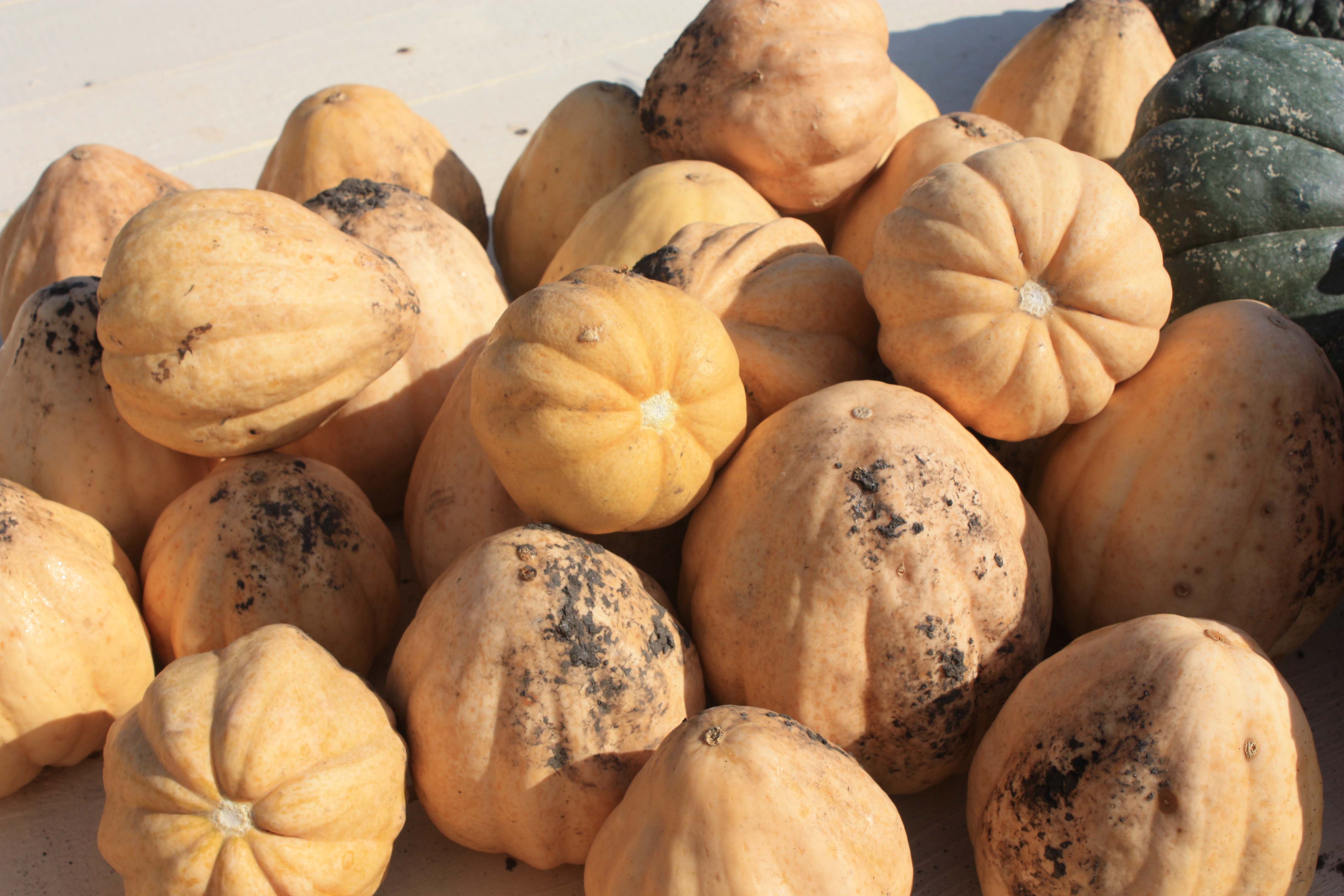
I got the couple of dozen Burgess Buttercup squash that I've set as a goal each of the past three years.  Since those are my personal favorite for eating, that's a very good thing.  Tammy, on the other hand, probably prefers the Waltham Butternuts and I am perfectly fine eating them as well.

We got pretty close to three squash for every couple of row feet for the Walthams, which is a fine result based on our historical harvest records.   

On the flip side, we only harvested one, smaller, pumpkin.  They simply needed more time and a bit more attention than we gave them.  This was one of those times where I just knew we were fighting a losing battle.  We didn't get the fence up the same day we planted.  So, of course the deer tasted several of the pumpkins that first night.  Then, there was the limited time to do the needed cultivation.  So, we opted to cultivate the crops that were already doing better rather than those that were already showing signs of a struggle.

This is a normal process at the Genuine Faux Farm.  We try to do as much as we can.  Actually, we always try to do MORE than we know we can.  Then, as the season progresses, we find ourselves making choices.  We've learned that it's often better to spend our time on the crops that are doing well so they keep doing well than it is to try to rescue crops that are having a rough time.


So, this year's choice for squash was to see the Waltham's and Burgess through to completion.  Of course, we would have liked the pumpkins to produce too.  But we don't regret the decisions that led to this at all.

A typical size of a nice Waltham Butternut squash is somewhere from three to four pounds.  Sometimes, we get a bunch of nice five pound squash.  This year was pretty much average in that respect.

Except for one squash that exceeded all expectations.  You might notice it is much bigger than the two other squash in the first picture.  The smallest squash was just under four pounds and the one lying down on the table was approaching five pounds. 

Then there was this monster.  How does eight pounds and a bit over four ounces sound to you?

Yeah.  That's a good sized squash.  And it's going to be our centerpiece on our kitchen table for a couple of months.  Usually, that spot is reserved for a nice Musquee de Provence pumpkin.  But, I don't think we're going to be too unhappy seeing this one on the table for a while.

Saturday, September 30, 2023

Variety Show: Feher Ozon Papricka


This would be my second veggie variety post in a row on the Genuine Faux Farm blog.  It's just like old times - except if this were like "old times" on the blog, these posts would be three to seven days apart!  The motivation behind these posts has more to do with the fact that I had some new pictures from this year's harvest that just begged me to write about them.

Shown above is our first harvest of Feher Ozon Papricka peppers in 2023 (August).  I like to harvest them when they have this rusty orange shade to them, but others might prefer that they turn a full red-orange.  We enjoy eating these in nachos and others have told me they like them on pizza.  You can certainly eat them raw as a snack as well.  They tend towards a sweeter papricka tasste rather than hot.

This is another variety that has responded well to high tunnel production for a few reasons.  First, they don't like wet feet and they prefer warmer, drier conditions.  And second, the plants are small in stature, so they lend themselves to places where space is at a premium.  This year's plants did not quite get to two feet tall and we gave them 18 inches of spacing in the row.  Each plant easily produced fifteen or more quality fruit (plus a few off fruit).

This variety holds most of its fruit with the pointy end up, but they can get so loaded with peppers that they'll just point whatever direction has free space.  The carrot-shaped fruit can be as large as five to six inches long. You could, if you wanted, dry these pepper to create a papricka spice, though we have not tried to do this ourselves.

Keep these peppers off the ground if there is moisture for best results.  Harvest typically requires a pruner or knife since the plants do not give up the fruit easily.  If you try to snap or twist them off, you'll end up with a sizable portion of the small plant in your hand as your reward.

Friday, September 29, 2023

Nice Melons


This year, at the Genuine Faux Farm, I decided to experiment a little bit with the melons we decided to grow.  Since we are no longer growing for a CSA Farm Share program, we no longer need to grow as many melons as we had been growing in prior seasons.  But, I like growing them and we both like eating them.  So, what were we to do?

Ever since 2015, we have grown anywhere from five to eight different melon varieties on the farm.  Our field melons are always surrounded by flowers to attract pollinators and we took to growing a row of Minnesota Midgets in Eden (our smaller high tunnel) about 2017.  The general result was that we had plenty of melons for ourselves and our CSA customers each season.  We usually had extra to sell - or if we didn't have time to seek out a market, we gave them to the poultry.  Yes, turkeys LOVE melons.

The 2015 experiment that became the norm at GFF

 I love to tell the success story that was our 2015 melon crop.  But, I love telling it even more because we could replicate it from year to year.  Well, not exactly each season - of course.  Sometimes the flowers were different.  One year one melon variety would do well, and then another the next.  But, our production was good each season and the results were similar every time.  

But, as the need to grow this many melons went away, we found ourselves just trying to figure out how much we should grow.... and how we should grow them.  And the transition has not been as easy as you might think.  It's hard to go back once you've grown as many as a thousand row feet of melons on the farm.

So, in 2023, I actually succeeded in letting go of a few things.  We grew a short row of field melons that had ONLY ONE variety (Pride of Wisconsin).  We have a log history with that cantaloupe and it did well for us again this year.  

And in the high tunnel, we decided to play a little bit, but we only planted a half row in Valhalla (our larger high tunnel).  Minnesota Midget had been our go to for high tunnel growing, but we really wanted some melons that tasted different.  So, we gave three different heirlooms a shot: Eden's Gem, Emerald Gem and Ha'Ogen.

A 2023 Ha'Ogen

I remember that we gave a couple of these a trial in the high tunnel when we first started growing in them and decided, for whatever reason, that they weren't working.  But, they all have a long history with us.  In 2013, we were sold that Ha'Ogen was just too good not to grow it.  And, frankly, I still stand by that statement.  Unfortunately, by 2017, we were realizing that Ha'Ogen was not working for higher production loads on our farm.  A big part of that had to do with Ha'Ogen's unhappiness with very wet soils - and we just couldn't find much dry space on our farm during that time period.

Meanwhile, Eden's Gem became one of our key production melons.  These personal-sized melons have a unique taste (a little bit of nutmeg flavor) and ripen earlier than any of the other varieties we have grown.  Emerald Gem flitted in and out of the picture.  These are orange fleshed and early to ripen as well.  

All of these three have limited vine length - which actually makes them candidates for the high tunnel.  But, we had gone with Minnesota Midget because they faithfully climbed (with some training) the trellis we put next to them each season.

Well, this year, we weren't as worried about space saving and we trialed Ha'Ogen, Emerald Gem and Eden's Gem in Valhalla this year.  Let's just say our taste buds were not disappointed.

We did not attempt to trellis any of these vines (we ran out of time), but they did not get so long as to intrude too much on their neighbors.  It was tolerable - but might have been a little less wonderful if we were trying for higher production numbers inside Valhalla.  Emerald Gem did not do particularly well, but Eden's Gem and Ha'Ogen produced several high-quality fruit.

In fact, they both did well enough that I could almost consider scaling them up in the high tunnel if I thought I had a market for them.  That, and if I wanted to pursue a market for them.

I was most pleased that Ha'Ogen did well.  We stopped growing them altogether in 2020 and I missed having Ha'Ogen or two for breakfast in the 2020-2022 seasons. This melon has green flesh with a gold edge around the seed cavity.  They smell a little bit like a ripe banana when they are first opened and have a smooth texture.  In fact, the first taste you get reminds you a little of a banana until.... it changes.  Let's just say you want to leave this melon in your mouth for a second so you can experience the full range of its flavor.

We know by now that every growing season is different, but maybe we discovered something in 2023?  Either way, I suspect we'll be growing Eden's Gem and Ha'Ogen in a high tunnel again next year.

Tuesday, June 27, 2023

Compost is Gold

One of the adjustments we have made over the past few years at the Genuine Faux Farm has been the management of our high tunnels, Eden and Valhalla.  While I say "adjustments" I actually mean "adaptations to reality of now."  When you go three years running where one or both of the farmers is down during the time of year when planting and high tunnel moving is supposed to happen, you adapt to the reality of what is....  even if you do it kicking and screaming.

For those who do not realize it, our two high tunnels are built so that they can move back and forth between two growing locations.   And, if you're not entirely sure what I mean by a high tunnel, you're looking at a photo of the inside of one of these hoop buildings.  We grow in the soil that is covered by the building.  If you want to see what some of that looks like, here's a post from 2017.

In any event, we found ourselves planting in our high tunnels in the same location that they were in last year.  In Eden's case, it hasn't been moved during any of the three seasons I just mentioned.  We had some help moving Valhalla a couple of seasons ago.

And now for the good news and adaptation.  We had, at our disposal a nice finished pile of compost that we could use to help rejuvenate some of the soil inside the buildings.  In the picture above, you can see that Rosie (the tractor) has a nice full bucket from that pile.  The bright sun fooled the camera a bit and it didn't pick up the deep, rich and dark color of this compost.


Both Tammy and I liked the feel and the smell of the black gold we pulled out.  Anyone who has worked with composting can tell you that a person learns the texture and scent indicators of quality compost.  And, other than a few things, like some baling twine and bigger sticks, this was good stuff!

We took the time to dig a planting whole for each pepper plant in Eden and filled them with the compost.  Then we put in the plants and covered with the soil removed from the hole.  It's a much longer process of planting, but for what we are doing now this was the best answer.

Eden now has had 120 Quadrato asti Giallo peppers planted for over a week now and they are looking very good.  These peppers are being grown out to harvest the seed for Seed Savers Exchange and I think we're on track for some excellent production.  The next steps are to finish caging the plants and to trim off the early fruit set to encourage them to put on a bit more growth first.

Quadrato asti Giallo is a pepper we have grown since 2008 (maybe earlier) and it was even in our top veggie variety list for 2018.  The good thing about having a history with an heirloom variety is that we are able to select plants that will help maintain a strong and healthy strain.  When we transplanted these peppers from seed trays to pots, we removed twenty plants that had germinated but were weak or showed some other issue we wouldn't want to propagate.  Another two dozen didn't get put in the high tunnel for similar reasons.  

Now we've got a very good looking mini-forest of peppers in Eden - all of them feasting on quality compost.  Keep checking back with the blog and we'll keep you updated on their progress.

Friday, April 14, 2023

2023 Onions at GFF


The 2023 onions were planted weeks ago into trays and they got moved out to Valhalla (one of our high tunnels) this past weekend.  The target field planting time is the first week of May this year (depending on field conditions).  When everything goes according to plan, we seed the onions in the 3rd week of February and then plant between April 28 and May 15.

This year we are growing a fairly modest number of onions.  I estimate we might have around 700 plants to put in to the ground.  For comparison, from 2015 to 2018 a typical harvest was well "north of" 3000 onions sized from 1/3 to 1/2 pound.  There were usually smaller onions as well that we accounted for by weight and not count.  

I thought people might enjoy hearing our selections for our 2023 growing plan.

Gladstone

Because we don't have to have quite as many onions with no CSA, we can actually continue our quest to find some open pollinated varieties and see if we can figure them out for good production levels.  Our selection for a white onion is Gladstone, a variety we have dabbled with in the past.  You can see a picture of what they look like at the top of this post.  Unfortunately, after some searching, I can't verify that these are open pollinated, with Harris seed listing it as an F1 hybrid and others not giving it that designation.  I guess I'll have to do some digging on that!

Sadly, there was an issue with watering the seedlings during our trip to Alabama and the Gladstone and Redwing trays took a fair amount of damage.  So, I'm not sure if we'll get a fair trial out of this.

Gladstone tends to be a bit longer season than White Wing (our favorite in the past) and Sierra Blanca (the back up when we couldn't get White Wing).  They are also a bit more elongated in shape and run a wider range of sizes when they mature.  All things you might expect from open pollinated varieties.

Still, we liked the taste and felt the performance in earlier trials was good enough to see if we could unlock the secret to success with them.  That secret may remain hidden for one more year.

Redwing

This has been our favored red onion for years, though we have tried a few others.  We've found Redwings to be consistent and be decent for storage.  We've tried several other reds in the past (in addition to Redwing) because we're always curious about our options.  That, and one never knows if a variety is going to be taken away as an option.

This year, we were able to get Redwing and decided we didn't want to be experimenting with every type of onion.

New York Early

Our yellow onion is another open pollinated variety that we have grown in the past.  This will be the first year that New York Early will carry the load for our yellow storage onion.  

We've found that they store nearly as well as some of the popular hybrids and they have a milder taste.  That milder taste actually translates well for me since the stronger onions often disagree with me.  The issue in the past is that a smaller percentage of the plants reach maturity than other yellow storage onions we have grown.  On the other hand, all of the New York Early plants that do reach maturity produce a nice, large onion.  

You either get a nice big onion or you get no onion.  At least that's been our experience.  

I have a suspicion that if we pay some attention to them this year, we might unlock some tricks to be more successful with this variety.

Believe it or not, that's it.  Unless you count the dozen Ailsa Craig plants we'll stick somewhere this year.  We'll do our best to report back in the fall.

Have a great weekend everyone!

Friday, March 31, 2023

More Veggie Varieties 2023

A week ago, I started a series of GFF blog posts that focused on vegetable varieties we grow and recommend.  The first entry in this year's list can be found here.  This is certainly not the first time we've written about such things and you can find many of the prior writings using the theme "Variety Show" on this blog.

The first thing I should do is state up front that we favor open pollinated varieties when we can and we like heirlooms when it is feasible for our production needs.  Also, I want to remind everyone that every farm - and the techniques each farm uses - has its own strengths and weaknesses.  This alone should remind us that a vegetable variety that grows well for us may not do the same for you.  That said, we try to give enough information to make informed decisions.

Pumpkin

We do not grow ornamental pumpkins or gourds at our farm.  We would prefer to grow squash for food, though our choice for pumpkins can certainly be decorative if you want.  We still grow one variety that is a no-brainer for us.  

Musquee de Provence has been a consistent producer, has fantastic taste and is a good looking pumpkin to boot.  Production numbers will certainly be smaller than it might be for other varieties in part because of the size (8 to 32 pounds) and the density of the fruit.  But, these store well and give you alot of squash when you process them. 

We have grown many other pie pumpkin varieties over time and this is the one we still grow. If Musquee were to disappear, we would likely move to Long Island Cheese.  After that, we would have to do some thinking.

Melons

For today's blog, I'm just going to select the melon we would choose for open field production if we were limited to only one.  Like tomatoes, we actually prefer some diversity to spread out the production period and to provide some taste and texture variety.

So, we're going to have to go with Pride of Wisconsin.  

Why?  Well, for one, it gives us a fairly standard looking cantaloupe, so it would be easier to get people to take it from us if we had a plethora of them.  The taste is certainly quite good, so that isn't an issue either.  But, the thing that really sets it apart from the others is the consistency.  They can handle some goofy weather and/or some goofy farming.  Perhaps not both at the same time, but they are more forgiving than most.  Production levels are good and they do take the ride in the truck pretty well too.

Other varieties we appreciate include Emerald Gem, Ha'Ogen, Eden's Gem and Minnesota Midget.    

Cucumbers
As I go through this list, I realize that we could almost do the same thing with melons and cucumbers as we did with tomatoes and peppers a week ago.  

We have grown several varieties for different reasons.  For example, Boothby's Blonde gives us a small, snack cucumber that can also be used for pickling and Marketmore 76 is a larger slicing cucumber and A&C Pickling could be either.  Should you have to pick between them?  The answer is - for the sake of keeping the blog a reasonable length - yes.  Drat.

We would select Marketmore 76 for consistency and production for the past 10 years on our farm.  If this variety fails, it is unlikely we would have gotten any cucumbers from any other variety.  Their taste is good, though you might want to peel it a bit if it is a larger fruit.  We like it even more because it is an open-pollinated variety that continues to be grown in all sorts of farming operations.

Winter Squash
This one in particular will pain me a bit.  I could happily live with eating Pride of Wisconsin melons and maybe tolerate missing the other varieties.  I'm fine with Marketmore 76 for cucumbers and won't be crippled if the other varieties went away - though Tammy will miss her Boothby's Blonde.  But, I get stuck on the winter squash because the varieties I REALLY WANT for my own personal use aren't the ones I feel like I must select for this category.

So, with apologies to my personal favorites Marina di Chioggia and Burgess Buttercup, I must select Waltham Butternut.  Perhaps this hurts even more because I feel like this and the other two before it are not very creative selections.  A standard cantaloupe, a standard American slicing cucumber and now the ubiquitous butternut squash are on the list.

Let's be honest here, Waltham's have less trouble with vine borers as a c.moschata than squash in the c.maxima family.  You'll get some Waltham's almost any year as long as you get them in the ground and keep weeds away for the first half of the season.  Butternuts can be used for pies or soups or however else you prepare squash.  And, I DO like their taste too. 

Reliable, useful, good taste.  Waltham Butternut is a winner. 

We also like Thelma Sanders Sweet Potato as an acorn squash option, so we'll probably always grow it.   And, we've happily grown a smaller batch of Burgess Buttercup nearly every year for our own consumption.


Watermelon 

It simply has to be Orangeglo. Sometimes it is spelled with the "w" on the end, sometimes it isn't.  the presence of the "w" doesn't matter when you open one up and start munching.  At least that's what I think.

Orangeglo are different from the norm.  They have a great texture and a great taste.  They look cool.  They've produced in years when other watermelons didn't want to.  Their seeds have set distance records in watermelon seed spitting contests.  And.. well... they're ORANGE inside!  

I think I got a soft spot for this variety when we had a couple of beautiful vines volunteer in the middle of one of our pastures.  We managed to protect those vines and got some gorgeous watermelons in a year when we hadn't planted any other watermelons.

Watermelons are one of those crops where you can have some fun with different sizes, textures and colors.  At one point in time we grew Sweet Siberian, Mountain Yellow Sweet, Chris Cross, Moon and Stars and a smattering of other varieties.  We liked Sweet Siberian because we could get a bunch of smaller watermelons for our CSA and the taste was good.  But, if we wanted to grow a second watermelon now I think we might go with either Mountain Yellow or Moon and Stars.  

Why?  Well, we kind of equate watermelons with fun and we see them as a treat.   I prefer the taste of the yellow and the orange watermelons and I love the look of the Moon and Stars.  

There you go!  Some more veggie varieties for you to consider.  If you were paying attention, you might notice that some of these varieties have links to other blog entries that discuss them in much more detail - so if you want more info, take the links!

Have a good day everyone!

Thursday, March 30, 2023

Catering to Different Tastes

I was recently honored with a request to speak to a group of professionals in the fields of Nutrition and Dietetics about local foods.  Of course, I made no pretense about being well-versed in their fields, but I certainly could share things I understood about growing good food.

One thing I actually know a bit about is the struggle to get a picky eater to eat vegetables.  So, of course, that topic came up as part of the presentation.

Many of the fine people in the Cedar Valley who know the Genuine Faux Farm probably don't know Rob in any other context other than as his role as a small-scale, diversified farmer.  In fact, if you are from the area and you haven't done much reading of this blog, you will probably make some erroneous assumptions.  For example, a vegetable farmer has to be someone who has ALWAYS loved vegetables.  Therefore, Rob has always loved all vegetables and must have no idea how hard it might be for a person to eat more veggies.

I am sorry to burst your bubble - but my parents can assure you that the list of things I would eat when I was growing up could probably fit on a 3"x5" card.  When it came to veggies it had to be green beans, lima beans, peas, corn and potatoes.  Tomatoes would be ok if it was a cooked sauce with very little evidence of skin or chunks of tomato. There were numerous incidents where shredded lettuce ruined a sandwich for me and my college friends encouraged me to get the mixed vegetables to watch me quickly and efficiently root out the carrot squares.  I could eat my mixed veggies as fast as anyone else and not eat a single one of those icky, orange things.

As a matter of fact, I could make small towers out of those carrot squares while successfully eating the beans, corn and limas out of the mix.

So, what happened?

Touchstone Gold Beets

Is it true that I like each and every vegetable that we have grown at our farm?  No, of course not.  But, I very much like many of them, I kind of like others and tolerate still others.  There are a few that I still haven't found a way to tolerate, but I make less of a stink about it when they show up (and I pick them out and go about my business).

Perhaps I grew up a little bit.  Maybe the taste buds changed some.  But, both Tammy and I are pretty certain that a big part of it had to do with the fact that we started growing our own produce.  The quality and freshness have much to do with flavor and texture quality.  And, of course, if you put some of your own effort into growing it, you might be more willing to try it - even if you do find yourself still not liking it.

But there is more to it than that.

Can't Beet This

We have learned that different varieties of a vegetable can have very different tastes and textures.  It is true that some people might not be able to detect a difference.  It is also true that some people who do not initially find a difference in different veggie varieties begin to develop the ability to tell the difference over time.  In my case, I can often detect a difference in taste between different varieties quickly.

I had always found the earthy taste and slippery/slimy texture of the standard red beet to be - shall we say - choke worthy.  Please, if you like boiled red beets, do not take offense.  This is why we grew red beets on our farm as well - so people could enjoy them the way they wanted to enjoy them!

In this case, I am speaking to that large group of people who think of beets as an 'evil' veggie, just as I did.  We tried the striped beet (Chioggia) and a golden beet (Touchstone Gold) several years ago.  And, since I take my job seriously, I had to taste what we grow.  I don't have to like each thing, as long as others do.  But, I feel like I have to be able to say that I tried it.

In any event, I tried these beets with MUCH TREPIDATION.

We roasted some Chioggia's and found them to be less earthy and to have a pleasing texture when roasted.  Then we tried Golden beets and I found I really liked those. 

In this case, the two keys were vegetable variety AND preparation method.  I have learned not to give up on a vegetable until we have explored a range of cultivars and a series of ways to prepare it for eating.

The result?  Now I very much like Golden and Chioggia beets either steamed, grilled or roasted.  I will tolerate standard red beets presented the same ways.  I can even eat boiled red beets with only some complaints.  But that was only after I was introduced to the "gateway beet" varieties that were cooked in a way that fit my palate.  

Who knew?

White Wing Onions

Opinions About Onions

If I recall correctly, my father has always liked onions, but they don't always like him.  At least, that's how he put it.  I have not always liked onions and I think I inherited the part about raw onions not liking me so much too.

However, we've learned that the shorter season white onions tend to agree with me more.  They sautee up nicely and have a pleasant taste.  On the other hand, storage onions tend to disagree with me more.  Happily, if they are sauteed longer, they "sweeten up" and give me less troubles.

Onions are a bit of an oddity for me because I've always liked the smell of them (raw or cooked).  In this case, it was probably more of a texture thing.  But, again, it isn't so much that MY tastes have changed, but my willingness to figure out how to make things work for my preferences (and my digestive requirements) has improved. 

Goodman Cauliflower

It's Not CauliFLOUR

Tammy and I were given the impression when we first started gardening that cauliflower was a near impossible veggie to grow.  And, sadly, when we would try cauliflower from the store, my first impression was that it tasted a bit like 'flour.'  Yick.

Tammy got me to try more broccoli and cauliflower by adding cheese to the mix.  That was great, but probably not the best long-term solution if you want your spouse to eat healthier.  This was especially true if the volume of cheese was greater than the volume of veggie.

We still tend to prepare our cauliflower steamed or raw and it will occasionally appear in soup as well.  We've added roasting to the list of options, though I admit I don't like broccoli, cauliflower and romanesco roasted as much as I do steamed.

This seems like a good time to remind you and me of something.  I have said this before and have had people extoll the virtues of roasting these veggies.  That's great!  If this is the method of preparation that you and yours really enjoy, go for it.  Just remember that each person may have different preferences for preparation options - and that's ok.  You like them roasted.  I like them steamed.  They like them raw.  This person likes them with cheese and that person with butter. 

We've explored different cauliflower varieties and found some range of taste.  It is our belief that soil and growing conditions can change the taste of this vegetable since we can still appreciate a head of cauliflower from our farm and not really be impressed with the same variety from other sources.  I sometimes feel that cauliflower in the late Fall has better taste - especially if it has experience a frost.  But, I have no proof of that.

Chervena Chushka sweet peppers

Sometimes it has nothing to do with taste

Tammy likes to eat peppers raw in the field.  I like the smell of peppers in the field and I am quite happy to pick her a pepper and toss it to her if she wants to snack on one.  In fact, I will toss snack tomatoes or peppers to anyone if they indicate they might like one.  But, you will rarely, if ever, see me crunch into one of these during a work break.

This has nothing to do with liking or not liking how they taste and everything to do with how they sit in my stomach.  Remember, I do a good deal of stooping, getting up and down and moving around when I am outside at the farm.  The last thing I want is to feel like I've got a rock in my stomach.  Sadly, that's what happens when I eat most raw peppers without something to accompany it.

I am not alone in this phenomenon.  Many people prefer red peppers because some of the things that cause discomfort are less prevalent in the more mature fruits.  I also prefer peppers that are not bells as they also give me fewer issues.  And, of course, if they are cooked, they seem to be easier to deal with.  

In the end, I'm just happy to have a couple of smaller slices on a sandwich and a nibble or two here or there.  But, since I won't eat too many peppers, I tend to be much pickier about the taste.  If I only get a little bit of a pepper, it had better be a good pepper!

Pride of Wisconsin melon

And - It needs to be ripe!

Then, there is the issue of ripeness.  I could tolerate certain kinds of melons, but I was never all that impressed with them.  In fact, this is something I have heard from many people.

I try to remind myself of how I USED to feel until we started growing our own melons and it has gotten harder and harder for me to do.  Why?  Well, it has been many years now since I have been forced to eat a melon that was NOT RIPE when it was harvested.  Most melon varieties will taste like a lot of nothing if they are harvested early.  And yet, that's what has been done for most grocery store melons.  They are harvested before they are ripe so they won't split in transit to the grocery store.  

Sadly, that is how most people are introduced to melons.

So, we sympathize with your opinion about melons.  In fact, we understand why you feel the way you do.  Some of you may not like the texture - so that may rule out many melons regardless of ripeness.  We can respect that.  But, for those of you that thought: "Melons.... meh."   You need to try some of the heirloom varieties that we have grown when they are truly ripe!  You might be so shocked by the taste initially that you might be tempted to decide you don't like it.  But, give yourself a second taste and you'll realize that your initial reaction was because your brain was telling your tastebuds that they shouldn't detect that much taste in a melon.  

After all, they've never experienced it before!


Are You Ready to Discover Tastes You've Been Missing?

I am still a picky eater and I always will be.  As such, I respect your right to decide what you will and will not eat - for whatever reasons you select.  But if you're looking to make some changes consider these thoughts:

1. Personal investment encourages attempts to try

In my case, it was the process of growing a vegetable and trying to figure out which varieties to grow.  The investment grew when we opted to grow veggies commercially.  

You, of course, don't have to go that far overboard.  Your investment could be a couple of plants in your garden or the support you give to a local grower of food.  Or maybe you agree to research and fix a dish for friends and family that like this veggie or food?

2. Reward yourself with the best examples of the thing you're going to try

Get the freshest, the ripest and the best specimens you can get of whatever it is you want to try.  So many people have stories of being turned off of a particular food because they were served some of the worst examples of that product at the point it was introduced.

3. Try each thing with more than one variety and using more than one method of preparation over time.

One of the keys here is to take your time with it.  The other key is to persist with the process of exploration over time.  

4. Keep it low key, don't make a big production out of it.

It is okay if you rediscover that you do NOT like something as long as you give yourself permission to discover that you DO like a certain variety, or a certain veggie prepared in a particular way.  For that matter, it could be a victory to decide it's simply "okay," but not going to be a favorite any time soon.  

If you need to, do your tasting with no witnesses for whom you might feel you have to perform (and it doesn't matter which way you think you have to perform).  After all, this is about what you are willing to put into your body.

5. If there are tastes and textures you like, build off of them.

I have always liked legumes, so it was not a big leap for me to determine that I liked snow peas and snap peas (peas you do not shell).  I learned that I liked the texture of spinach and not iceberg lettuce, so when we found some lettuces that had textures closer to spinach I was much more willing to give them a try.

As for me, I still won't eat carrots.  They're just one of those things that get stuck in my throat and are not allowed to pass.  There are other things that I have not found a way to appreciate, and that's also fine.  On the other hand, I have so many more options of things I will tolerate and things I have discovered I like.

Maybe you can too?

Friday, March 24, 2023

GFF Veg Varieties 2023

Now is a great time to be thinking about the veggies that are going into gardens.  Which makes it a good time for us to share some of our favorite veggie varieties for the Genuine Faux Farm.  This actually has meant a bit more to us over the past few years because we have been simplifying the operation.  From the perspective of veggie varieties, that means we find ourselves asking the question - "which varieties do we keep growing and which ones do we let go?"

There are enough vegetables that this is going to be a multi-post thing.  So, stay tuned for the next week or so as I sprinkle blog entries amidst the other normal silliness that happens here on a daily basis (yeah, have you noticed?  I haven't missed a day in 2023 yet.).
Tomatoes

Ok, it feels like most gardeners love to talk about tomatoes.  We've all got our favorites.  And those that grow heirloom varieties, just as we do, often grow more than one variety simply because it is so hard to limit yourself!  So many taste and texture options.  So many different characteristics.  And a wide range of production factors to consider.

One of the considerations at the farm is that we grow all of our tomatoes, with maybe the exception of a single cherry tomato plant closer to the house, inside of our high tunnels.  A reality on the farm is that we have seen consistent damage from dicamba (a story for another day) and crops in the nightshade family, like tomatoes, are especially vulnerable.  That means we pick varieties that do well for us in that environment.

Italian Heirloom

Picture of this variety is shown above.

These are smaller than average plants and their leaves are a bit wispy, so they can sometimes look a bit like they are an unhappy plant - like some of the Roma types.  But the production levels are excellent and the tomatoes are a nice nine-tenths of a pound on average.  They are meaty, not too juicy, and have a good taste that works in sauces or fresh.  They start production early and can run into October and sometimes November in the high tunnels.  The only issue is that you can see sunscald on the tomatoes due to less leaf cover.  We have sometimes planted zinnias or basil or other taller plants to the south of these tomatoes to provide a little extra coverage.

Black Krim

We selected Black Krim as our "purple" or "black" variety many years ago.  For several years, we combined Paul Robeson with Black Krim in our high tunnels and found that was a good combination.  Krim started earlier and then the flushes seemed to alternate between the two varieties.

Black Krim is one of those varieties that we've learned how to grow over time.  A cool, wet season is not their friend, which is why they like to be in our high tunnels.  It also helps that we can regulate how much and when the plants get water.  The tomatoes always taste better if we can reduce water intake prior to a harvest peak.

This is not to say that people can't successfully grow Black Krim in their gardens.  You have to remember, there are fundamental differences between commercial growing and home gardening.  The amount of time and attention a commercial grower (as we have been) can spend per plant is far less than the time a gardener can provide.  That means a gardener might be able to make some adjustments that we can't in order to get their couple of plants to produce well enough.

Black Krim are smaller plants that like warmer and drier weather.  They also require that you climb a learning curve to figure out when to pick them.  To teach yourself, go by feel rather than what they look like!  

As to why we grow them - it's all about the taste and texture combination.  They're just that good.

Speckled Roman

Our choice for paste tomato is still the Speckled Roman.  However, when we make sauces, we usually use a wide range of tomatoes to get the best tasting sauce we can possibly have.  And, remember, the Italian Heirlooms have some Roma heritage and can fill this slot capably too.

Speckled Romans are the biggest LIARS in the garden.  Oh... poor me... it is sooooo hot and I feel that I might SWOON!  Then, evening comes and they stand up beautifully.  Harvest comes, and they have a very nice flush of red and yellow striped paste tomatoes.  We prefer the taste of these as a base for our sauces (a bit sweeter than many paste tomatoes).  But, I have to admit that we've also grown many other paste varieties that have been just as productive (and some more productive) in the past.

None of the heirloom paste tomatoes we have tried have particularly loved being in the high tunnel.  But, then again, paste tomatoes have not been a big focus of ours for the past several years.  When we did farmers' markets, it was more important to have them.  But, we still grow a batch for ourselves every year.

Nebraska Wedding

This is the heirloom variety that we are growing for our yellow/orange slicer-sized tomatoes.  We used to grow Moonglow and another variety that seems to have gone extinct (Golden Sunray).  Once again, Nebraska Wedding plants tend toward the smaller side.  You just have to remember that "small" is a relative term here.  We tend to prefer smaller plants so we don't have to do excessive trellising work in our high tunnels.  A nice cage is usually good enough to keep them in check.   

The average fruit size is around a half pound.  But we have noted that perfect growing conditions and nice fertile (but not overly fertile) soil can push that size up to 2/3 pound.  First fruits are typically bigger than later fruits.  That's not a big deal because these were originally introduced to me as being determinant (the plants die after producing fruit).

The skin is a bit tougher on these tomatoes and they often are a uniform size with no splitting, which is great for marketing.  We like that the taste balances some of the more acidic tomatoes in our sauces.

That's enough on tomatoes for now.  I'm sure I'll come back to them in a future post.

Peppers

Napoleon Sweet

We've always liked Napoleon Sweet as a green/red bell pepper.  They have a better than average green bell taste and a good red bell taste.  But we hold a bit more fondness for these in our hearts after we grew them out for Seed Savers (to produce seed) during the 2021 season.  

Like our tomatoes, we now grow all of our peppers inside the high tunnels to protect them from the effects of dicamba (an herbicide) and they do very well there.  These plants tend to be taller than many pepper varieties, so they might require staking in the field.  I will admit that we rarely staked them when they were outside.  But, when we grow them inside, the plants get a bit bigger and they do require staking or trellising of some sort. 

You can opt not to trellis Napoleon Sweet if you like walking around plants that have fallen into the row.  But when that happens, it exposes fruit to the sun and you get sunscald issues.

These plants have been consistent producers for years at the Genuine Faux Farm.  The main inconsistency, if it is a problem for you, is that they don't produce a whole bunch of uniform fruit (see the photo).  They produce consistent taste and texture - but don't expect consistent shape.

Golden Treasure

When ripe, Golden Treasure fruit are about 8 inches long and maintain a carrot shape.  Like many heirloom peppers, there can be some variability in shape, but the form you see at the bottom left of the image is mostly true to form.  There are a couple of green peppers at the right that might be another variety - the picture is old enough that I don't recall for certain, but I think they are Marconi Reds that have not yet turned red.

You can pick these when they start to show a little yellow and they'll turn the rest of the way in two to three days on your kitchen counter.  This pepper is Tammy's favorite fresh eating pepper.  Even I will occasionally take a nibble out of one.  I prefer my peppers as part of a sandwich or in combination with other things because peppers like to talk back to me (if you know what I mean).  But, I do like the taste of a Golden Treasure.

Once again, these plants tend to be on the taller side.  They don't seem to grow any differently for us in the field or the high tunnel - except that now we grow all of our peppers in the tunnels (see above).  They do like a bit more water, so if we want top production, we have to run their lines more often than other varieties.  The good news is that they pair up pretty well with Napoleon Sweet for cultivation techniques.

We'll stop with these five for today's blog.  More to come - and possibly more tomatoes and peppers among the varieties we choose to highlight.  

Have a great day everyone!

Friday, October 7, 2022

Musquee de Provence - Variety Show


It has been quite instructive for us to go through the process of cutting back on the crops and the varieties within those crops over the past couple of growing years.  Yes, I do recognize that it has been bittersweet.  It has been much easier to manage fewer crops and varieties (with all of their differing requirements) and I have to admit that this has rejuvenated some of my enjoyment for growing.  On the other hand, I do miss having the variety too.

But, getting back to the main theme.  Despite the wide range of vegetable varieties we have enjoyed growing in the past, we have forced ourselves to make choices.  For example, we allowed ourselves only ONE pie pumpkin variety this year (note: we do not grow ornamental pumpkins - though a pie pumpkin can serve as an ornamental if you want).  In the past we've grown as many eight varieties in one season and we've cycled through a few over the years.  So, I estimate we probably have grown about a dozen different kinds at the Genuine Faux Farm.

And, the one left standing in 2022 (and probably for years to come) is Musquee de Provence.

This heirloom variety has been an anchor for pumpkin production at the Genuine Faux Farm since 2015 and shows up on and off prior to that.  It actually made our top varieties list as early as 2012 (the year the photo shown above was taken).

Musquee de Provence starts off as a dark green color and turns to an orange-tan shade.  We like to pull in the fruit at the point when the "ground-side" of the squash show that orange-tan color.  However, if weather threatens, we have successfully pulled them in when they are green.  The fruit will turn increasingly tan during the curing process.

Full disclosure - our reason for pulling them in has had to do with many years of heavy Fall rains at our farm.  We did find that sitting in wet fields resulted in our losing many fruit - and since we did not want to tolerate that, we brought them in with good success.  The advertised days to maturity from seed is 110 to 120 days, which typically gives us a mid-September harvest around here.

I suppose you want a fun fact for our other French heirloom pie pumpkin?  This one supposedly comes from southern France and was named for its distinctive pumpkin odor.  Yes - it smells good!  The rough translation to Engish is that Musquee means musky.  But, I am not sure that is an entirely accurate description of the fragrance.

Musquee de Provence has also been marketed as "Fairy Tale" - though I am not entirely certain that the strains are completely interchangeable.  

These pumpkins are a c.moschata (solid stem) squash and their vines can get fairly long.  If you can manage to give them a longer growing season, they will reward you with multiple fruit sets.  In 2021, we had a long Fall and harvested two batches of full sized pumpkins from one set of vines.  Now, before you think they set NEW pumpkins after we harvested the first set, let me clarify.  Typically, there will be smaller fruit that were set later in the season that do not mature by the time cold weather sets in.  In this case, we had good pollinator presence through the whole year AND plenty of time for the healthy vines to keep on growing out fruit that were set late.

Pumpkin size can range from 8 to 35 pounds.  Our average tends to be around 12 pounds when you include the late set, smaller fruit.  The seed cavity is relatively small and the fruits are very dense.  The meat is a deep orange to red-orange color.  You can almost make a pie out of them without adding any other spices - they are that good.

If they have a downside, it was that they were too big for us to use with our CSA - so we typically sold the larger ones outside of the CSA.  On the other hand, they store well.  They look wonderful as a kitchen centerpiece and you can easily freeze the excess in freezer bags for later use.


We typically start Musquee de Provence plants in trays and transplant them into the field between May 20 and June 5 on our farm (depending on field conditions).  We like planting them 18 inches in row and five feet between rows.  Most years, we run drip irrigation early to get them started and later during very dry periods.  However, if you don't do much irrigation beyond what it takes to get plants started, you should do fine with this variety.

With all squash, we prefer to split squash rows up with flower rows, such as zinnia, borage, calendula and other flowers.  It doesn't hurt to have some shorter season squash (or cucumbers) nearby to get squash bees accustomed to being in the area by the time these vines are ready for pollinators.  We sometimes put nasturtiums in the row with Musquee, but we don't find this to be as necessary for solid stem squash (c.moschata). 

Like most solid stem squash, the biggest issues for us have been grassy or aggressive weeds near the root zone and wet conditions after fruit set.  We get an average of 0.85 marketable fruit per row foot planted.  

We like to let the fruit cure for a couple of months and we find their taste improves as they age.  Typically, the tan-orange coloration is a good indicator that the fruit has cured and is reaching its peak for taste.

Saturday, September 24, 2022

Thelma Sanders Sweet Potato Squash - Variety Show

We featured Orangeglo watermelon a few weeks ago and received some positive feedback.  And, you know how that goes.  Give the farmer a little positive energy and he suddenly wants to do something to show that it is a good thing

Thelma Sanders Sweet Potato squash

During our first few years at the Genuine Faux Farm, longer season squash were difficult to grow primarily because of the insect pressure.  But, we stuck with our plans for developing a more balanced habitat (among other things) and now we are reasonably successful with our squash crops.  Some of the easier squash to grow are in the family C. pepo, which include zucchini, summer squash and acorn squash.  Shorter season crops reduce the odds that they will be exposed to hazards, such as pests, disease and weather, and the members of this family mature earlier than those in C.moschata (butternut for example) or C.maxima (buttercup are an example of these).


In general, acorn squash can be very productive, producing many one to two pound fruits.  The most popular acorn squashes look like the traditional variety Table Queen, which was apparently introduced by the Iowa Seed Company in 1913.  You can see some Table Queens at the bottom left of this picture from our farm in 2006 or 2007.

Now, I have to admit that I tend to prefer the taste and texture of buttercup and butternut type squashes.  So, I can be a bit more picky about the taste of an acorn squash.  Well, it turned out that Thelma Sanders Sweet Potato has a less grainy texture and a better taste than Table Queen and all of the hybrids that have followed it.  So, if we're going to grow acorn squash, Thelma has won every trial at our farm.

Thelma is an heirloom variety that was shared with Seed Savers and they have consistently offered the seed.  Their full description can be found here, but I give some of the highlights below:

(C. pepo)  Originally from Thelma Sanders of Kirksville, Missouri. Wonderful cream-colored acorn squash. Sweet chestnut flavor, enormously productive. Thelma described this good keeper as ‘better than sweet potatoes.’ 85-90 days.

While I don't pretend that these squash are "better than" sweet potatoes - because sweet potatoes are sweet potatoes - I will state that Thelma Sanders squash are the best tasting acorn type squash I have had and they grow very well at the Genuine Faux Farm.  With our cultivation practices and soils, Thelma has outperformed each green acorn squash we have tried.  These plants seem to handle a wider range of seasonal conditions, produce more fruit per row foot and have a larger average fruit size.

We typically get two marketable fruit per row foot for a poor to average growing year and might get more during an excellent year.  But, the real difference between a poor and excellent year is typically fruit size.  This past year was a bit dry and we did not irrigate, so the fruit averaged 1.8 pounds. We have had really good years where fruit size is closer to 2.3 pounds on average, which is quite large for acorn squash.

The best way to make sure you can fail with Thelma Sanders is to let the weeds near the root zone out-compete the vines.  Don't get me wrong.  These plants are tough enough that you don't have to have a perfect, weed-free environment.  But, if you let grasses, in particular, get a foothold near the roots of Thelma Sanders' vines, then you won't get much for squash.

The other way to fail?  Have so much rain that the plants are in standing water for days on end.  Yup - they aren't a good pond plant, I guess.

Otherwise, Thelma Sanders works well with bare soil or mulched ground.  Their vines are moderate in length.  So, unlike some vines that can really wander, Thelma Sanders tends to stay (mostly) in the area you provide them.  A good hedge of zinnias or borage will definitely head them off and keep them in their appointed space.  We even had a row of calendula hold the line one year - though that was a near thing.

Thelmas ready to harvest in 2022

Here is, perhaps, the best endorsement I can give this particular variety.  We were asked if we would be willing to grow acorn squash in 2022 as part of our limited repertoire.  We only said "yes" on the condition that they would allow us to grow THIS variety.  We were aware that the prospective customer might not accept this because most people believe acorn squash MUST have dark green skin.  Once we got past that hurdle, we entered the season with high confidence that we could produce what was needed using Thelma Sanders Sweet Potato squash.

Are there any disadvantages to this particular variety?  

One that comes to mind is that lighter skin shows blemishes far more readily than the dark black/green skin of other acorn squash.  So, if appearance is a key factor for marketing, that could play against it.  Also, the range of sizes and shapes might be a bit inconsistent if you compare it to some of the modern acorn squash hybrids that concern themselves with uniformity.  Also, if you are concerned that the stems stay on the squash, you will find that they tend to pop off of these fruit pretty easily at harvest time.  I actually find that to be a plus for processing, but it may provide an opportunity for a breach in storage that might reduce the length of time that it keeps its eating quality.

Still, storage is fine, usually getting us into January.  Typically, we don't look for any of the C.pepo fruits to last all that long anyway.

But, we're in it for the taste, texture and reliability.  Something you don't always find with open pollinated varieties.  But, you do get it with this one.

Have a great day everyone!

Saturday, September 3, 2022

Orangeglo - Variety Show

Orangeglo, Sweet Siberian (front left), Chris Cross (back left),Moon & Stars, Mountain Yellow Sweet

It has been quite a while since I did a feature of a veggie variety on the GFF blog.  So, I said to myself, "Self, let's do a Genuine Faux Farm blog on a veggie variety."  Since I can be pretty convincing sometimes, I agreed to do just that.

It has been a few years since we have seriously grown watermelons.  Yes, it is true that we would grow a fair number of them to make sure our CSA members would each get one.  Even longer ago, we would try to grow way too many of them in hopes that we would have a bumper crop and we could try to market the excess.  The problem was twofold.  First, it was never as easy as you pretend it will be to find the unplanned market when you do have the bumper crop and second, if you secure that market it always seems like there is some sort of disaster that prevents you from having the excess you wanted to have - especially when you grow as many different crops as we did.

If you are a CSA (Community Supported Agriculture) farm share grower, there are problems with growing traditional sized (larger) watermelons.  Unless you have share pickup at your farm, you are stuck with bringing a full load of watermelons AND all of the rest of the produce at the same time.  In our case, at the point watermelons got ripe, our shares were full of all sorts of other neat things.  Our truck was full to the gills (so to speak) with everything else - there was really no place to put the watermelon.

And watermelon do not pack particularly well.

Even if we selected watermelon varieties that were smaller, we were often stuck with packing issues.  Still, if we had a good watermelon year, we worked to find solutions - and usually managed just fine.  We even arranged to have someone bring their truck to the farm and come with us to our distributions.

Now that we are not growing watermelon for anyone other than ourselves, we were left with the choice - which watermelon variety would we choose?


Sometimes it is difficult to give up the opportunity to grow a wide range of cultivars.  It was fun just trotting out five or six varieties and seeing how each of them did and how each tasted.  There was also a certain amount pleasure in describing each and their relative strengths to those who were trying to select which one to take home.

In the end, we went with the watermelon that we felt had the best combined texture and taste - probably according to Rob's taste buds more than Tammy's.  This isn't because Tammy is not allowed to have her opinion.  It's more that Rob is a bit more persnickity when it comes to watermelon in the first place.  Tammy would be fine with several varieties, and Rob might actually pass on some of them... or just eat a few chunks and leave it at that.

Orangeglo has a fruitier texture and taste unlike many of the highly marketed watermelons you can find in stores currently.  Most of those fruit are a bit grainy and more water than melon - in my opinion.  Orangeglo is a bit more 'pulpy' in texture and has a definite flavor that is clearly watermelon, but with more depth to its sweet flavor.

Yes, it does have seeds in the cavity, but unlike some heirloom varieties,the seeds are usually very well developed and pretty easy to find and remove.  I will admit that some varieties we tried had seeds EVERYWHERE and it was hard to appreciate the taste, even if it was excellent.

Vines are usually pretty reliable once you get them started.  We planted a total of six seeds and transplanted all six this Spring.  Of those, four survived the deer and rabbits.  In return, we got one full sized melon (about 20+ pounds) and four or five smaller melons (10-15 pound range).  I am not counting the fruit a deer stepped on in that count.


I can't say that we did particularly well with our cultivation and care of these plants in 2022, but we did well enough.  And, the production was in line with what we typically expect from this variety.  Unlike some of the hybrid, production melons that many commercial growers favor, these melons do have a fairly wide range of sizes.  The largest I think we have seen was approaching thirty pounds.  But, it is pretty common, in our experience to have about a quarter of the marketable fruit land in the 20 pound range and the rest landing at 10 to 15 pounds.

Orangeglo does love it when you promote visits from pollinators.  So, some variety of flowering plants in the area will increase the likelihood of fruit set. We usually plant our watermelons in the same area as our melon plants.  We like borage, calendula, zinnia, marigold, buckwheat and sunflowers in that area.  We even tried sunn hemp one year and the vines liked to crawl into the sunn hemp (but it was hard to find the fruit).

We did try watermelon next to winter squash one year, but found the watermelon vines did not compete well with the squash.  They just don't start crawling fast enough and the squash take their space before they can really get going.  We have grown watermelon with both straw and paper mulch, but our best production has been on bare soil, most of the time.  Does that mean I think that is the absolute best way to grow watermelon?  Probably not.  But, remember, watermelon never were one of our primary crops, so I didn't expend THAT much energy thinking about how we grew them.

But now that I've had a tasty Orangeglo or two this year, I might create a side project for 2023....