Showing posts with label Just Veg-ing Out. Show all posts

Tuesday, November 28, 2023

Exceeds Expectations


We got our winter squash crop in pretty late this past season because we simply had difficulty getting started.  The good news?  We pretty much know what we're doing by now with these crops and we gave them the best start we could in hopes that we could avoid an early frost.  And, happily, the first frost was late this year so things went just fine.

I got the couple of dozen Burgess Buttercup squash that I've set as a goal each of the past three years.  Since those are my personal favorite for eating, that's a very good thing.  Tammy, on the other hand, probably prefers the Waltham Butternuts and I am perfectly fine eating them as well.

We got pretty close to three squash for every couple of row feet for the Walthams, which is a fine result based on our historical harvest records.   

On the flip side, we only harvested one, smaller, pumpkin.  They simply needed more time and a bit more attention than we gave them.  This was one of those times where I just knew we were fighting a losing battle.  We didn't get the fence up the same day we planted.  So, of course the deer tasted several of the pumpkins that first night.  Then, there was the limited time to do the needed cultivation.  So, we opted to cultivate the crops that were already doing better rather than those that were already showing signs of a struggle.

This is a normal process at the Genuine Faux Farm.  We try to do as much as we can.  Actually, we always try to do MORE than we know we can.  Then, as the season progresses, we find ourselves making choices.  We've learned that it's often better to spend our time on the crops that are doing well so they keep doing well than it is to try to rescue crops that are having a rough time.


So, this year's choice for squash was to see the Waltham's and Burgess through to completion.  Of course, we would have liked the pumpkins to produce too.  But we don't regret the decisions that led to this at all.

A typical size of a nice Waltham Butternut squash is somewhere from three to four pounds.  Sometimes, we get a bunch of nice five pound squash.  This year was pretty much average in that respect.

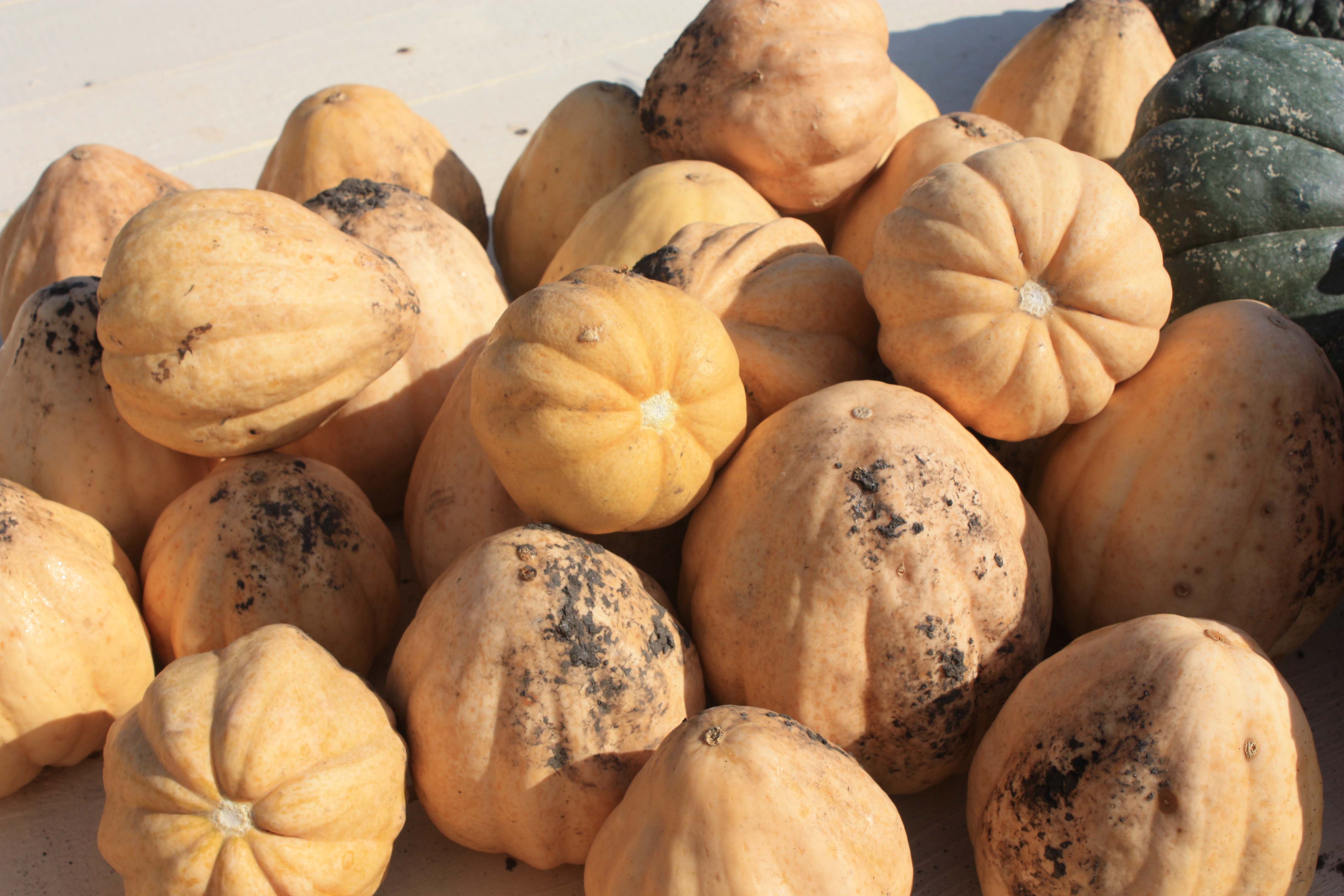
Except for one squash that exceeded all expectations.  You might notice it is much bigger than the two other squash in the first picture.  The smallest squash was just under four pounds and the one lying down on the table was approaching five pounds. 

Then there was this monster.  How does eight pounds and a bit over four ounces sound to you?

Yeah.  That's a good sized squash.  And it's going to be our centerpiece on our kitchen table for a couple of months.  Usually, that spot is reserved for a nice Musquee de Provence pumpkin.  But, I don't think we're going to be too unhappy seeing this one on the table for a while.

Saturday, September 30, 2023

Variety Show: Feher Ozon Papricka


This would be my second veggie variety post in a row on the Genuine Faux Farm blog.  It's just like old times - except if this were like "old times" on the blog, these posts would be three to seven days apart!  The motivation behind these posts has more to do with the fact that I had some new pictures from this year's harvest that just begged me to write about them.

Shown above is our first harvest of Feher Ozon Papricka peppers in 2023 (August).  I like to harvest them when they have this rusty orange shade to them, but others might prefer that they turn a full red-orange.  We enjoy eating these in nachos and others have told me they like them on pizza.  You can certainly eat them raw as a snack as well.  They tend towards a sweeter papricka tasste rather than hot.

This is another variety that has responded well to high tunnel production for a few reasons.  First, they don't like wet feet and they prefer warmer, drier conditions.  And second, the plants are small in stature, so they lend themselves to places where space is at a premium.  This year's plants did not quite get to two feet tall and we gave them 18 inches of spacing in the row.  Each plant easily produced fifteen or more quality fruit (plus a few off fruit).

This variety holds most of its fruit with the pointy end up, but they can get so loaded with peppers that they'll just point whatever direction has free space.  The carrot-shaped fruit can be as large as five to six inches long. You could, if you wanted, dry these pepper to create a papricka spice, though we have not tried to do this ourselves.

Keep these peppers off the ground if there is moisture for best results.  Harvest typically requires a pruner or knife since the plants do not give up the fruit easily.  If you try to snap or twist them off, you'll end up with a sizable portion of the small plant in your hand as your reward.

Friday, September 29, 2023

Nice Melons


This year, at the Genuine Faux Farm, I decided to experiment a little bit with the melons we decided to grow.  Since we are no longer growing for a CSA Farm Share program, we no longer need to grow as many melons as we had been growing in prior seasons.  But, I like growing them and we both like eating them.  So, what were we to do?

Ever since 2015, we have grown anywhere from five to eight different melon varieties on the farm.  Our field melons are always surrounded by flowers to attract pollinators and we took to growing a row of Minnesota Midgets in Eden (our smaller high tunnel) about 2017.  The general result was that we had plenty of melons for ourselves and our CSA customers each season.  We usually had extra to sell - or if we didn't have time to seek out a market, we gave them to the poultry.  Yes, turkeys LOVE melons.

The 2015 experiment that became the norm at GFF

 I love to tell the success story that was our 2015 melon crop.  But, I love telling it even more because we could replicate it from year to year.  Well, not exactly each season - of course.  Sometimes the flowers were different.  One year one melon variety would do well, and then another the next.  But, our production was good each season and the results were similar every time.  

But, as the need to grow this many melons went away, we found ourselves just trying to figure out how much we should grow.... and how we should grow them.  And the transition has not been as easy as you might think.  It's hard to go back once you've grown as many as a thousand row feet of melons on the farm.

So, in 2023, I actually succeeded in letting go of a few things.  We grew a short row of field melons that had ONLY ONE variety (Pride of Wisconsin).  We have a log history with that cantaloupe and it did well for us again this year.  

And in the high tunnel, we decided to play a little bit, but we only planted a half row in Valhalla (our larger high tunnel).  Minnesota Midget had been our go to for high tunnel growing, but we really wanted some melons that tasted different.  So, we gave three different heirlooms a shot: Eden's Gem, Emerald Gem and Ha'Ogen.

A 2023 Ha'Ogen

I remember that we gave a couple of these a trial in the high tunnel when we first started growing in them and decided, for whatever reason, that they weren't working.  But, they all have a long history with us.  In 2013, we were sold that Ha'Ogen was just too good not to grow it.  And, frankly, I still stand by that statement.  Unfortunately, by 2017, we were realizing that Ha'Ogen was not working for higher production loads on our farm.  A big part of that had to do with Ha'Ogen's unhappiness with very wet soils - and we just couldn't find much dry space on our farm during that time period.

Meanwhile, Eden's Gem became one of our key production melons.  These personal-sized melons have a unique taste (a little bit of nutmeg flavor) and ripen earlier than any of the other varieties we have grown.  Emerald Gem flitted in and out of the picture.  These are orange fleshed and early to ripen as well.  

All of these three have limited vine length - which actually makes them candidates for the high tunnel.  But, we had gone with Minnesota Midget because they faithfully climbed (with some training) the trellis we put next to them each season.

Well, this year, we weren't as worried about space saving and we trialed Ha'Ogen, Emerald Gem and Eden's Gem in Valhalla this year.  Let's just say our taste buds were not disappointed.

We did not attempt to trellis any of these vines (we ran out of time), but they did not get so long as to intrude too much on their neighbors.  It was tolerable - but might have been a little less wonderful if we were trying for higher production numbers inside Valhalla.  Emerald Gem did not do particularly well, but Eden's Gem and Ha'Ogen produced several high-quality fruit.

In fact, they both did well enough that I could almost consider scaling them up in the high tunnel if I thought I had a market for them.  That, and if I wanted to pursue a market for them.

I was most pleased that Ha'Ogen did well.  We stopped growing them altogether in 2020 and I missed having Ha'Ogen or two for breakfast in the 2020-2022 seasons. This melon has green flesh with a gold edge around the seed cavity.  They smell a little bit like a ripe banana when they are first opened and have a smooth texture.  In fact, the first taste you get reminds you a little of a banana until.... it changes.  Let's just say you want to leave this melon in your mouth for a second so you can experience the full range of its flavor.

We know by now that every growing season is different, but maybe we discovered something in 2023?  Either way, I suspect we'll be growing Eden's Gem and Ha'Ogen in a high tunnel again next year.

Friday, August 25, 2023

In Their Own Sweet Time


We harvested our first broccoli of the season on Wednesday morning before the real heat settled in for the day.  There are many more broccoli heads that are approaching maturity out there as well.  We'll just have to see how they handle the weather conditions.  Because that's just the way it is sometimes.

When the farm was my primary job, the first big broccoli harvest was usually an indicator to me that the harvest season for our farm was really starting in earnest.  Sure, we would have pulled in significant amounts of produce prior to that broccoli harvest.  But there's a difference between off-peak and on-peak harvest on a diversified vegetable farm.  

Off-peak harvest is something you work for so you can have fresh food available for a longer part of the year.  On-peak harvest is when you have to work desperately hard to keep up with all of the things that need to be brought in NOW.  And, you have to find homes for it SOON.

Even now that we have scaled back, the broccoli still symbolizes on-peak harvest season.  Suddenly we are trying to keep up with the green beans, onions, melons, peppers, tomatoes, cucumbers, zucchini, summer squash...  well, you get it.  Everything.

Things are very different now than they were when the farm was my full-time (and only) job.  For example, crop timing is important to us for completely different reasons now.  When we had a CSA, what mattered most was the timing of our crop with respect to each other.  If the broccoli was a little early or late due to weather conditions (or other matters) it mattered less as long as it still held the proper slot with respect to our crops.  If the weather was a bit cool and slowed the broccoli down, that was ok because most everything else would also slow - so the slots each crop held were pretty much intact.

In our current iteration of the Genuine Faux Farm, it matters much more to us that crops fall into slots that work with our job schedules and the relationship to sales opportunities or trips to the food bank.  But, no matter how hard you try to plan your planting dates and calculate your anticipated days to maturity, each crop is going to mature in their own sweet time.

It doesn't matter if you have a big project due this week for this job, or there are wall-to-wall meetings for that other job.  The broccoli decides when the broccoli is ready.

One of the bigger factors for vegetable production timelines is the "growing degree day."   A very basic way of looking at growing degree days that they are calculated by taking the average of a given days minimum and maximum temperatures and then we subtract a base temperature below which a given crop will grow (often 50 degrees Fahrenheit).  More growing degree days will typically accelerate the growth of most plants.  And yes, there are exceptions.  Many plants slow growth when temperatures get too high (usually over 86 degrees Fahrenheit).

As you can see, Iowa can be a pretty interesting place when it comes to temperature.  Just last week, we recorded a 47 degree low at our farm.  Then there was yesterday.  

Well, take a look.

A little before 3 PM on Wednesday, our weather station recorded a high of 100 degrees.  At that moment, the heat index was 122.  Around noon, we had our highest heat index (128 degrees) and our highest dew point (85).  For that matter, the heat index was already over 100 when I harvested the broccoli somewhere between 8 am and 9 am.

It's safe to say that very few of the plants at our farm found yesterday to be friendly for positive growth.  Yesterday was a "just survive day."  We'll see what happens after this.  Sometimes broccoli will start to bolt after a heat burst like this one.  We'll just have to see.

But they'll still do what they do in their own sweet time.

Saturday, March 18, 2023

Minding Your Peas and Cukes

As our farm changes, we reconsider what we will grow and how much of those things we will grow each year.  I know we both love our snow peas and we have a variety of snow peas we really appreciate.  It seems to like to get a start in the high tunnel and then it really takes off when we move the building off of the plants.  

So, we'll be planting snow peas this year.  I guess you could say we are...

Giving Peas a Chance

Young peas at the right, carrots at the left (mid May)

Peas are one of those crops that farms like ours don't often focus on.  The tomatoes, especially when you grow a range of heirlooms, are attractive and easy to talk about.  Lettuce has so many different varieties and they can look very different from one to the next.  If you live in Iowa, you typically have a place in your heart for sweet corn.

I have yet to see a session offered at a farming conference (such as PFI) that focused on growing peas, but we will happily talk about lettuce, tomatoes, squash and numerous other crops.

The reality is that peas do not typically provide high yields per row foot, but they do represent a fairly high cost in terms of labor during harvest.  If you're a small farm with limited resources, peas might not be worth the chance.  In our case, we like the bridge peas give us in late June and early July to the green beans.  But, the overlap between the two can certainly test one's picking patience.

We like to get the peas in the ground around April 30 and earlier if we start them in the high tunnel.  Ideally the four inch soil temperature in the mid-50's gives us good germination.  We focus on pod peas (snow) and stopped growing shell peas years ago.  The return on shelling peas was so low that we couldn't justify trying them any more.

Peas de Resistance

Trying to get a jump on trellising

All of our work having to do with peas is focused around the harvest.  I suppose, you could say this is true for all of our crops if you think about it.  But, we trellis our peas primarily to make the harvest easier and reduce our harvest time.  If we didn't trellis them, we could still get peas and the plants wouldn't suffer too much.  

If you've ever tried to harvest peas that weren't trellised well, you might be tempted to write a book about...

War and Peas

And, in fact, there is a kids book with that title by Michael Foreman.  You can listen to it here.

We've also had some issues with wind blowing some of the vines off of the trellising.

Two rows of peas with nowhere to go?
 
When the vines fall off or otherwise evade our trellis efforts, you could say we have an issue with...

Escapeas!
 
Our trellising technique when we grew as much as eight hundred row feet of peas was a bit of a project, but once it was done, it worked pretty well.  We started with cattle panels at the ends of our 200 foot rows.  This provided and anchor for the Hortnova fencing that ran the rest of the length of the row.  It also provided a barrier against the deer that occasionally like to taste our peas.  So, you could say that the cattle panels provide us with some...

Peas of Mind
Mammoth Melting Peas
 
We have found that the taller vining plants, such as the Mammoth Melting Pea actually prefers the cattle panels to the Hortnova fencing.  As a result, we actually provided cattle panels for the whole length of the row.  Since we put these on the outside rows, this also provided a barrier to the deer.

Blizzard, another pea variety, doesn't seem to care how it is trellised.  But, if the tellis is too loose and rolls over on itself it causes problems.  If you can't quite see how this might be an issue, we'd like you to....

Visualize Whirled Peas

These Blizzard pea plants want you to know that they do not endorse Rob's puns.

In any event, when we have a cooler June and July this provides a great situation for peas planted in the field.  During the years when that happened, we really brought in nice harvests.  Our very best year was 2015, when we brought in about 450 pounds of snow peas from 600 hundred row feet.

Which means we can talk a bit about...

Peas and Prosperity

Oregon Sugar Pod II - consistently reliable.

Our baseline for pea production is about 50 pounds for 100 row feet of peas.  That's what we expect if everything goes well.  And, most seasons, something goes wrong.  For example, in 2013, the Mammoth Melting seeds were not pure, so the peas they produced were not snow peas and did NOT taste good.  On the other hand, Oregon Sugar Pod II has been pretty consistent at 57 to 65 pounds per 100 feet.  The big issue with them are the...

Inner Peas
Well, we had gone so long without a pun, I had to get one in there.  Here's the deal.  Oregon Sugar Pod II is the most heat tolerant, shortest vine, standard snow pea we have grown.  But, unlike Blizzard, it likes to hold many of its peas inside the leaf canopy, which makes it a bit more difficult to harvest.

Spend time amongst the peas and you get to enjoy their flowers.


But, when you actually find that pod sitting deep in the vines, you get tempted to yell...

I Gotta Pea

If you are not in our CSA, then you might not have been pointed to this song by Brent Odom. 

Yes, yes, we know that this type of song is typical of a ten year old's sense of humor.  Therefore, it makes sense that Rob is posting it.

This reminds me of a person I met some time ago at a park.  She liked to sing the alphabet song while shelling peas.  She also had a small tank where she raised minnows for fishing.  Since her name was Ella, she taught us to sing the alphabet song this way.  ABCDEFGHIJK... 

Ella Minnow Pea

I suppose many of you are in some amount of pain by now, so I will get back to talking about our peas. 

Golden Sweet Peas - easier to pick and great taste.

Golden Sweet Peas like the cooler weather and very much prefer to be trellised well.  In most production years, we didn't give them the full attention they deserved but they have a great taste raw or cooked.  The yellow-green color makes the peas stand out from the vines and make it easier to pick.  But, many people aren't sure if the peas are good because the pale color looks a bit anemic. 

Peas Believe Me

Golden Sweet Peas are very tasty.  Rob does not typically eat raw veggies in the field, but he'll make an exception for these.  In fact, he'll eat any one of thes varieties of snow peas we have grown raw or cooked and can tell you that each has their own taste.  The Blizzard and Golden Sweet Peas have the most tender pods of the batch.  Blizzard can be very sweet tasting and Golden Sweet is in between Blizzard and a standard snow pea (Oregon Sugar Pod) for taste.  Mammoth Melting is fine raw but even better in stir fries or steamed since it has a pod that can be a bit tougher.

Hopefully we'll have a good year with our pea crop.  If we do, we might have some available for YOU.  If you buy more than you would need for one meal, you can have extra.  Then one night you can go home, find some leftovers - just a little of this and that - to have...

A Peas Meal.
 

For the longest time we had a tagline that was, of course, pun based.

Minding Your Peas and Cukes

I think it was actually fairly popular.  We gauge such things by the volume of the collective groaning heard from those who are reading it. 

One time, I was out weeding between the carrots and peas and had one of those moments that occurs every so often in the country where there is very little noise.  I guess you could say I had some 

Peas and Quiet

I also noted that this must be a very good year for peas since there were some vining into adjacent bell pepper plants.  If those vines choke out the bell peppers but result in top quality peas, you might say we won the

No Bell Peas Prize

The Blizzard peas STILL do not endorse Rob's puns

In order to appease you (see what I did there?  You did... ups, sorry), we will actually provide you with some interesting information. After all, I've been told I'm full of it.

For example, we do not actually grow peas and peppers in the same area, so happily, we should not have pea vines choking out our peppers.  Needless to say, the trellising helps contain the pea vines somewhat.  But, since the peas grow vertical, they tend to have a shade zone.  Peppers like their sun, so a shade zone might not be helpful to our bell peppers.  As a result, we interplant bush beans with peppers and we have tried some clover as well.

I was just thinking.  Most people seem to like baby animals.  How about 'baby' plants?  Would you find young pea plants to be...

A pea ling?

Ahem.  Moving on.

Since this is supposed to be a post about peas AND cukes, we'd like you to know that the cukes...

Look Just Vine to Us!


Lovely coverage and texture.. soon everyone will decorate with them!

In the picture above, the plants were only just started producing, but the vines were really covering ground.  The season for cucumber yoga had begun!  We do not trellis our cucumbers, which means Rob had to do a fair amount of contorting to pick cucumbers and not destroy vines or fruit in the process.  In short, it can be a fair amount of exercise. 

And, in case you didn't know, peas can get you exercise as well.  We are considering marketing a new hot drink that combines peas and coffee.  You exercise while drinking it (maybe doing cucumber yoga?).  I think we'll call it...

Pea Lattes!

You're welcome.  And have a fine day - assuming you survived this blog post.

Friday, October 7, 2022

Musquee de Provence - Variety Show


It has been quite instructive for us to go through the process of cutting back on the crops and the varieties within those crops over the past couple of growing years.  Yes, I do recognize that it has been bittersweet.  It has been much easier to manage fewer crops and varieties (with all of their differing requirements) and I have to admit that this has rejuvenated some of my enjoyment for growing.  On the other hand, I do miss having the variety too.

But, getting back to the main theme.  Despite the wide range of vegetable varieties we have enjoyed growing in the past, we have forced ourselves to make choices.  For example, we allowed ourselves only ONE pie pumpkin variety this year (note: we do not grow ornamental pumpkins - though a pie pumpkin can serve as an ornamental if you want).  In the past we've grown as many eight varieties in one season and we've cycled through a few over the years.  So, I estimate we probably have grown about a dozen different kinds at the Genuine Faux Farm.

And, the one left standing in 2022 (and probably for years to come) is Musquee de Provence.

This heirloom variety has been an anchor for pumpkin production at the Genuine Faux Farm since 2015 and shows up on and off prior to that.  It actually made our top varieties list as early as 2012 (the year the photo shown above was taken).

Musquee de Provence starts off as a dark green color and turns to an orange-tan shade.  We like to pull in the fruit at the point when the "ground-side" of the squash show that orange-tan color.  However, if weather threatens, we have successfully pulled them in when they are green.  The fruit will turn increasingly tan during the curing process.

Full disclosure - our reason for pulling them in has had to do with many years of heavy Fall rains at our farm.  We did find that sitting in wet fields resulted in our losing many fruit - and since we did not want to tolerate that, we brought them in with good success.  The advertised days to maturity from seed is 110 to 120 days, which typically gives us a mid-September harvest around here.

I suppose you want a fun fact for our other French heirloom pie pumpkin?  This one supposedly comes from southern France and was named for its distinctive pumpkin odor.  Yes - it smells good!  The rough translation to Engish is that Musquee means musky.  But, I am not sure that is an entirely accurate description of the fragrance.

Musquee de Provence has also been marketed as "Fairy Tale" - though I am not entirely certain that the strains are completely interchangeable.  

These pumpkins are a c.moschata (solid stem) squash and their vines can get fairly long.  If you can manage to give them a longer growing season, they will reward you with multiple fruit sets.  In 2021, we had a long Fall and harvested two batches of full sized pumpkins from one set of vines.  Now, before you think they set NEW pumpkins after we harvested the first set, let me clarify.  Typically, there will be smaller fruit that were set later in the season that do not mature by the time cold weather sets in.  In this case, we had good pollinator presence through the whole year AND plenty of time for the healthy vines to keep on growing out fruit that were set late.

Pumpkin size can range from 8 to 35 pounds.  Our average tends to be around 12 pounds when you include the late set, smaller fruit.  The seed cavity is relatively small and the fruits are very dense.  The meat is a deep orange to red-orange color.  You can almost make a pie out of them without adding any other spices - they are that good.

If they have a downside, it was that they were too big for us to use with our CSA - so we typically sold the larger ones outside of the CSA.  On the other hand, they store well.  They look wonderful as a kitchen centerpiece and you can easily freeze the excess in freezer bags for later use.


We typically start Musquee de Provence plants in trays and transplant them into the field between May 20 and June 5 on our farm (depending on field conditions).  We like planting them 18 inches in row and five feet between rows.  Most years, we run drip irrigation early to get them started and later during very dry periods.  However, if you don't do much irrigation beyond what it takes to get plants started, you should do fine with this variety.

With all squash, we prefer to split squash rows up with flower rows, such as zinnia, borage, calendula and other flowers.  It doesn't hurt to have some shorter season squash (or cucumbers) nearby to get squash bees accustomed to being in the area by the time these vines are ready for pollinators.  We sometimes put nasturtiums in the row with Musquee, but we don't find this to be as necessary for solid stem squash (c.moschata). 

Like most solid stem squash, the biggest issues for us have been grassy or aggressive weeds near the root zone and wet conditions after fruit set.  We get an average of 0.85 marketable fruit per row foot planted.  

We like to let the fruit cure for a couple of months and we find their taste improves as they age.  Typically, the tan-orange coloration is a good indicator that the fruit has cured and is reaching its peak for taste.

Saturday, September 24, 2022

Thelma Sanders Sweet Potato Squash - Variety Show

We featured Orangeglo watermelon a few weeks ago and received some positive feedback.  And, you know how that goes.  Give the farmer a little positive energy and he suddenly wants to do something to show that it is a good thing

Thelma Sanders Sweet Potato squash

During our first few years at the Genuine Faux Farm, longer season squash were difficult to grow primarily because of the insect pressure.  But, we stuck with our plans for developing a more balanced habitat (among other things) and now we are reasonably successful with our squash crops.  Some of the easier squash to grow are in the family C. pepo, which include zucchini, summer squash and acorn squash.  Shorter season crops reduce the odds that they will be exposed to hazards, such as pests, disease and weather, and the members of this family mature earlier than those in C.moschata (butternut for example) or C.maxima (buttercup are an example of these).


In general, acorn squash can be very productive, producing many one to two pound fruits.  The most popular acorn squashes look like the traditional variety Table Queen, which was apparently introduced by the Iowa Seed Company in 1913.  You can see some Table Queens at the bottom left of this picture from our farm in 2006 or 2007.

Now, I have to admit that I tend to prefer the taste and texture of buttercup and butternut type squashes.  So, I can be a bit more picky about the taste of an acorn squash.  Well, it turned out that Thelma Sanders Sweet Potato has a less grainy texture and a better taste than Table Queen and all of the hybrids that have followed it.  So, if we're going to grow acorn squash, Thelma has won every trial at our farm.

Thelma is an heirloom variety that was shared with Seed Savers and they have consistently offered the seed.  Their full description can be found here, but I give some of the highlights below:

(C. pepo)  Originally from Thelma Sanders of Kirksville, Missouri. Wonderful cream-colored acorn squash. Sweet chestnut flavor, enormously productive. Thelma described this good keeper as ‘better than sweet potatoes.’ 85-90 days.

While I don't pretend that these squash are "better than" sweet potatoes - because sweet potatoes are sweet potatoes - I will state that Thelma Sanders squash are the best tasting acorn type squash I have had and they grow very well at the Genuine Faux Farm.  With our cultivation practices and soils, Thelma has outperformed each green acorn squash we have tried.  These plants seem to handle a wider range of seasonal conditions, produce more fruit per row foot and have a larger average fruit size.

We typically get two marketable fruit per row foot for a poor to average growing year and might get more during an excellent year.  But, the real difference between a poor and excellent year is typically fruit size.  This past year was a bit dry and we did not irrigate, so the fruit averaged 1.8 pounds. We have had really good years where fruit size is closer to 2.3 pounds on average, which is quite large for acorn squash.

The best way to make sure you can fail with Thelma Sanders is to let the weeds near the root zone out-compete the vines.  Don't get me wrong.  These plants are tough enough that you don't have to have a perfect, weed-free environment.  But, if you let grasses, in particular, get a foothold near the roots of Thelma Sanders' vines, then you won't get much for squash.

The other way to fail?  Have so much rain that the plants are in standing water for days on end.  Yup - they aren't a good pond plant, I guess.

Otherwise, Thelma Sanders works well with bare soil or mulched ground.  Their vines are moderate in length.  So, unlike some vines that can really wander, Thelma Sanders tends to stay (mostly) in the area you provide them.  A good hedge of zinnias or borage will definitely head them off and keep them in their appointed space.  We even had a row of calendula hold the line one year - though that was a near thing.

Thelmas ready to harvest in 2022

Here is, perhaps, the best endorsement I can give this particular variety.  We were asked if we would be willing to grow acorn squash in 2022 as part of our limited repertoire.  We only said "yes" on the condition that they would allow us to grow THIS variety.  We were aware that the prospective customer might not accept this because most people believe acorn squash MUST have dark green skin.  Once we got past that hurdle, we entered the season with high confidence that we could produce what was needed using Thelma Sanders Sweet Potato squash.

Are there any disadvantages to this particular variety?  

One that comes to mind is that lighter skin shows blemishes far more readily than the dark black/green skin of other acorn squash.  So, if appearance is a key factor for marketing, that could play against it.  Also, the range of sizes and shapes might be a bit inconsistent if you compare it to some of the modern acorn squash hybrids that concern themselves with uniformity.  Also, if you are concerned that the stems stay on the squash, you will find that they tend to pop off of these fruit pretty easily at harvest time.  I actually find that to be a plus for processing, but it may provide an opportunity for a breach in storage that might reduce the length of time that it keeps its eating quality.

Still, storage is fine, usually getting us into January.  Typically, we don't look for any of the C.pepo fruits to last all that long anyway.

But, we're in it for the taste, texture and reliability.  Something you don't always find with open pollinated varieties.  But, you do get it with this one.

Have a great day everyone!

Wednesday, September 14, 2022

What's A Cuke Worth?

In September of 2010, I took the time to write a blog that looked at the value of one of the many vegetable crops we were raising that year.  There were a few motivations for doing this at the time.  First, I would frequently assess whether we were growing the right amount of any given crop - and one of the ways to do that was to figure out if a crop was contributing financially to the farm in some fashion.  But, I also realized that boiling things down to financial numbers was both more complex than it seemed and it was not the only way to assess what we were growing.

I thought it might be interesting to look at what I wrote then and modify with a few more years of experience and see where it landed.  For full disclosure, we actually removed cucumbers from our production list this season - and we might see a reason for that as we go.

The first thing I often like to do is look at the value of the crop produced.  And, when I say value, we need to remember it isn't always about sales.  For example, I might look at buckwheat and see the value in its ability to suppress perennial weeds that have harmed other crops.  Or, I might add value for a basil crop for its ability to attract pollinators when allowed to bloom.  And I've been known to grow more green beans than we need because it can help with Colorado Potato Beetles in our potato crops.

No matter how I go about it, the process of exploring value is what is important here.  It isn't necessarily important that you uncover everything as long as you feel comfortable that you have enough information to make useful decisions. 

Our numbers from 2010 at the beginning of September for cucumber production were as follows:
  • 4200 cucumbers went to the CSA
  • 50 were sold at farmers market
  • 400 were sold to other outlets
  • 1400 were donated to various locations
  • 1100 were used on the farm to feed birds, for events, for our own (or our family's) consumption or for promotional usages, etc

That is 7150 cucumbers produced, harvested and used in some fashion or another.  To clarify, our main business in 2010 was the CSA Farm Shares for about 120 members.  Deliveries were done at farmers markets, so we tried to maintain a front table with some extra produce.  One of the issues with that approach was that we only had certain types of produce at the table when we had fulfilled our commitment to the CSA.  That means we only had cucumbers when they were at top production - when every other vendor had cucumbers.  This is not exactly the best way to sell cucumbers at farmers market because you typically make your best sales on the 'edges' of the season!

We usually didn't have much time to pursue other outlets, so we sold what we could that way and we were quite free with our donations to the local food bank.

When we tried to assign values, we used these numbers:

  • 75 cents at market
  • 50 cent values to cucumbers given to CSA or donated. We figure in these cases that there is a discount because of the ability to move bulk amounts.
  • We sell to other outlets in bulk at 40 cents.
  • We assign 5 cent value to things used on the farm. There is still value - even if it is used to feed birds (or even compost).

That gives us a value so far of $2900 for this one crop.
This works out to about $4.32 per row foot assigned to cucumbers.

So, how do I feel about those values now?

We can't change the price we charged at farmer's market, so we won't discuss that one - and the bulk price to other outlets is also a constant.  Other than that, the rest was an assigned value based on various estimates.  

The first question, of course, is why did I go with higher values for CSA and donated crop rather than bulk price?  Most years, the CSA value for cucumbers would be lower, but at the point I wrote the 2010 blog, cucumbers had taken a higher than usual proportion of the share volume because some of the other crops were slow due to weather issues.  By the time we reached the end of the year, this value would be much lower because our Fall crops did very well (with the help of a new high tunnel!).

Backing up a little bit, there are two ways I could calculate CSA values for a given crop.  One would be to take the entire income from CSA shares for the year and assign value based on the portion of those shares represented by each crop.  But, that assumes each crop is appreciated in the same way by the customers (hint - they are not). 

The other option might be to consider it another bulk purchase and simply assign that price.  The problem with that is I run into the danger of over-valuing each crop and making the total value actually EXCEED the realized income from the CSA.

In the end, I simply recognize the weaknesses of each approach and go with an informal hybrid of the two.  It is just not worth the time and effort it would take to come up with an exact formulation.  

Why?  There is a point where the returns for the effort of determining exact values are negative.  We just need to get things close enough so we can get a handle on what we are doing and inform future decisions.

So, if I did this valuation process for 2010 now, with all of the data for the year and a few more years experience - what would I do?

I would start with the bulk price for both the CSA and food donations and I'd probably stop there.  I only need some reasonable base values of the crops I am analyzing each season to make comparisons.  I never had the time or energy (or need) to assess every single crop - which makes sense when you have forty or more crops each season.

And, I think I might argue that the 5 cents per cucumber for the rest works out well enough.  Though my gut tells me I am underselling some of the benefits that come from feeding the birds, etc.  My gut also tells me that I am overvaluing these things because I can't readily change them into cash.

But, again THAT IS NOT THE POINT.  If we consistently use the same valuation system, we do not need to make it balance exactly with actual cash.  What we need is to value things for the purpose of comparison so we can evaluate how we are doing with our crop.  Instead of using dollars and cents, we could make up a new unit... call it "whatsits" or "thingies" or something else if it makes you feel better.  It's a unit that we can use on our farm.  Maybe I'll call them GFFs?

After adjustments, our value for the cucumbers in 2010 might be closer to $2500 (or 2500 GFFs)- which would still have been a reasonable return.

Is there other value we missed?

It is a common mistake to miss some intangible benefits that come with a given crop or practice.  The reason for that is that we have a hard time figuring out a monetary value to assign these things.  And sometimes we do it a disservice when we try.

For example, it works well to plant multiple successions of cucumbers AND they can get an early start (or late finish) in high tunnels.  Consistent and long production of a quality crop brings value.  We might be able to assign numbers to that if we really wanted to.  Remember how I mentioned the production "at the edges?"  If you have quality product in the early or late stage of the typical season, it usually can bring a better price - so it can have more value.

So, why don't I use those numbers?  

First, time is valuable too.  So, I was never convinced I needed to do that for this particular crop - though I did try it with lettuce (for example).  And second, I figured edge of the season value averaged out with prime season value.  The end results were only a few dollars (or GFF units) different, so why should I get that detailed?

Here's another example of value we might consider:

Cucumbers mature in 50 to 70 days depending on the variety.  Most melons take 80 or more days to mature.  Many winter squash take even longer.  And, squash bees are the best pollinator for these crops.  

So tell me, doesn't it make sense to get an early planting of cucumbers going to start feeding those squash bees so they are present when the longer season crops need them?  And maybe additional successions of cucumber (or summer squash and zucchini) might help to keep those populations healthy and moving about the farm for future production?

How do you put a value on that?  It's hard enough to actually establish whether or not there is measurable differences in pollination - so there isn't a good way to establish a value easily.  But that doesn't mean you shouldn't consider it. 

So, maybe $2900 (2900 GFFs) is still a reasonable estimate for that 2010 crop?

So, what does this crop cost us?

In the 2010 version of this blog, I proceeded to work on the costs for our cucumber crop:

  • Seed cost - $62
  • We direct seeded these into the ground, so planting cost was low
  • Irrigation costs depend on the year. 2010 was wet, so this was minimal
  • Labor included seeding, cultivation, weeding and harvest.
  • Labor for cleaning, packing and distribution.
  • Overhead costs, such as fuel for delivery and equipment are split between so many crops that this is not a huge factor.
  • The highest cost is labor. 

Estimate of person hour labor spent on this crop = 160 hours.
Assign a value of $10/hour and you have a labor cost of $1600

In 2010, I calculated a net value of $1238 from the crop, not including overhead expense splits.

How have things changed for cucumber production costs?

The biggest change in process over the years was that we moved from direct seeding cucumbers to transplanting them.  We made that move because it increased the reliability of each succession.  After all, there is value in being able to consistently produce a crop (another intangible we often fail to measure).

Otherwise, labor is still the biggest expense.  And, $10/hour doesn't represent the present day labor cost either.  Either way, it is safe to say that the expense per row foot for growing cucumbers has gone up since 2010, if only because the rate per hour is higher.

The price we can get for cucumbers hasn't exactly changed much since 2010 and the cost has gone up.  Our $1200 "profit" on cucumbers would look more like $500 in 2022.  But that assumes we have two things:

  1. sufficient labor to grow and harvest the crop
  2. sufficient demand for the crop in the markets we have available to us

Well, once we hit 2020 (and the pandemic) we no longer had the access to labor we once had.  For that matter, we lost most of the demand too.  Combine all of that with a decreased value over cost per row foot and...

the farm stops growing the crop.

What did we learn over time?

Over a period of ten growing seasons (2010 to 2019) we developed a fairly consistent production system for cucumbers that routinely resulted in quality product in a volume that covered all of the demand we were willing to pursue.  We were also able to devise a system where the failure of one succession rarely resulted in a drop in income for this crop..

In short, what we did worked.  And our analysis of the crop informed the small adjustments we would make from year to year as circumstances changed.

We also determined that investing additional capital into a labor saving piece of equipment (like some version of this) was not going to fit our operation or the future plans for our farm.  We considered, at one point, adding trellising to our cucumber operation to reduce harvest labor costs.  But, we found that would only move labor to a different point in time where we wouldn't have enough of that resource available.

We did make adjustments to our cucumber succession timing and we changed the composition of the varieties we grew in each succession.  As it was, we came to recognize that not all cucumbers could be valued equally.

But that, as they say, is another story for another time.  If you read this far and found some of this useful or interesting, excellent.  If you found it amusing - ok, I can accept that too.  If you skipped to the end to find out how this blog was going to end.  Here you go.

And they all lived happily ever after.

Saturday, September 3, 2022

Orangeglo - Variety Show

Orangeglo, Sweet Siberian (front left), Chris Cross (back left),Moon & Stars, Mountain Yellow Sweet

It has been quite a while since I did a feature of a veggie variety on the GFF blog.  So, I said to myself, "Self, let's do a Genuine Faux Farm blog on a veggie variety."  Since I can be pretty convincing sometimes, I agreed to do just that.

It has been a few years since we have seriously grown watermelons.  Yes, it is true that we would grow a fair number of them to make sure our CSA members would each get one.  Even longer ago, we would try to grow way too many of them in hopes that we would have a bumper crop and we could try to market the excess.  The problem was twofold.  First, it was never as easy as you pretend it will be to find the unplanned market when you do have the bumper crop and second, if you secure that market it always seems like there is some sort of disaster that prevents you from having the excess you wanted to have - especially when you grow as many different crops as we did.

If you are a CSA (Community Supported Agriculture) farm share grower, there are problems with growing traditional sized (larger) watermelons.  Unless you have share pickup at your farm, you are stuck with bringing a full load of watermelons AND all of the rest of the produce at the same time.  In our case, at the point watermelons got ripe, our shares were full of all sorts of other neat things.  Our truck was full to the gills (so to speak) with everything else - there was really no place to put the watermelon.

And watermelon do not pack particularly well.

Even if we selected watermelon varieties that were smaller, we were often stuck with packing issues.  Still, if we had a good watermelon year, we worked to find solutions - and usually managed just fine.  We even arranged to have someone bring their truck to the farm and come with us to our distributions.

Now that we are not growing watermelon for anyone other than ourselves, we were left with the choice - which watermelon variety would we choose?


Sometimes it is difficult to give up the opportunity to grow a wide range of cultivars.  It was fun just trotting out five or six varieties and seeing how each of them did and how each tasted.  There was also a certain amount pleasure in describing each and their relative strengths to those who were trying to select which one to take home.

In the end, we went with the watermelon that we felt had the best combined texture and taste - probably according to Rob's taste buds more than Tammy's.  This isn't because Tammy is not allowed to have her opinion.  It's more that Rob is a bit more persnickity when it comes to watermelon in the first place.  Tammy would be fine with several varieties, and Rob might actually pass on some of them... or just eat a few chunks and leave it at that.

Orangeglo has a fruitier texture and taste unlike many of the highly marketed watermelons you can find in stores currently.  Most of those fruit are a bit grainy and more water than melon - in my opinion.  Orangeglo is a bit more 'pulpy' in texture and has a definite flavor that is clearly watermelon, but with more depth to its sweet flavor.

Yes, it does have seeds in the cavity, but unlike some heirloom varieties,the seeds are usually very well developed and pretty easy to find and remove.  I will admit that some varieties we tried had seeds EVERYWHERE and it was hard to appreciate the taste, even if it was excellent.

Vines are usually pretty reliable once you get them started.  We planted a total of six seeds and transplanted all six this Spring.  Of those, four survived the deer and rabbits.  In return, we got one full sized melon (about 20+ pounds) and four or five smaller melons (10-15 pound range).  I am not counting the fruit a deer stepped on in that count.


I can't say that we did particularly well with our cultivation and care of these plants in 2022, but we did well enough.  And, the production was in line with what we typically expect from this variety.  Unlike some of the hybrid, production melons that many commercial growers favor, these melons do have a fairly wide range of sizes.  The largest I think we have seen was approaching thirty pounds.  But, it is pretty common, in our experience to have about a quarter of the marketable fruit land in the 20 pound range and the rest landing at 10 to 15 pounds.

Orangeglo does love it when you promote visits from pollinators.  So, some variety of flowering plants in the area will increase the likelihood of fruit set. We usually plant our watermelons in the same area as our melon plants.  We like borage, calendula, zinnia, marigold, buckwheat and sunflowers in that area.  We even tried sunn hemp one year and the vines liked to crawl into the sunn hemp (but it was hard to find the fruit).

We did try watermelon next to winter squash one year, but found the watermelon vines did not compete well with the squash.  They just don't start crawling fast enough and the squash take their space before they can really get going.  We have grown watermelon with both straw and paper mulch, but our best production has been on bare soil, most of the time.  Does that mean I think that is the absolute best way to grow watermelon?  Probably not.  But, remember, watermelon never were one of our primary crops, so I didn't expend THAT much energy thinking about how we grew them.

But now that I've had a tasty Orangeglo or two this year, I might create a side project for 2023....

Thursday, February 24, 2022

Almost Without Exception

I now have many years worth of digital photos of the farm and farm related things.  This wealth of one particular resource has its blessings and it has its... non-blessings.  For example, if I am looking for some picture in particular for whatever reason, I am beginning to find that I am spending far more time than I should looking for it.

Yes, yes.  I know I should spend some time organizing the photos so I can find things quicker.  But, let me ask you this - have YOU organized all of those photos on your phone?  Or have you gone through all of the old photo albums you keep saying you want to look at and organize?  No?  Me too.

Yet there is value in searching.  Some of that value comes in the form of new learning.  Some in the form of relearning something that has been learned before.  And, sometimes, you come to a realization that things have changed or stayed the same - and those changes and non-changes are worth pondering.

The photo on the left is from the Fall of 2012 and it shows us setting up our table at the Saturday Waverly Farmers' Market - likely a September morning.  And, our tomatoes were coming in full force!

At that time we would tout that we grew anywhere from 20 to 40 different heirloom tomatoes each and every season.  And, because of our farm's soil and location, we typically had a stronger late harvest than early harvest (this changed as we added high tunnels).

We would feature our heirloom tomatoes prominently, offering chances for people to taste each type if they wanted.

On days like this, it would not be unusual to have fifteen to twenty different varieties on our table for people to choose from.  Each tray would hold an average of 20 (usually more) pounds of tomatoes and we would bring somewhere in the neighborhood of thirty trays.  That's 600 pounds of tomatoes for those of you keeping track at home.  

On top of that, we would often have a few boxes with "seconds" - tomatoes that were not top market quality, but still perfectly useful - that we would sell at bulk prices to people who wanted to can, make sauces, or whatever...

And, of course, we would have some other veggies as well to complement the tomatoes, like fall lettuce.  Sadly, our bacon and mayonnaise trees were usually not ripe at the same time - but that's how it is sometimes.

I will report that we often did pretty well on these days - at least in comparison to other market days.  But, we would usually still be going home with about half of the tomatoes, unless the food bank dropped by and would take a batch of the remaining tomatoes.  The problem there was that they were "allergic" to any tomato that was not red - so those stayed with us.  Their loss, I guess, but we also had more at home, so it wasn't exactly a big positive from our perspective.

 After markets like this, we would combine partially loaded trays with other partial trays and compress how things went back into the truck.  If you failed to do that, the tomatoes would roll around inside the trays and you might be a bit unhappy with their condition (and the condition of the inside of the truck) when you got back home.  This would take some time, so we were often the last to get packed up at the end of the market day.

And, without fail, there would always be someone who would pull up as we put the last thing into the truck and say something along the lines of...

"Oh shoot!  We missed the market and we were soooooo  looking forward to it.  I don't suppose you have any tomatoes (or some other veggie) that we could still buy?"

You would think that after this had happened many times before, we would politely decline.  But, we always said yes (as long as we had what they requested).

Then, one of us would climb into the truck (usually me) and pull things out - even if it was a huge pain to do - and we would show them what we had.

Almost without exception one of the following would happen:

  1. The person would inspect, prod and mumble and finally select ONE tomato - and after a little more prodding, maybe select a second one, and pay.... with a big bill so we would then have to go find our change box again.
  2. The person would ask us, after we had gone to the extra work to pull things out, if we would give them a discount.  After all, market was done and we should be grateful to make one more sale - even if it was at a quarter the asking price.
  3. The person would sigh and say, "Are any of these 'Better Boys?'  They're not?  Well, I don't want any then."

Please don't take this wrong.  We are both people who like to be helpful.  We prefer to be kind.  If you are interested enough in stopping and asking for something specifically from us and we have it, we'd love to accommodate.  So, we found ourselves going through these motions even with the knowledge of how it was likely to turn out.

And sadly, we often found ourselves regretting that we had tried to accommodate.  And that's kind of sad.

But, I DID say "almost without exception."

There were a couple of cases where the person(s) who stopped us and benefited from our extra effort recognized what we were doing.

Once, the person did not buy much - because they did not need much.  But, they made it clear that they were so grateful to get some fresh produce and that they understood it had taken us extra effort to do so.  This individual was not physically able to help us re-load, but they wanted to do something to help if they could.  

The honest and heartfelt recognition of our extra efforts was enough.  And they were able to tell us at a different market that they had enjoyed tasty BLT sandwiches thanks to our product (even if we didn't have bacon and mayonnaise in our truck). 

The other time that I specifically recall honest recognition is when an individual said, with sincerity - but not much fanfare - "I know this is not correct change.  Please keep the extra to pay for your additional effort on my behalf.  Thank you."

And, on top of that, we saw BOTH individuals at the next farmers' market.  Rewarding our extra effort with continued patronage.

Today's challenge?  Be the exception.  Recognize the effort someone makes on your behalf.  Let them know you appreciate it and recognize the value.

Have a great day everyone!

Wednesday, February 2, 2022

Variety Show - Hot Peppers

There is a whole host of information on our old Genuine Faux Farm website that probably doesn't get visited by much of anyone anymore.   Eh... who am I kidding.  There is probably a great deal of information there that was NEVER looked at by anyone.  

Still, we're going to migrate some of that material into blog posts if we think it could be interesting to others.  

Today, we're sharing (and updating) the information we've gathered with respect to the different hot pepper varieties we have grown over the years at the Genuine Faux Farm.  Remember, our goals may not match your goals and your farm is not the same as our farm.  Sometimes a favorite for us won't work for you and vice versa.  Nonetheless, we can share what we've learned and you can take it and use the information as you see fit!

We prefer to grow open pollinated varieties and have tried a fairly wide range of heirloom and heritage types.  It is our belief that, for many crops, there is a variety that is properly adapted to our farm and our cultivation techniques.  It just takes experimentation to find the right ones.


HOT PEPPERS


Storage:

  • Optimal environment for short storage & fresh use: 45 degrees F at 95% humidity.
  • Many hot peppers are excellent for drying.

Preparation: For most hot peppers, the heat is contained largely in the seed cavity and the seeds themselves. You can make a hot pepper a bit milder by removing this cavity and using the outer flesh of the fruit. When cutting hot peppers, it is often a good idea to wash your hands after cutting to avoid accidentally any residue in your eyes. Very hot peppers are often handled using gloves. If you are cutting a variety of items, it is a good idea to cut the hot peppers last, or use a clean knife. Otherwise, other fruits and vegetables will acquire some of the spicy qualities of the hot pepper.

Drying: Dehydrating and drying hot peppers is the only method of long term storage we have tried with success. Typically, we find that cutting the peppers into thin pieces will speed the dehydration process. You may opt to grind pepper into a powder or store them as pieces. We recommend that you avoid grinding too much at a time as pepper powder loses some of its qualities quickly. We have also simply let some of the thinner hot peppers dry on the counter.

We have had marginal success cutting hot peppers up and freezing them. But, that's not to say it can't be done successfully.

Cultivation:

We grow these similarly to sweet and bell peppers - so I guess we'll get a blog post on those out soon! One of the main differences we note is that the hot peppers seem to like the warmer and dryer weather more than sweet peppers do. So, a cooler and damper season may influence the health of these plants significantly.  Hot peppers do not like "wet feet," so make sure they are in well-drained soils.

Hot peppers love the high tunnel environment, but since we rarely have had a market for large amounts of these fruit, we don't spend that precious space on them.  We did try hoops with some plastic during a cold late Spring and early Fall to provide more heat, which seemed to work well enough.  Keep soil clear around the plants early to encourage the soil to heat up (keep them weeded and don't put straw or grass mulch down).

We also separate our sweet peppers from the hot peppers to avoid cross pollination and possible confusion/mixing of the fruit. In our fields, that usually means putting eggplant, flowers and/or green beans in the rows between the two, typically separating them by at least 15 feet.


VARIETY DESCRIPTIONS


Alma Papricka

Alma Papricka peppers

(Hot Scale 0 of 5)

These plants produce small rounded peppers (1 to 3 inch) that progress from cream colored to orange to red. Fruit can be picked at any point once they reach the cream coloration. We tend to like the taste even better once peppers begin to change color until they reach bright red. We enjoy Alma Papricka fresh on nachos and the taste goes well with chicken or fish. Peppers can be dried and ground to make papricka spice. Plants are generally smaller in size and produce a single flush of fruit in our area (two in the high tunnel, with the second being much smaller). 

Peppers hold well on the plant - a good companion for a range of papricka taste with Feher Ozon. These plants do not like having wet feet, but we have found they love being in the high tunnel. One flush of fruit typically gives 8 to 15 excellent quality fruit and several others that are still useful quality, but harder to market.


Feher Ozon Papricka

(Hot Scale: 0 of 5)

This papricka pepper holds most of its peppers with the pointy end up, rather than down. Of course, the plants can be so loaded with fruit that peppers have to go whichever direction they are able to go. These carrot shaped peppers can be as large as 5 inches long and have an excellent fresh taste. These can also be dried for papricka spice, but their larger size and higher water content requires more effort in drying.

Keep these peppers off the ground (if a plant falls over) for better results. These plants tend to be smaller than Alma and are also not fond of wet feet. They were very happy to be in a high tunnel during the 2013 season easily giving us 10 marketable peppers per plant. Our prior field numbers landed around seven fruit for an average. When picking these peppers, it is best to cut them off since they don't give up their peppers easily and you may end up with a sizable portion of the plant if you are not careful.


Ancho Gigantea

(Hot Scale: 2 of 5)

Ancho Gigantea is a type of pablano pepper. This cultivar can have a very wide range of size for the fruit and can be picked dark green to red with no discernible difference in taste. When picked green, the peppers do tend to hold their firmness longer. Plants can get very large and sprawling and have a tendency to fall over unless carefully staked. The large plants have also been known to break in strong winds once they reach full size. Fruit are often hidden deep inside the plant, protecting them from sunscald. 

We recommend trellising or staking and patience. In cooler climates peppers will take their time maturing. Taste is reasonably good, but we do think some of the other peppers we grow have more going for them in this category.


Beaver Dam

beaver dam plants

(Hot Scale: 2-4 of 5)

This is possibly our favorite hot pepper. Plants are compact, thus we can get many more per foot in one of our rows. We have also gotten as many as three flushes of fruit as long as we pick at the 'lime green' or slightly later stage. Fruits mature to red, first showing some yellow and orange. Taste is excellent at all stages, normally getting progressively warmer as they ripen. 

Each plant will produce between 3 and 7 peppers per plant per flush, with an average around 7 fully formed fruit per plant in a season. Fruit can be as long as 7 inches and are excellent for stuffing. Walls are a bit thicker than many hot peppers. 

Heat levels have been highly variable on our farm. Some can be very mild and others extremely warm. Heat tends to concentrate in the tip of these fruits - but if you get yourself a "hot one" it won't matter much where you take a nibble. These have given the most consistent results in the high tunnel since they do not like wet soil conditions - typically seeing total crop failures in those years.


 Fish

(Hot Scale 3-4 of 5)

This pepper evidently has a history of being used in crab houses for seasoning, according to Seed Savers. If you want to grow a different pepper, this is a good one to try. The leaves are variegated and the peppers are striped. Plants can be brittle and will break easily. 

These peppers are best when they begin to change color. Fruit tend to be small, but potent. Several of our CSA members have responded favorably to these with many being very happy with the taste. These will grow reasonably well in containers and we note no marked difference between field and high tunnel production.

Fruit are shaped like a small, thin jalapeno and are striped green and white early and then red and yellow as they mature.  Wait until they change color for best taste.  


Hot Portugal

(Hot Scale 4 of 5)

Hot Portugal grow long (7 to 8") and thin peppers that are hottest when allowed to turn red. We see these as a type of cayenne and find them easy to dry. People who demand a hot pepper tend not to be disappointed by this variety. In fact, this pepper has been known to leave people who bite into one speechless (for a time).

The tips of the first formed fruit tend to touch the soil and the tip end will often get soft and be breached.  It is best to remove these once you notice the problem - and if you have time (we never did) you might do well to remove the first set early and encourage the second fruit set.  Even if you don't get to that, cutting off the bottom of the pepper leaves you with plenty of pepper to use. 

When green, these have a bit of a 'bean pod' taste and are not as warm. Depending on the season and time of season, we believe Hot Portugal may get the hottest of the peppers we grow. Be very careful not to confuse these with Jimmy Nardello's (a sweet pepper we enjoy) because they can look very similar.  The key is to learn the slight difference in the formation of the shoulders of the fruit.


 Joe's Long Cayenne

(Hot Scale 3 of 5)

One plant will produce large amounts of peppers. So, of course, we grow six to ten plants on the farm. You might lose a few fruit that touch the soil early on and get soft, but this won't make much difference given the overall production will easily compensate. Unlike most cayennes you will see that grow tiny, thin fruits that may reach 4" in size, these grow long thin cayennes that reach 8 to 9 inches. These are easy to pick, easy to hang up for drying, easy to dehydrate and excellent for winter dry storage. Taste is hot enough to let you know it is there, but not so hot that it is all you taste. Picked green, these are very mild and have a bit of a 'bean pod' taste to them. Harvest is typically in September, so be patient. They do not like to be rushed. Our average harvest runs around 30 fruit per plant, but we aren't surprised when we pull 50 or more off of one plant. These are easy to dry and store. Best tasting cayenne we've encountered.


Wenk's Yellow Hot

 (Hot Scale 2-3 of 5)

These plants behave like jalepenos in many ways, but you want to pick the fruit once they turn yellow then orange and then red. In our opinion, jalepenos tend to be a bit bitter and lack taste. Wenk's Yellow Hots, on the other hand, have a wonderful taste and we strongly prefer these to jalepenos. 

Try to mix a few of these into dishes that call for jalepenos and you will find that the added color makes the meal attractive and tasty option.  If you like jalepenos, try adding some of both. 

Plants are not quite as productive as jalepenos, but certainly productive enough with easily 35-40 per plant. We suspect you could make an excellent hot papricka powder out of these if you had the know how and were so inclined.


Aji Crystal

(Hot Scale 3-4 of 5)

Aji Crystal and Hungarian Hot Wax were introduced to the farm at the same time and we liked them both equally well, but found they traveled in the "same lane."  The result was that we would grow whichever we had the seed for on a given year.

 Average production for Aji was 32.7 fruit per plant in 2011 and taste was well received by our customers. We might say that it is warmer than the Hungarians, but the difference is very slight. Fruit have a slight 'boxiness' that gives them a different look. Otherwise, you might say they are a larger yellow jalapeno in shape and size.


 Hungarian Hot Wax

 (Hot Scale 3-4 of 5)

We have to admit that our history with Hungarian Hot Wax makes us want to grow them. These peppers were in our garden well before we started Genuine Faux Farm and we may have kept them, in part, for the link to our past. On the other hand, their taste rates right up there with Aji Crystal and the hotness is similar. 

Unlike Aji, they do not have the boxiness and are a smooth fruit. Our 2011 production level was 32.8 per plant. The biggest difference is that they seem to maintain a more consistent size than Aji Crystal and would likely serve production systems that need consistency and shorter harvest windows.


 Early Jalapeno

 (Hot Scale 2-3)

In general, neither of us is enamored with most jalapenos, finding them to be a bit bitter. Or, worse yet, some are just hot for hot's sake, with no taste to redeem them or make them interesting enough to be willing to deal with warmth. This variety does reasonably well and produces plenty of peppers per plant (usually 50 to 60 if you keep it picked). It will do you no favors to let them turn red as it doesn't seem to improve the taste on this variety, nor does it get any hotter. Instead, the fruit get a bit tougher. Just grab them when they get to the size you want and you'll be happiest.

We also note that some fruit will start to show dry cracking as they age - even before they change color.  This doesn't impact the taste, but it does change the texture - not for the better, as far as we are concerned.  So, keep it picked for best results.


And even more that we've tried over the years at the Genuine Faux Farm

Cyklon (Hot Scale 3-4)

These plants produce thinner peppers that reach approximately 4 inches and they seem to hold a smoother, more uniform shape than others of this type. Pick these when they are red for best taste. Plants are easy to pick and fruit do not tend to split or exhibit any other problems. With Hot Portugal, Maule's Red Hot and Cyklon we felt we were growing too many of the same sort of pepper without enough demand to support them all. Cyklon was the first of the group to be eliminated due to the least consistent harvests.

Black Hungarian (Hot Scale 4)

Black Hungarian plants are very attractive.  They have dark green leaves, sometimes with purplish veining. Plants do not get terribly large and stay self contained. The dark fruit and the beautiful purple flowers are also quite attractive. While you can certainly use the fruit, the taste is somewhat bitter and doesn't have great culinary value in our opinion. Grow this if you want an ornamental pepper. Perhaps you will like the taste, but we won't bet on it.

Maule's Red Hot (Hot Scale 4)

Maule's Red Hots tend to be longer and thinner and remind us more of Hot Portugal than Cyklon. Again, if we had more of a market for hot peppers and people who like subtle taste differences in them, we would have considered growing them more often. But, since we did not, it made no sense to duplicate with Hot Portugal.

Numex Big Jim (Hot Scale 2)

This was our 'Anaheim-style' chile, perfect for rellanos. Plants are very productive, more compact than Anaheim College and seem to be well adapted to the Midwest. We would recommend this variety for our area if you want this type of pepper, but seed suppliers stopped carrying it and it hasn't returned to our knowledge. Another variety called Numex Joe Parker is said to be similar, but we do not have the motivation to try it.

Conchos (Hot Scale 3)

Cylindrical, dark green fruits that look like large jalepenos. Excellent for stuffing and for poppers. Fruits are often 1.75" by 4" in size. We have found some variety in the hotness of these peppers. At times, we would rate this one higher than a 3 on the hotness scale, but rarely lower than that. Once again, this pepper is fine, but the seed disappeared from our normal suppliers and we weren't sufficiently motivated to pursue it. We prefer to give more space to Beaver Dam and Wenk's Yellow Hot.

Senorita Jalepeno (Hot Scale 1-2)

Darker green, smaller jalepeno. Definitely a milder jalepeno that will be adequate for persons who do not care for too much heat. These have a mild taste that gets even milder with removal of the seeds. Plants provide continuous production as long as they are picked frequently. Again, the seed supply disappeared and we moved on.

Anaheim College 64 (Hot Scale 2)

Anaheim College is a chile-type pepper. it is a green pepper that grows long and relatively thick pointed fruit. Used for dishes such as chile rellanos, this pepper has a good taste that gets milder if you gut the seeds.  These peppers tend to begin production later in the season here in Iowa. It is likely this variety wants something different than our Zone 4b weather to do well.

Ancho 211 (Hot Scale 3) 

As is the case with all ancho, these are also known as pablano chile peppers. These do seem to have a fairly broad range of hotness depending on weather. Hotter, drier weather tends to result in hotter peppers. Fruits are smaller (3 inches) and are a blackish green to red color. Plants begin producing later in the year and will produce in great abundance once they start. Our plants at the time of frost were still covered with immature fruit, making us decide to move to Ancho Gigantea in an effort to get more of the fruit to mature size in our growing season. This is a hybrid, hence another reason why we moved away from it.